


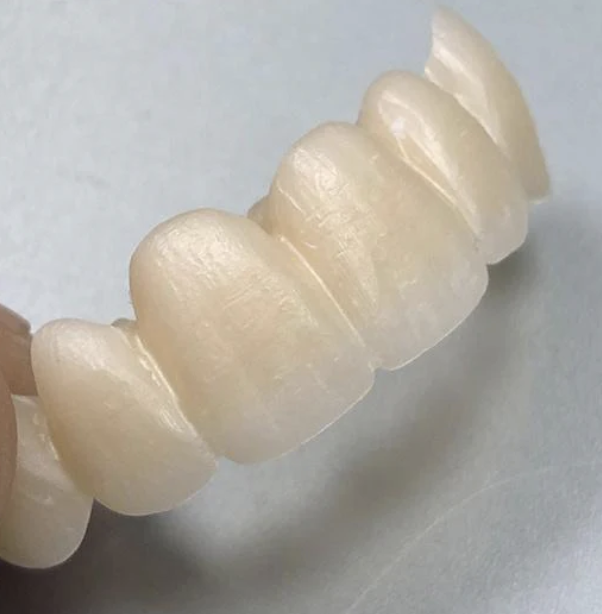
Material Science in Dentistry: What Labs Need to Know About the Next Generation of Ceramics
Dentistry is quietly undergoing a materials revolution. What used to be an art of porcelain layering and hand mixing is now a discipline of physics, chemistry, and nanotechnology. Each generation of ceramic advances not only beauty but the fundamental science of how restorations interact with light, pressure, and time.
At VCAD Dental Outsourcing Lab, every restoration begins with material intelligence — understanding not only what a ceramic looks like, but how it behaves. From multilayer zirconia to hybrid glass ceramics, the lab’s philosophy is simple: form follows science.
Let’s explore how the next generation of dental ceramics is transforming the relationship between design, manufacturing, and performance — and how VCAD leads that evolution.
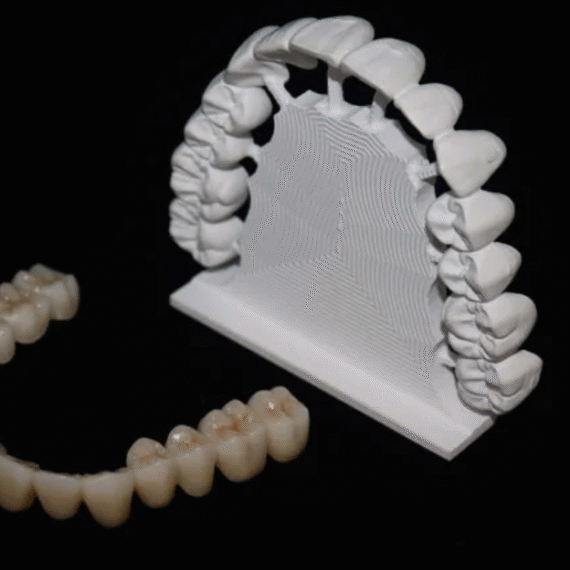
1. The Evolution of Dental Ceramics
Ceramics have always defined the aesthetics of dentistry. But in the digital era, they have become equally important for function and predictability.
Early porcelain-fused-to-metal (PFM) systems offered strength but lacked optical depth. Pure feldspathic porcelain delivered translucency but fractured under stress. The last two decades changed everything with zirconia and lithium disilicate, which combine strength, beauty, and digital compatibility.
Now, a new generation has emerged — multilayer, monolithic, and hybrid materials engineered for CAD/CAM workflows.
At VCAD, technicians classify ceramics into four evolutionary stages:
- First-generation (PFM): Strength from metal, beauty from porcelain. Labor-intensive and inconsistent.
- Second-generation (Pressable ceramics): Lithium disilicate improves translucency but requires manual layering.
- Third-generation (Monolithic zirconia): Machine-milled strength but initially too opaque.
- Fourth-generation (Multilayer zirconia and hybrid composites): Gradient translucency, balanced flexural strength, fully digital processing.
Each generation solved one problem and revealed another. VCAD’s material R&D focuses on uniting them all — the strength of zirconia, the optical realism of glass, and the manufacturing efficiency of digital design.
The evolution of materials isn’t about replacement; it’s about convergence.
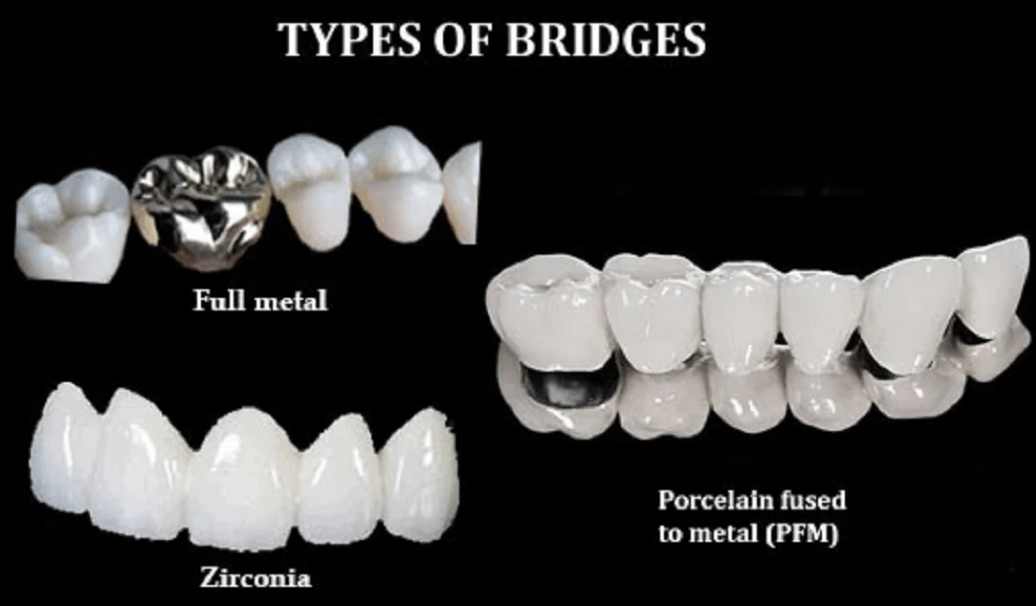
2. Understanding Material Behavior – The Science Beneath the Surface
To design restorations that last, labs must understand how ceramics behave beyond their catalog values.
1. Microstructure and Strength
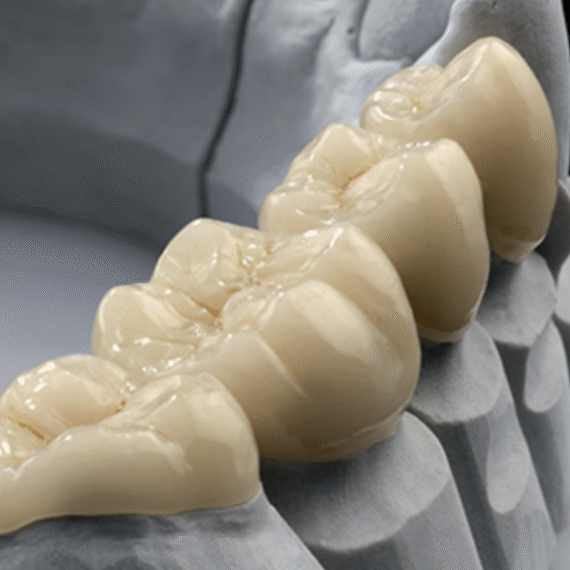
Zirconia’s strength (900–1,200 MPa) comes from transformation toughening — crystals expand when stressed, stopping cracks from spreading. But as translucency increases (with 5Y or 6Y yttria content), crystal size grows, and flexural strength drops. VCAD balances these trade-offs by matching materials to indication:
- Posterior bridges → 3Y-TZP zirconia (high strength).
- Anterior veneers → 5Y or 6Y zirconia (high translucency).
2. Optical Properties and Light Dynamics
Ceramics interact with light differently depending on their crystalline density and glass content. Translucent ceramics refract light in a way that mimics enamel scattering. VCAD technicians calibrate layer thickness to control brightness gradients — ensuring vitality without excessive translucency that may gray out the tone.
3. Thermal Expansion and Bonding
Each material expands differently under temperature changes. VCAD engineers verify the Coefficient of Thermal Expansion (CTE) compatibility between frameworks and veneering porcelains to prevent delamination.
4. Aging and Hydrothermal Stability
Zirconia can undergo low-temperature degradation when exposed to moisture. Through controlled sintering cycles and surface polishing, VCAD minimizes this transformation, extending long-term stability.
This scientific precision transforms ceramics from artistic guesses into predictable engineering materials.
As one VCAD technician puts it: “We don’t just match shades — we match physics.”
3. Multilayer Zirconia – Engineering Light and Strength
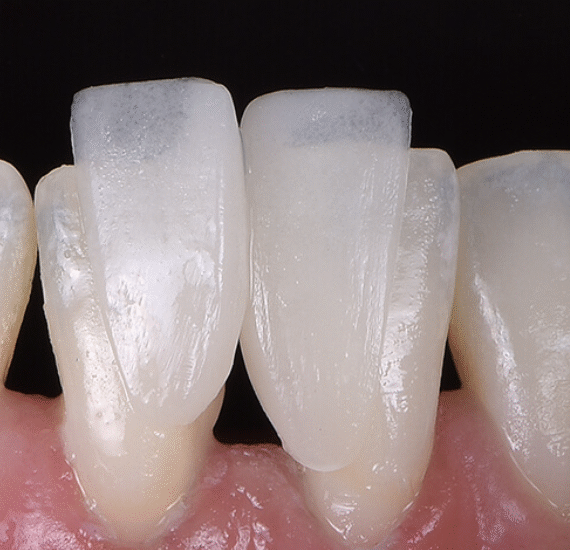
Multilayer zirconia represents one of the greatest achievements in dental material innovation. It combines gradient translucency with color saturation, mimicking natural enamel-to-dentin transition.
At VCAD, multilayer blocks are carefully selected and milled with directional orientation in mind — the top layer reserved for enamel translucency, the middle for chroma, and the base for strength.
1. Optical Gradient Design
By digitally aligning crown orientation with material gradient, designers ensure that incisal edges capture light naturally while cervical areas retain warmth. This avoids the “flat white” appearance typical of early zirconia restorations.
2. Strength Gradient Simulation
Finite element analysis (FEA) within VCAD’s CAD system simulates stress distribution during mastication. The stronger base of the zirconia bears occlusal load, while the translucent layer handles esthetics. This prevents catastrophic failure while maintaining lifelike appearance.
3. Controlled Sintering Profiles
Different layers of zirconia shrink at slightly different rates during sintering. VCAD uses custom sintering schedules, developed through years of calibration, to equalize contraction and prevent internal tension.
4. Surface Texture and Glaze Optimization
Once milled, each restoration undergoes precision polishing. Smooth surfaces reduce plaque retention and increase optical clarity — because a perfectly finished surface reflects light more uniformly, appearing more “alive.”
Through this methodology, VCAD achieves the ideal marriage of physics and perception — restorations that work hard and look effortless.
4. The Rise of Hybrid Ceramics and Composite Materials
The next frontier in dental material science is not pure ceramic — it’s hybridization.
Hybrid ceramics combine ceramic fillers with polymer matrices to mimic the elasticity of dentin while preserving esthetics. Examples include VITA Enamic, Cerasmart, and other nano-resin composites.
VCAD uses hybrid materials strategically for specific indications: long-term temporaries, minimally invasive restorations, and implant provisional frameworks.
Key advantages include:
- Shock Absorption: The polymer network absorbs occlusal stress, reducing chipping.
- Milling Efficiency: Hybrids mill faster and with less tool wear.
- Repairability: They can be easily polished or re-bonded chairside.
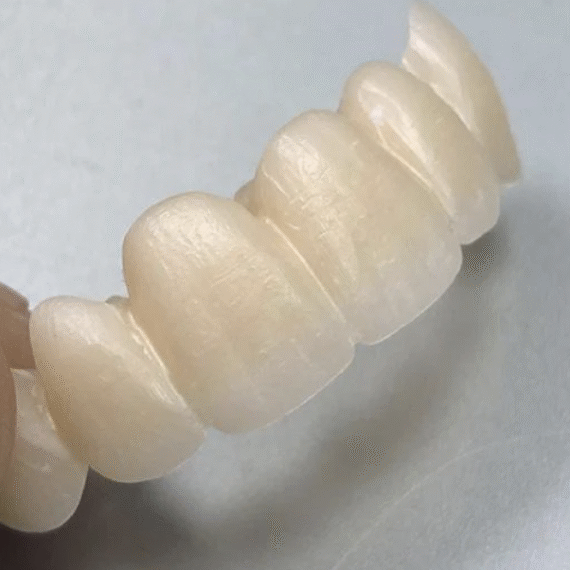
However, hybrid materials require disciplined calibration. Their lower modulus means they deform slightly under pressure, demanding precise cement space settings and bonding protocols.
To manage this, VCAD’s AI system adjusts cement gap automatically based on the chosen hybrid material’s modulus of elasticity.
These adaptive workflows ensure consistency even when working with materials that behave unpredictably in less controlled environments.
The message is clear: the future of dental ceramics isn’t rigidity — it’s responsive intelligence.
5. Data-Driven Material Selection – Precision Through Knowledge
Material choice is no longer a matter of habit or brand loyalty; it’s a decision grounded in data.
VCAD’s Material Intelligence Platform tracks every restoration produced: what material was used, where it was placed, how long it lasted, and what clinical feedback it received.
Over time, this creates a living database that reveals performance patterns:
- Which zirconia brands deliver lowest fracture rates.
- Which translucency levels best match natural enamel in different ethnic skin tones.
- Which sintering profiles yield the most consistent fits.
This data feeds directly into VCAD’s Material Recommendation Engine, guiding technicians and partner clinics toward evidence-based choices.
The system turns experience into algorithmic knowledge. Instead of guessing, VCAD predicts.
And because material science evolves constantly, the lab maintains active collaboration with universities and suppliers to test emerging ceramics — from graphene-reinforced composites to bio-active glass hybrids that promote tissue integration.
Ultimately, VCAD views material innovation not as a product race but as an ethical commitment: to deliver restorations that are safer, stronger, and scientifically justified.
Conclusion
Ceramics are no longer inert materials — they are engineered ecosystems where light, structure, and chemistry interact.
At VCAD Dental Outsourcing Lab, understanding these interactions defines the very concept of precision. From multilayer zirconia to hybrid composites, each material is not just selected but studied, calibrated, and continuously improved through data feedback.
This fusion of material science and digital engineering elevates dentistry from craftsmanship to evidence-based artistry.
Because in the end, the patient never asks what brand of zirconia was used — they simply trust that their smile feels natural, functions perfectly, and endures over time.
That trust is built on invisible science. And at VCAD, science is not behind the smile — it is the smile.