


Building a Career in Digital Dental Design – Skills Every Technician Should Master
The dental lab of today looks nothing like the one from twenty years ago. Hand wax-ups, porcelain furnaces, and articulators are now joined by digital scanners, 3D printers, and AI-driven design platforms.
But while technology has transformed the tools, it hasn’t replaced the artist — it has redefined them. The future dental technician is no longer just a craftsman but a digital designer, fluent in anatomy, software, and science.
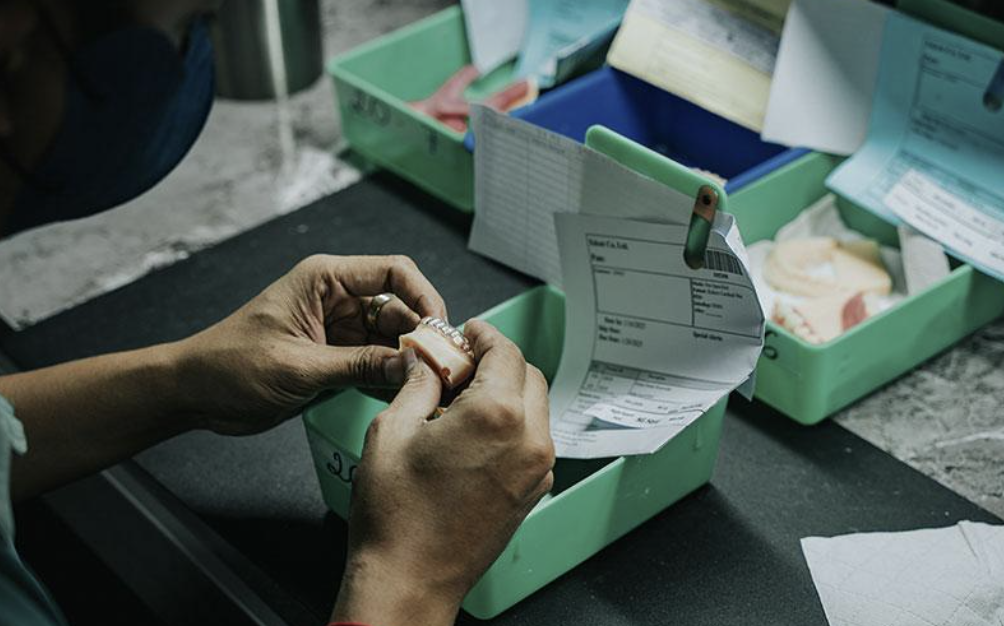
At VCAD Dental Outsourcing Lab, hundreds of technicians work in this new hybrid environment — a space where creativity meets code. Their daily work offers a glimpse of what skills and mindsets the next generation of professionals will need to master to thrive in digital dentistry.
1. From Artisan to Designer – The Mindset Shift
The biggest transformation in a technician’s career isn’t technological — it’s psychological.
Traditional craftsmanship valued manual dexterity: the steady hand that sculpts wax or layers porcelain. In the digital era, precision is produced through clicks, coordinates, and algorithms. Yet artistry still matters; it simply lives in a different medium.
To succeed, technicians must adopt a designer’s mindset — analytical, curious, and adaptive. They must learn to translate clinical problems into digital solutions.
At VCAD, training programs begin with philosophy before software. New recruits learn that their task isn’t “to make crowns,” but “to create harmony between material and motion.” Every curve, cusp, and margin must reflect both aesthetics and biomechanics.
This mindset shift also changes how success is measured. In the analog lab, perfection was judged visually. In the digital lab, it’s quantified — by micron tolerances, fit accuracy, and production efficiency.
The new professional identity combines artistry with engineering discipline. As one senior VCAD designer puts it: “We design beauty that can survive physics.”
2. Core Digital Skills – The Modern Technician’s Toolkit
The modern dental designer’s craft depends on mastering an integrated set of digital tools. By 2026, these five competencies will define employability across global labs.
1. CAD Software Proficiency
Fluency in 3Shape and Exocad is now as essential as porcelain layering once was. Beyond knowing shortcuts, designers must understand the logic of digital anatomy — contact strength, occlusal curvature, and path of insertion.
VCAD’s internal program requires new technicians to complete a 100-case simulation module, covering single crowns, implant abutments, veneers, and full-arch designs.
2. CAM Process Understanding
A great CAD model means little if it’s unmillable. Designers must grasp milling strategies, tool diameter limits, and nesting principles. Knowing how the machine “thinks” prevents costly errors before they happen.
3. Scan and Data Management
Digital designers must know how to evaluate STL quality, remove noise, and align bite data accurately. Poor data handling is the silent killer of precision.
4. Material Science Literacy
Every design decision interacts with material behavior. A technician must know how zirconia sinters, how lithium disilicate flexes, and how PMMA wears.
5. Collaboration and Communication
Design is dialogue. Technicians must communicate clearly with clinicians, interpret feedback, and document changes efficiently. English fluency and digital etiquette are as valuable as technical skill in global outsourcing environments.
The modern toolkit is less about tools and more about translation — turning complex digital data into functional, human smiles.
3. Beyond the Screen – Soft Skills That Drive Hard Results
As automation takes over repetitive tasks, what remains uniquely human becomes more valuable.
VCAD’s most successful designers share three soft-skill strengths:
Analytical Thinking
They question data instead of accepting it. If a scan looks distorted or a prescription seems inconsistent, they investigate — not to challenge authority, but to protect accuracy.
Adaptability
Digital tools evolve rapidly. A technician who resists change becomes obsolete. VCAD’s teams rotate between software modules and attend quarterly workshops to learn new plug-ins and AI functions.
Empathy
Yes, empathy — the ability to sense the patient behind the pixels. Designers who visualize the person wearing the restoration create more natural results.
In an industry obsessed with precision, soft skills ensure precision feels personal.
The balance between machine logic and human empathy defines the VCAD culture — where designers are encouraged to think like engineers but care like artists.
4. Continuous Learning – The Engine of Career Growth
The half-life of technical knowledge is shrinking. What a technician learns today may be outdated in three years. That’s why career longevity now depends on learning agility.
VCAD invests heavily in ongoing education through its internal Digital Mastery Program, which includes:
- Micro-courses on implant workflows, esthetic design, and occlusion dynamics.
- Cross-training with the QC and CAM departments to build interdisciplinary understanding.
- Mentorship sessions with senior designers who share case-based insights.
Outside the lab, professionals should pursue vendor certifications (3Shape Academy, exocad Masterclasses) and stay active in online dental tech communities.
By 2026, employers will value technicians who can prove a record of skill evolution, not just experience years.
In essence, your degree gets you hired; your learning keeps you relevant.
VCAD technicians are encouraged to treat every case as a classroom. The feedback loop — from design verification to clinical result — is a living textbook that teaches precision through consequence.
The lesson is simple: the lab doesn’t make experts; learning does.
5. The Future of the Profession – From Operator to Innovator
Looking ahead, the role of dental technicians will evolve into something broader — part designer, part scientist, part innovator.
Technicians will:
- Collaborate with AI systems that suggest design adjustments.
- Use digital twins to simulate bite dynamics before production.
- Participate in remote co-design sessions with clinicians in real time.
- Contribute to material R&D, testing new translucent ceramics and hybrid composites.
In this future, career growth won’t follow the old path of “junior → senior → supervisor.” Instead, it will branch into specializations — implant design strategist, occlusion analyst, digital aesthetician, or AI systems integrator.
VCAD is already nurturing this future workforce. Its internal talent map identifies potential innovators and mentors them toward leadership roles in R&D, AI integration, and clinical collaboration.
The next generation of dental technicians will not be hidden behind machines. They will stand at the frontier where biology meets technology — shaping smiles with data and imagination alike.
Conclusion
Building a career in digital dental design is no longer about learning software; it’s about adopting a philosophy of precision and curiosity.
The technicians of tomorrow must combine mechanical knowledge with digital fluency, creative vision with scientific reasoning, and personal empathy with global collaboration.
At VCAD Dental Outsourcing Lab, this evolution is already underway. The company’s training ecosystem shows that when technicians grow beyond repetition into reflection, they don’t just make restorations — they make progress.
In the coming years, the most valuable professionals won’t be those who know everything, but those who never stop learning.
Because in digital dentistry, knowledge ages fast — but mastery renews itself with every new smile designed.