


In modern dentistry, technology is no longer the main bottleneck — communication is. A restoration can be designed with sub micron precision, yet fail clinically because the message between dentist and lab was lost in translation.
This invisible gap costs time, trust, and money. A misinterpreted shade note, an unclear margin, or an incomplete prescription can turn hours of technical work into waste. For global digital workflows, where clinicians and technicians may be thousands of miles apart, clarity isn’t optional — it’s the foundation of quality.
At VCAD Dental Outsourcing Lab, communication is treated as a process, not an afterthought. The lab has built a Communication Framework that merges digital tools, standardized language, and human understanding into one system of collaboration. Here’s how it works — and why it redefines global dental partnerships.

1. The Root Problem: Lost in Translation
Every dental case begins as an idea — the clinician’s vision of what the patient needs. But by the time that vision reaches the lab, it often gets diluted through incomplete data, inconsistent terminology, or assumptions about design intent.
A common example: the dentist requests “more translucency on the incisal edge,” but the technician interprets it as “lighter shade at the tip.” The result? Two different aesthetics, one unhappy patient.
These misalignments stem from a deeper issue: the two professions speak different dialects of the same language. Clinicians think in terms of biology, occlusion, and patient emotion; technicians think in design geometry, material behavior, and manufacturability.
VCAD recognizes that bridging this gap requires more than polite emails. It requires a shared structure of meaning — a way for both sides to interpret and respond consistently.
That’s why every case begins with a structured digital prescription (VCAD Rx) that translates clinical intent into standardized design parameters:
- Restoration type & material
- Preparation depth & margin line visibility
- Occlusal scheme preferences
- Esthetic reference photos and shade mapping
The Rx form isn’t just a checklist — it’s a communication translator. It forces clarity before design begins, reducing the probability of subjective misunderstanding.
When information is clear, collaboration becomes predictable — and predictability breeds trust.
2. The Three-Layer Communication Model
VCAD’s communication system operates on three coordinated layers: Data, Design, and Dialogue.
1. Data Layer – The Foundation
This is where structure lives. Every case uploaded to VCAD passes through data verification software that ensures files, Rx forms, and images match the clinician’s prescription. AI-driven tools flag inconsistencies such as missing bites, incomplete scans, or mismatched material codes.
This foundation prevents the “garbage-in, garbage-out” effect that plagues many labs.
2. Design Layer – The Visualization Bridge
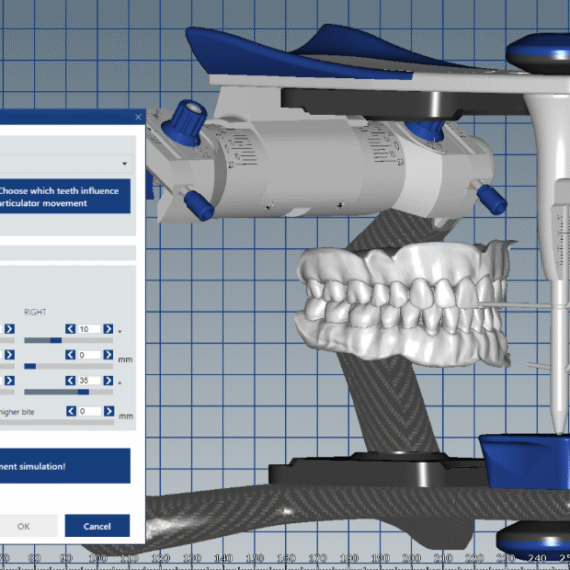
Once data is verified, technicians work within VCAD’s cloud-based 3D environment, which supports live annotations. Clinicians can view the evolving design in real-time, rotate models, and leave comments directly on the geometry.
This visual collaboration eliminates ambiguity — “a bit thinner” becomes “reduce 0.2mm on distal cusp.”
3. Dialogue Layer – The Human Element
Even with perfect data and visualization, empathy matters. Each clinic is assigned a dedicated case coordinator — a bilingual professional trained in both clinical and technical communication. They interpret subtle intentions that machines can’t: tone, urgency, and nuance.
This human layer ensures that messages are not only delivered but understood.
These three layers work like a neural network: the data supplies memory, the design provides structure, and the dialogue adds emotion. Together, they make digital collaboration human again.
3. Turning Asynchronous Workflows into Real-Time Collaboration
Time zones once made global partnerships inefficient. A dentist in California sends feedback at 5 PM, and the lab in Asia responds the next morning — valuable hours lost.
VCAD flips this limitation into an advantage. Its time-zone synchronization protocol ensures that design and feedback cycles flow continuously:
- North American clinics send cases at day’s end.
- VCAD’s technicians, working overnight (Asia time), process and design.
- By the next morning, cases await review — effectively a 24-hour workflow loop.
To enhance this, VCAD built a real-time communication dashboard inside its cloud system. Clinicians can:
- Leave voice or text notes directly within the design case.
- Tag priority levels (“urgent,” “esthetic-sensitive,” “review pending”).
- Receive automatic notifications when revisions are uploaded.
This “design while you sleep” model increases global productivity without additional staff. More importantly, it reduces stress for clinicians who no longer chase updates.
For complex restorations — such as full-arch or implant hybrid cases — the dashboard enables synchronous co-design sessions. Both dentist and technician can manipulate the same 3D model simultaneously, discussing contour or gingival support in real time.
By converting asynchronous workflows into a conversation loop, VCAD transforms the global distance into an operational advantage.
4. Standardizing Aesthetic and Functional Communication
The hardest part of lab communication isn’t shade — it’s perception. “Natural translucency,” “warm tone,” “balanced emergence” — these are artistic terms, not numerical data. And yet, they define success.
VCAD’s solution is standardization through reference systems.
The lab uses calibrated light boxes and photographic protocols aligned with Munsell color principles and digital spectrophotometer readings. Clinicians receive a VCAD Shade Guide Protocol, instructing how to capture consistent lighting and angles using common smartphones.
When the image enters the system, AI-based color calibration adjusts for lighting bias, aligning it with VCAD’s internal reference library of 5,000+ shade samples.
For functional aspects, VCAD employs the Functional Matrix Library, which categorizes morphology patterns based on occlusal schemes and age profiles. Instead of ambiguous phrases like “youthful cusp,” clinicians can select a predefined morphology type (“FM-3, moderate cusp, anterior guidance dominant”).
These standardized systems make communication scientific without losing artistry. They give structure to subjectivity — ensuring that both sides visualize the same outcome.
The result: fewer revisions, faster approvals, and restorations that look exactly as imagined, across cultures and continents.
5. The Cultural Element – Trust Beyond Technology
The final bridge isn’t built from software or systems; it’s built from understanding.
Global collaboration means navigating different languages, expectations, and communication styles. VCAD trains every team member not just in English proficiency but in cultural empathy — understanding how clinicians from different regions express feedback.
For example, a Japanese partner may imply dissatisfaction politely (“perhaps the shade is a little strong”), while an American dentist may give direct, technical critique. Both carry the same intent, but require different listening skills.
This attention to nuance prevents small misunderstandings from becoming large tensions. It’s why VCAD’s coordinators are trained to read tone as carefully as data.
Every message, whether digital or human, goes through the same test: Did we truly understand what was meant?
In the end, technology connects devices; communication connects people.
The VCAD Communication Framework proves that clarity is not the opposite of creativity — it’s the condition that allows creativity to flourish. By aligning clinicians and technicians through data, design, dialogue, and empathy, VCAD turns outsourcing into partnership, and partnership into precision.