


The Changing Landscape of Global Dental Outsourcing – What 2026 Will Look Like
The dental industry is no longer confined by geography. In the past decade, digital transformation and global logistics have turned local laboratories into international collaborators. What was once a physical exchange of models has become a real-time transfer of data, design, and trust.
As 2026 approaches, this transformation is accelerating. The global dental outsourcing market — valued at over USD 3.2 billion in 2024 — is projected to grow at nearly 12% annually, fueled by advances in digital scanning, AI design, and cost-efficient manufacturing networks.
But this growth isn’t just about cheaper production. It’s about a redefinition of partnership, where precision, speed, sustainability, and data transparency become the real competitive currencies.
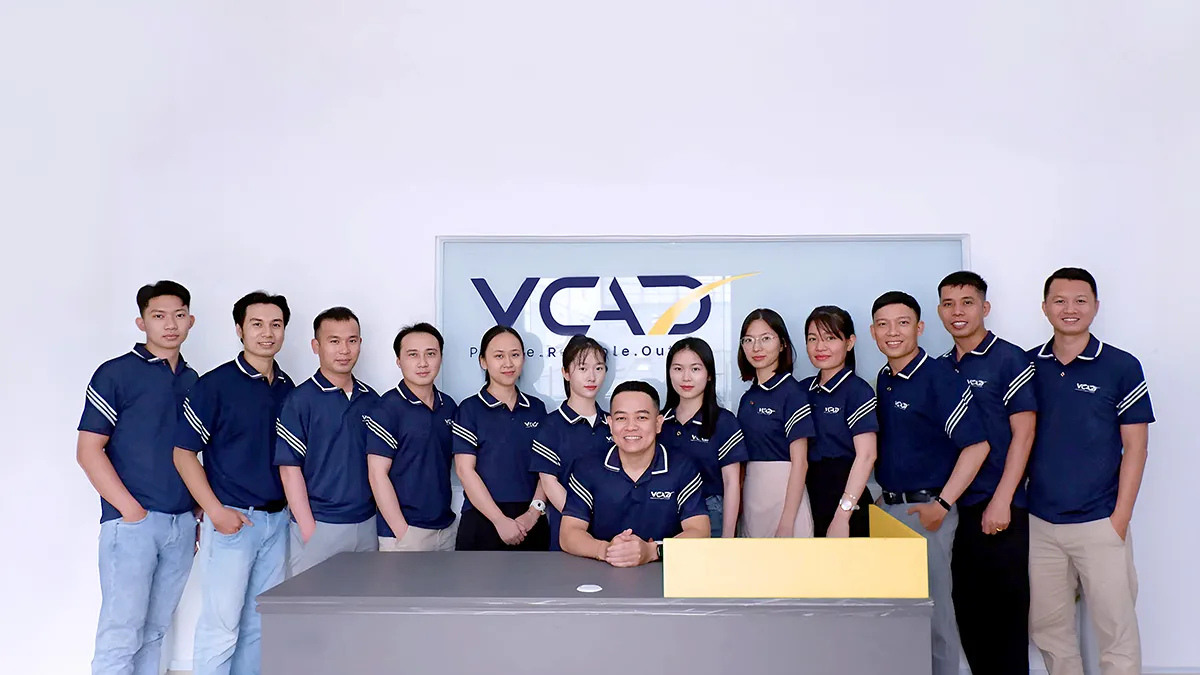
At VCAD Dental Outsourcing Lab, these shifts aren’t predictions; they’re the lab’s daily reality. Serving clinics across North America, Europe, and Asia, VCAD stands at the intersection of efficiency and innovation — where outsourcing is no longer a service, but a system.
Here’s how the landscape is changing — and what the world of digital dental outsourcing will look like by 2026.
1. From Cost Efficiency to Capability Partnerships
Historically, outsourcing was driven by one factor: cost. Clinics and labs in developed markets delegated labor-intensive production to regions with lower expenses. But as technology democratized access to high-end equipment, the outsourcing equation shifted from cheap labor to smart collaboration.
By 2026, capability outsourcing will define the industry. Clinics will seek partners who can:
- Integrate seamlessly with their digital workflows.
- Offer specialized design expertise for complex restorations.
- Deliver consistent quality verified by data, not promises.
VCAD exemplifies this shift. Its One-Contact Platform allows global clinicians to upload cases, review designs in real time, and communicate directly with assigned technicians — all without friction.
In this new paradigm, outsourcing labs are no longer “external vendors.” They become strategic extensions of clinical practice.
Dentists retain creative control while gaining an entire digital infrastructure: CAD teams, AI analytics, and precision manufacturing — all operating under their brand’s clinical philosophy.
The winners of 2026 will be those who outsource intelligence, not just effort.
2. The Rise of 24-Hour Global Workflows
Time zones used to be obstacles; now they are assets.
As digital outsourcing networks mature, asynchronous production has become the new form of efficiency. A clinician in Los Angeles sends scans at 6 PM; a technician in Ho Chi Minh City begins design immediately; by morning, the restoration is ready for review.
This 24-hour production rhythm creates a perpetual motion of productivity — dentistry that never sleeps.
VCAD was among the first to systematize this advantage. By leveraging its Vietnam-based operations, the lab transforms time differences into turnaround benefits. With 8-hour CAD design and 2-day production cycles, clients effectively gain an extra working day per week without expanding their staff.
By 2026, this model will evolve even further:
- Cloud-based manufacturing hubs will distribute production dynamically based on capacity and proximity.
- AI load-balancing systems will assign cases to available designers or machines globally.
- Predictive scheduling will estimate case delivery before design even begins.
The result: zero idle time, zero missed communication, and a new kind of global rhythm — one where distance disappears in the flow of data.
3. Data Transparency and Trust – The New Differentiator
In a crowded outsourcing market, how can clinics know which lab to trust? The answer, increasingly, will be data transparency.
By 2026, global clients will demand real-time visibility into their outsourced production — not just tracking numbers, but performance metrics: remake rates, QC reports, and sustainability audits.
VCAD’s approach offers a glimpse into that future. Its QC Dashboard allows clients to view:
- Material batch certifications.
- Digital tolerance reports (CAD vs CAM deviation).
- AI-analyzed remake causes and correction rates.
Each case carries a traceable QC passport, ensuring that every restoration can be verified, not just visually approved.
Transparency is more than accountability — it’s differentiation. In the next era of outsourcing, trust will be measurable.
Labs that can show data will dominate those that only make claims. And clinics will choose partners who align with their brand values — accuracy, ethics, and environmental responsibility — not merely pricing.
4. Automation, AI, and the Rebirth of Human Expertise
There’s a myth that automation will replace technicians. In truth, automation will refocus them.
By 2026, AI will handle repetitive CAD tasks — margin detection, occlusion balancing, nesting optimization — freeing technicians to do what machines cannot: interpret nuance, understand esthetics, and empathize with patient needs.
VCAD already implements this synergy. AI detects margin lines and predicts contact points, but human designers refine anatomy, adjust translucency, and validate occlusal logic.
The result is a human-in-the-loop system — automation accelerates, but artisans perfect.
Moreover, the role of technicians is expanding into data interpretation. They’re no longer just designers; they are data analysts, reviewing metrics from hundreds of cases to continuously refine standards.
Outsourcing labs that train their teams for this hybrid role — technical artistry combined with analytical reasoning — will define the next generation of professionals.
The global lab of 2026 will look less like a factory and more like a research hub — a place where human creativity and artificial intelligence collaborate to restore smiles with scientific precision.
5. Sustainability and Ethical Globalization
Outsourcing often raises questions about sustainability and ethics: carbon footprint, material sourcing, and fair labor practices. The future will demand that global efficiency also mean global responsibility.
By 2026, clients will expect labs to publish environmental and social responsibility metrics alongside their technical ones.
VCAD is already taking that lead through:
- Eco-friendly packaging using biodegradable pulp containers.
- Recycling of zirconia waste dust and PMMA remnants.
- Carbon offset partnerships supporting reforestation in Southeast Asia.
- Energy-efficient milling operations monitored through smart power grids.
Beyond environment, ethical outsourcing means respecting both people and privacy. VCAD adheres to HIPAA and GDPR standards globally, ensuring patient data remains secure even across borders.
Ethical globalization isn’t just moral; it’s strategic. In an age where consumers scrutinize brands for authenticity, clinics that partner with responsible labs gain reputational advantage.
Sustainability, once peripheral, has become the signature of premium outsourcing.
Conclusion
Global dental outsourcing is no longer about distance; it’s about design — of systems, data, and trust.
As 2026 approaches, the most successful labs will not compete on cost, but on collaboration intelligence: the ability to connect seamlessly, predict outcomes, and uphold transparency from scan to smile.
VCAD Dental exemplifies this evolution. It represents the shift from vendor to partner, from manufacturer to collaborator, from efficiency to empathy.
In this changing landscape, the labs that thrive will be those that see outsourcing not as delegation, but as symphony — a global collaboration where every time zone, technician, and algorithm plays in tune with the same rhythm: precision without borders.
Because the future of dentistry isn’t global by geography; it’s global by design.