


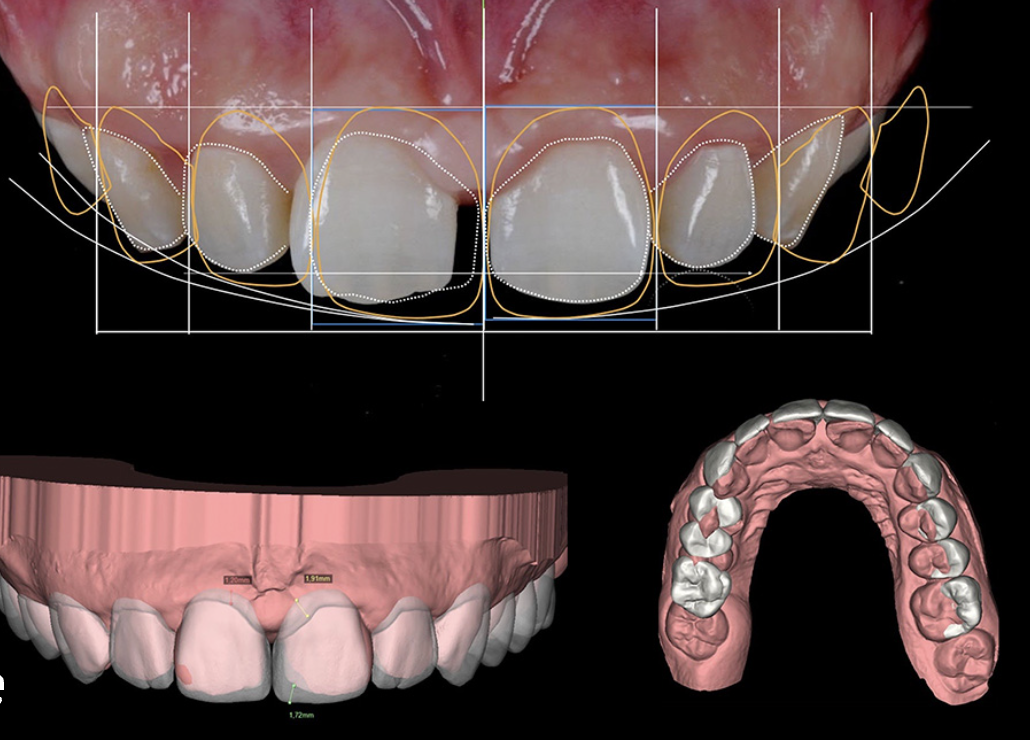
Shade selection has always been one of the most challenging aspects of esthetic dentistry. Even with advanced materials such as multilayer zirconia, lithium disilicate, and nano-ceramics, a restoration can look unnatural if its shade does not harmonize with the surrounding dentition. For decades, clinicians struggled with inconsistent lighting, subjective interpretation, and limited shade guides. Today, digital dentistry demands far more accuracy — especially as patients increasingly compare esthetic results with the expectation of “invisible dentistry.” VCAD Dental Outsourcing Lab sees shade management not as a single step but as a structured system that spans data capture, calibration, interpretation, and final quality control. This system-driven approach ensures that shade selection is repeatable, scientific, and consistent across cases, clinicians, and even different geographic regions. In this article, we explore how modern shade management works, why digital systems outperform traditional methods, and how VCAD’s standardized shade protocols dramatically improve esthetic predictability.
1. Why Traditional Shade Selection Often Fails
Traditional shade selection primarily relied on handheld guides such as Vita Classical or Vita 3D Master. While widely used, these tools introduce multiple limitations. First, shade interpretation is subjective. Two clinicians may choose slightly different shades under identical conditions because human perception varies with fatigue, background contrast, and even emotional state. Second, lighting dramatically affects shade accuracy — warm lighting introduces yellow bias, while cool lighting makes teeth appear brighter or grayer. Even sunlight varies by time of day, season, and geographic location, creating unpredictable results. Third, traditional shade photos often lack metadata such as color temperature, exposure settings, or reference markers. Without standardized photography, technicians cannot accurately interpret subtle nuances in translucency, value, or chroma. This leads to repeated adjustments, remakes, or chairside staining attempts. Fourth, dental restorations are multilayered structures, meaning a shade is not merely a surface color but a combination of translucency gradients, internal scattering, and enamel thickness. A flat shade choice cannot capture these subtleties. For these reasons, traditional shade taking frequently fails, especially in anterior esthetic zones.
2. The Digital Evolution of Shade Management
Modern dentistry embraces a new paradigm: shade selection as a digital, measurable, repeatable process. This transformation is driven by the integration of digital cameras, AI-based shade analysis tools, and standardized protocols. The emergence of calibrated photography systems allows clinicians to capture shade references with consistent lighting and color accuracy. Shade-matching software then compares these photos against libraries of known shades, helping to eliminate human subjectivity. Digital systems also allow technicians to analyze hue, value, and chroma separately instead of relying on a single general shade. Furthermore, digital shade mapping provides regional shade variation — for example, cervical warmth, middle chroma, and incisal translucency — something impossible with traditional guides. The result is a more complete, three-dimensional understanding of the patient’s actual tooth structure. VCAD embraces this evolution by implementing a full Shade Management System built on scientific principles rather than guesswork.
3. The VCAD Shade Management System: A Complete Workflow
VCAD’s system includes five integrated layers, each designed to remove ambiguity and ensure high-fidelity esthetic outcomes.
3.1. Standardized Capture Protocol
Every clinician partnering with VCAD receives a comprehensive photography protocol covering angles, lighting, distance, and camera settings. The protocol includes instructions for: using neutral gray reference cards; capturing shade under 5500–6500K lighting; maintaining consistent camera distance; capturing multiple zones (cervical, middle, incisal); and avoiding color contamination from lipstick, reflective surfaces, or colored gloves. This ensures every shade image enters the system with predictable accuracy.
3.2. AI-Enhanced Shade Mapping
Once the clinician uploads shade photos, VCAD uses AI-driven analysis tools that compare the image against its internal library of more than 5,000 shade samples. The system evaluates color temperature, translucency, and value, then generates a heatmap of shade variation across the tooth. This provides data-driven insight into: incisal translucency level, enamel-thickness-related brightness, cervical chroma intensity, and incisal edge bluish opalescence. The output is far more informative than simply choosing “A2.”
3.3. Visual Interpretation by Specialized Technicians
AI provides precise measurements, but final interpretation requires human expertise. VCAD’s esthetic technicians review the AI map and assess how the restoration’s material properties will interact with the shade. Zirconia requires different stain strategies than lithium disilicate, and incisal edge effects must be hand-adjusted. This hybrid model ensures accuracy while preserving artistic nuance.
3.4. Material-Specific Shade Adjustment Protocols
Different materials alter color through thickness, translucency, and firing cycles. VCAD uses calibrated protocols that specify enamel thickness, cutback techniques, multi-layering patterns, and staining guides for each material type. For example: 5Y zirconia requires protective adjustments in cervical warm zones; lithium disilicate responds strongly to internal characterization before pressing; multilayer zirconia demands orientation alignment with block gradient. These material-specific protocols ensure that the final restoration matches the intended shade even after sintering or crystallization.
3.5. Final Shade Quality Control
Before shipping, VCAD performs photographic comparison between the finished restoration and the original reference. QC technicians adjust surface stains, incisal translucency gradients, and glaze brightness to ensure natural integration. These QC images are also archived for future reference — contributing to VCAD’s long-term digital record system.
4. How Shade Management Systems Improve Esthetic Predictability
A structured shade system reduces the most common esthetic problems clinicians face. First, it minimizes the mismatch between restoration and natural dentition. Accurate shade mapping ensures cervical warmth looks natural and incisal translucency appears authentic rather than grayish. Second, it eliminates subjective variation between clinicians and technicians. When systems, not personal judgment, control shade, outcomes become replicable. Third, it reduces remakes — a major source of financial loss for both clinics and labs. Reproducing a crown purely because the shade is off by half a shade is wasteful and avoidable. Fourth, it improves patient satisfaction. Patients want restorations that blend seamlessly with their natural teeth, especially in the anterior zone. A structured shade system dramatically increases the chance of a perfect match. Fifth, it strengthens clinician confidence. When clinicians know their lab uses scientific shade protocols instead of visual estimation, they can confidently present esthetic treatments to patients.
5. Integrating Shade Systems Into Clinic Workflows
The success of shade management depends not only on the lab but on the clinic’s ability to follow protocols. VCAD supports this integration by providing: shade-taking training modules; templates for light calibration; smartphone camera setting guides; checklists for eliminating environmental color contamination; and sample cases showing good vs. bad shade capture. Clinics with multiple dentists or DSOs especially benefit from this standardization because it ensures every clinician captures shade the same way.
VCAD also helps clinics transition from subjective shade selection to data-based decision-making through consistent evaluation of shade images uploaded over time. If certain clinicians consistently submit photos with warm lighting bias, VCAD provides corrective feedback. If certain branches produce better outcomes, their best practices are shared across the network. This turns shade management into a continuous-improvement loop rather than a one-time instruction sheet.
Shade accuracy is one of the most important components of esthetic dentistry, yet historically it has been one of the least controlled. Digital dentistry elevates shade selection from an artistic guess to a scientifically managed system. VCAD’s Shade Management System combines standardized photography, AI-driven analysis, expert technician review, material-specific protocols, and rigorous QC to deliver restorations that match the patient’s natural dentition with remarkable precision. With this structured approach, shade selection becomes predictable, repeatable, and scalable — even for multi-clinic organizations operating across large geographic regions. For clinicians, the result is fewer remakes, faster seat times, happier patients, and confidence in every esthetic case. For patients, the result is a smile that looks natural, harmonious, and tailored to them — not merely the closest shade tab available.