


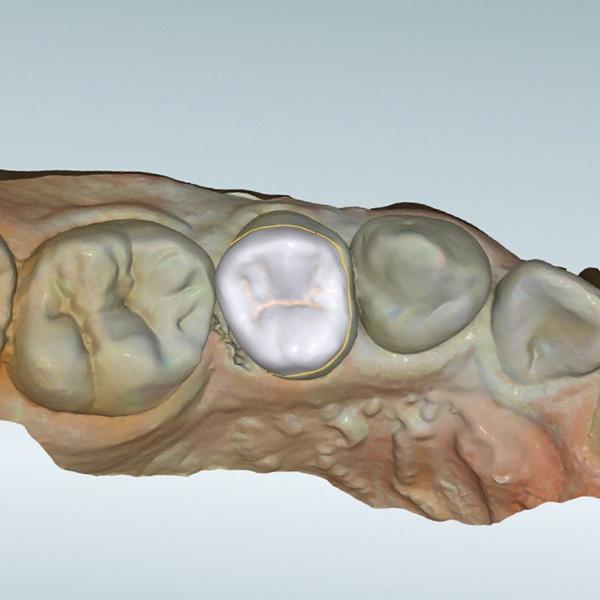
In digital dental workflows, most discussions around accuracy and efficiency focus on CAD design or manufacturing precision. However, from a laboratory perspective, the most decisive stage occurs earlier—at case intake. Before any design work begins, the quality, completeness, and consistency of submitted data determine whether the workflow will proceed smoothly or encounter delays, rework, and variability.
Dental case intake quality control is not an administrative step. It is a technical validation process that defines whether a case is ready for design. When intake is structured and disciplined, downstream processes become predictable. When intake is inconsistent, even highly skilled design and production teams are constrained by incomplete or inaccurate input.
This article examines why intake QC is critical, what it involves in practice, and how it directly impacts workflow stability.
Intake as the True Starting Point of the Digital Workflow
In a digital environment, design does not begin when a file is opened in CAD software. It begins when the case is received and evaluated.
At intake, multiple variables converge:
- Scan data quality (preparation, antagonist, bite)
- File compatibility and integrity
- Prescription clarity
- Restoration parameters and material selection
If any of these variables are incomplete or inconsistent, the design process cannot proceed reliably.
A structured dental case intake quality control process ensures that all required inputs are validated before design begins, preventing the need for interpretation or assumption later in the workflow.
What Intake Quality Control Actually Verifies
Effective intake QC is not a superficial check. It is a systematic evaluation of whether the case contains all necessary information for accurate design and manufacturing.
1. Completeness of Scan Data
For crown and bridge cases, this typically includes:
- Preparation scan
- Antagonist scan
- Bite registration
Missing any of these elements compromises the ability to establish occlusion, margin placement, or spatial relationships.
2. File Format and Compatibility
Digital workflows involve multiple file types, including:
- STL and PLY for geometry
- XML or DCM for additional data
- Other formats depending on scanner systems
A structured intake process ensures that all files are readable and compatible with the design environment.
3. Prescription and Parameter Clarity
Design cannot proceed without defined parameters such as:
- Restoration type
- Material selection
- Thickness requirements
- Special instructions
Incomplete prescriptions force designers to make assumptions, increasing variability in outcomes.
Why Cases Should Not Proceed Without Complete Intake Data
In high-volume environments, there may be pressure to begin design immediately upon receiving a case. However, proceeding without full validation introduces compounding inefficiencies.
Immediate vs. Delayed Processing
When intake QC is enforced:
- Cases with complete information proceed immediately
- Cases with missing data are paused until clarification is provided
If information cannot be provided promptly, cases are typically deferred to the next processing cycle.
Impact on Workflow Efficiency
While this approach may delay individual cases, it prevents:
- Interrupted design workflows
- Mid-process communication delays
- Redesign and remakes
From a system perspective, enforcing intake QC reduces total turnaround time across all cases.
The Cost of Skipping Intake Quality Control
When dental case intake quality control is not applied consistently, errors propagate through the workflow.
Design-Level Consequences
- Incorrect margin interpretation
- Unstable occlusion due to incomplete bite data
- Inconsistent anatomical design
Production-Level Consequences
- Poor fit requiring adjustment
- Material waste due to remakes
- Delays in delivery schedules
Operational Consequences
- Increased communication between lab and clinic
- Unpredictable turnaround times
- Reduced throughput capacity
These issues are often more costly to resolve than the time saved by skipping intake QC.
Intake QC as a Bottleneck Prevention Strategy
From a workflow perspective, intake QC functions as a bottleneck control mechanism.
Identifying Constraints Early
By validating cases before design:
- Errors are identified at the earliest possible stage
- Design teams are not interrupted mid-process
- Production schedules remain stable
Maintaining Continuous Workflow
When only validated cases enter the design queue:
- Designers can work without interruption
- Case flow becomes more predictable
- Resource allocation is more efficient
This transforms the workflow from reactive to controlled.
Interaction Between Intake QC and Turnaround Time
Turnaround time is often misunderstood as a measure of speed. In practice, it is a measure of consistency.
Structured Turnaround Logic
In disciplined workflows:
- Design timelines begin only after intake validation
- Cases with complete information follow defined turnaround windows
- Complex cases are allocated appropriate time based on requirements
For example, design timelines may vary depending on case size and complexity, but only after the case is confirmed to be complete.
Avoiding Hidden Delays
Without intake QC, delays occur later in the process:
- Waiting for missing information during design
- Reworking incomplete designs
- Reproducing failed cases
These delays are less visible but more disruptive.
Case Communication as Part of Intake Quality Control
Intake QC is closely tied to communication between clinics and laboratories.
Structured Communication Requirements
Effective intake processes define:
- Required scan sets
- Mandatory prescription fields
- Acceptable file formats
- Response expectations for missing data
This reduces ambiguity and ensures that both parties operate within the same framework.
Feedback Loops
When issues are identified:
- Clear feedback is provided to the clinic
- Specific deficiencies are documented
- Resubmission requirements are defined
Over time, this improves submission quality and reduces intake errors.
Managing Variability in Case Submissions
Not all cases are submitted with the same level of completeness or quality. Variability is inevitable due to differences in:
- Scanner systems
- Operator technique
- Clinical conditions
Standardization Through Intake QC
A structured dental case intake quality control process mitigates this variability by:
- Applying consistent validation criteria
- Rejecting or pausing incomplete cases
- Ensuring that only standardized inputs enter the workflow
This creates a stable foundation for design and production.
Prioritization and Case Segmentation
In high-volume environments, not all cases require the same level of urgency.
Role of Intake QC in Prioritization
During intake, cases can be categorized based on:
- Urgency
- Complexity
- Completeness of data
This allows laboratories to:
- Prioritize critical cases
- Allocate resources efficiently
- Maintain balance between speed and accuracy
Without intake QC, prioritization becomes reactive rather than planned.
Integration with Digital Case Management Systems
Modern workflows often incorporate digital tools for case tracking and management.
Benefits of Structured Case Management
- Centralized tracking of case status
- Visibility into intake validation results
- Coordination between design and production stages
Some systems provide shared dashboards or tracking links, enabling both laboratory and clinic to monitor case progress.
Impact on Workflow Transparency
This integration improves:
- Communication efficiency
- Accountability
- Predictability of delivery timelines
Two Approaches to Intake Handling
Different laboratories approach intake in different ways.
Approach 1: Immediate Processing
- Cases are accepted and sent directly to design
- Minimal validation at intake
- Issues addressed during or after design
Approach 2: Controlled Intake QC
- Cases are validated before entering the design queue
- Incomplete cases are paused
- Only standardized inputs proceed
The second approach leads to greater overall efficiency, despite appearing slower at the initial stage.
Limitations and Practical Considerations
While intake QC improves workflow stability, it requires:
- Clearly defined submission guidelines
- Consistent enforcement of validation criteria
- Efficient communication channels
Without these elements, intake QC may become a bottleneck rather than a control mechanism.
However, when implemented correctly, it functions as a filter that stabilizes the entire workflow.
Conclusion: Intake QC as the Foundation of Predictable Workflows
In digital dental workflows, dental case intake quality control is the foundation upon which all subsequent stages depend.
By ensuring that only complete, consistent, and compatible data enters the design process, intake QC reduces variability, prevents downstream errors, and supports predictable turnaround times.
For laboratories and clinics aiming to optimize efficiency and reduce rework, the focus should not begin at design or production, but at intake—where workflow stability is first established.