

Blog

In digital dentistry, one of the most expensive and disruptive problems is the remake. A restoration remake affects every part of the workflow: it wastes lab resources, consumes clinician chairside time, delays treatment plans, and frustrates patients. Even high-performing dental labs struggle with remakes because the underlying causes are complex — incomplete data, unclear margins, inaccurate shade photos, last-minute changes, communication delays, or lack of structured workflows.

Digital Case Coordination is the modern answer to this challenge. Instead of treating each case as an isolated transaction, Digital Case Coordination turns dental workflows into a closed-loop ecosystem where data clarity, communication structure, and proactive verification significantly reduce errors before they occur. At VCAD Dental Outsourcing Lab, Digital Case Coordination is not a single role — it is a coordinated network of automation, human oversight, communication systems, and data-driven feedback cycles that together minimize remake rates and improve clinical outcomes.

This article analyzes how VCAD’s Digital Case Coordination system works and why it is central to delivering predictable, low-remake digital dentistry for global partners.

1. Why Remakes Happen — Understanding the Root Causes


Most remake problems are predictable — and preventable. The key is understanding where errors originate before blaming design or manufacturing.

1.1. Incomplete or distorted scan data


Missing interproximal surfaces, distorted occlusion, or unclear margins lead to design inaccuracies that cannot be corrected later.

1.2. Ambiguous clinical instructions


Instructions like “slightly adjust contact” or “more translucency” look simple but result in misinterpretation, especially across time zones.

1.3. Shade inconsistencies


Improper lighting, absence of calibration cards, or incorrect shade photography cause color mismatches that require remaking the entire restoration.

1.4. Clinician preference variations


Two clinicians may want different contact tightness or morphology styles — but without detailed preference profiles, labs rely on assumption.

1.5. Communication delays


If a lab waits hours or days for clarification, production timelines exceed tolerance, and rushed cases carry higher error risks.

1.6. Material selection conflicts


Using the wrong material for thin margins, underprepared surfaces, or high occlusal load situations often leads to fractures or poor esthetics.

When these problems stack together, remakes become inevitable.
Digital Case Coordination solves this by creating a layer of structured control between clinician and lab.

2. What Digital Case Coordination Actually Means


Digital Case Coordination at VCAD is built around the principle that precision begins with information, not manufacturing. Instead of relying solely on technicians, VCAD assigns each clinic a dedicated Case Coordinator trained in:

  • clinical terminology
    • CAD/CAM workflows
    • occlusal logic
    • material selection
    • communication strategy
    • cross-department scheduling


The coordinator becomes the “single brain” that oversees all case movement, ensuring no detail falls through the cracks.

But VCAD takes this further: Case Coordinators work inside a digital ecosystem supported by AI, automation, and structured protocols.

Together, they create a coordination system that is:
• fast
• consistent
• transparent
• measured
• predictive

This transforms remake reduction from hope into a repeatable system.

3. The VCAD Digital Case Coordination Workflow


Below is how VCAD’s system works step-by-step, ensuring problems are caught early rather than after production.

3.1. Automated Data Verification (Intake Level)


The moment a clinician uploads a case, VCAD’s system runs automated checks:

  • margin detectability
    • occlusion alignment
    • bite integrity
    • scan completeness
    • file corruption
    • prep reduction analysis
    • material compatibility


Errors are flagged instantly, and the coordinator reviews them manually for context.

3.2. Coordinator-Level Clinical Review


Human context is essential. The coordinator verifies:

  • prep design vs chosen material
    • shade consistency across images
    • restorative category accuracy
    • special instructions alignment
    • patient esthetic expectations


If any information is missing, the coordinator requests clarification immediately — often before the clinician has even left the room.

3.3. Preference Matching


VCAD stores preference profiles for each clinician:

  • contact tightness
    • occlusal scheme
    • morphology style
    • emergence profile
    • translucency and incisal halo effects


These preferences are automatically loaded into the CAD design so technicians don’t rely on memory or guesswork.

3.4. Live Communication Loop


During design, the coordinator stays connected with both the technician and clinician. This eliminates the classic “silent gap” where assumptions lead to errors.

3.5. Pre-QC Structural Review


Before milling, the coordinator verifies:

  • crown thickness
    • connector design
    • occlusal contacts under dynamic motion
    • esthetic parameters
    • scanned arch alignment


This prevents heavy grinding or non-seating restorations.

3.6. Post-QC Photographic Validation


After milling and finishing, high-resolution QC images are uploaded into the case record. The coordinator ensures everything matches the prescription before packing.

This multi-layer coordination makes errors extremely unlikely.

4. AI + Human Coordination: A Hybrid Model That Works


While humans excel at understanding nuance, AI excels at detecting patterns and highlighting risks. VCAD merges both.

4.1. AI Flags, Humans Interpret


AI flags:
• thin margins
• over-tapered preps
• occlusal collisions
• missing scan segments
• shade inconsistencies

Humans interpret clinical intent and decide whether revision is needed.

4.2. AI Predicts Remake Probability


VCAD’s models analyze thousands of past cases and predict remake risks based on:
• tooth type
• prep geometry
• material
• clinician patterns
• shade complexity

High-risk cases receive priority review.

4.3. AI Learns Clinician Patterns Over Time


The system gradually understands each clinician’s preferences better than they remember them themselves — producing consistent results across years.

Digital Case Coordination is not a static workflow; it is an intelligent feedback system.

5. How Digital Case Coordination Reduces Remake Rates


VCAD’s approach reduces remakes by attacking the problem at every stage.

5.1. Problems are prevented, not corrected


Most remakes occur because errors slip through early stages. By applying strict intake and pre-design validation, VCAD removes the root cause.

5.2. Communication becomes precise


Instead of vague instructions, all communication is structured:
• annotated 3D viewers
• standardized shade forms
• digital Rx templates
• visual feedback loops

5.3. Clinician expectations are stored and respected


Technicians no longer create designs based on assumption. Everything follows documented preferences.

5.4. Reduced chairside adjustment = reduced remake requests


When the crown fits with minimal adjustment, both clinicians and patients are happy.

5.5. Data-driven improvement


Every remake case is analyzed and added into the VCAD intelligence system, preventing the same errors in future cases.

This is why VCAD maintains one of the lowest remake rates among global outsourcing labs.

Remake reduction is not the result of luck, talent, or better milling machines — it is the outcome of coordinated systems that protect information accuracy from the moment a case enters the workflow. VCAD’s Digital Case Coordination combines automation, human expertise, data intelligence, and structured communication to eliminate errors before they reach production. For clinicians, this means restorations that seat easily, esthetics that match predictably, and treatment schedules that stay on track. For DSOs and multi-location clinics, it means consistency across branches and a dramatically reduced operational burden. For patients, it means confidence — the restoration they receive is the restoration intended. With Digital Case Coordination, VCAD transforms precision into a guaranteed outcome rather than a hopeful expectation.
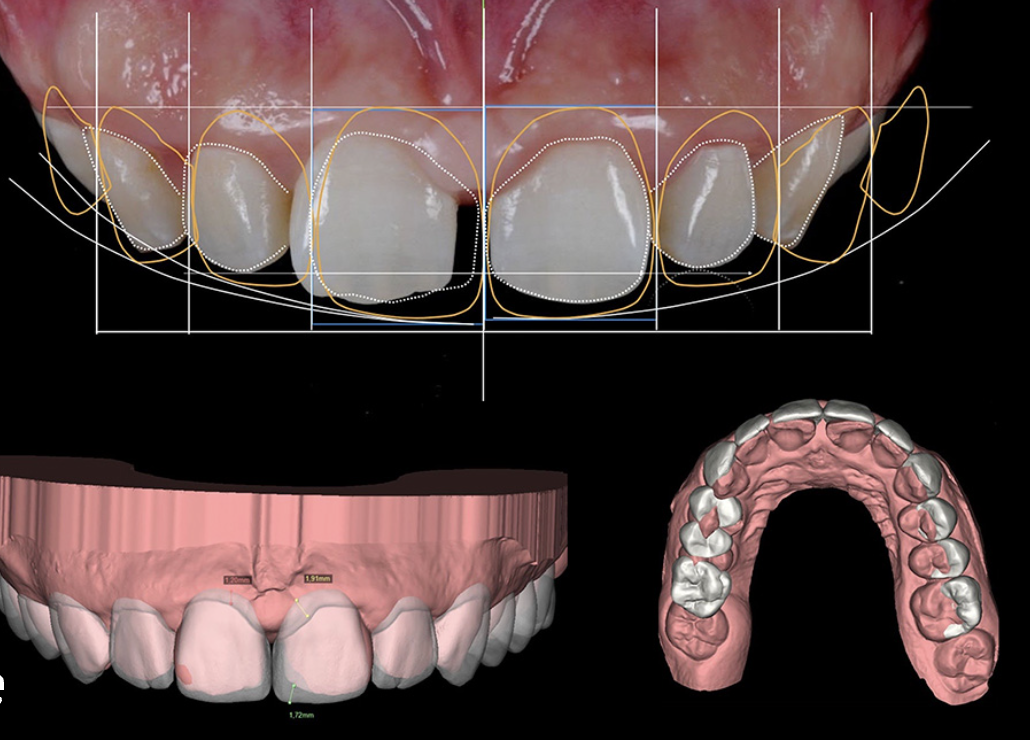
Shade selection has always been one of the most challenging aspects of esthetic dentistry. Even with advanced materials such as multilayer zirconia, lithium disilicate, and nano-ceramics, a restoration can look unnatural if its shade does not harmonize with the surrounding dentition. For decades, clinicians struggled with inconsistent lighting, subjective interpretation, and limited shade guides. Today, digital dentistry demands far more accuracy — especially as patients increasingly compare esthetic results with the expectation of “invisible dentistry.” VCAD Dental Outsourcing Lab sees shade management not as a single step but as a structured system that spans data capture, calibration, interpretation, and final quality control. This system-driven approach ensures that shade selection is repeatable, scientific, and consistent across cases, clinicians, and even different geographic regions. In this article, we explore how modern shade management works, why digital systems outperform traditional methods, and how VCAD’s standardized shade protocols dramatically improve esthetic predictability.

1. Why Traditional Shade Selection Often Fails


Traditional shade selection primarily relied on handheld guides such as Vita Classical or Vita 3D Master. While widely used, these tools introduce multiple limitations. First, shade interpretation is subjective. Two clinicians may choose slightly different shades under identical conditions because human perception varies with fatigue, background contrast, and even emotional state. Second, lighting dramatically affects shade accuracy — warm lighting introduces yellow bias, while cool lighting makes teeth appear brighter or grayer. Even sunlight varies by time of day, season, and geographic location, creating unpredictable results. Third, traditional shade photos often lack metadata such as color temperature, exposure settings, or reference markers. Without standardized photography, technicians cannot accurately interpret subtle nuances in translucency, value, or chroma. This leads to repeated adjustments, remakes, or chairside staining attempts. Fourth, dental restorations are multilayered structures, meaning a shade is not merely a surface color but a combination of translucency gradients, internal scattering, and enamel thickness. A flat shade choice cannot capture these subtleties. For these reasons, traditional shade taking frequently fails, especially in anterior esthetic zones.

2. The Digital Evolution of Shade Management


Modern dentistry embraces a new paradigm: shade selection as a digital, measurable, repeatable process. This transformation is driven by the integration of digital cameras, AI-based shade analysis tools, and standardized protocols. The emergence of calibrated photography systems allows clinicians to capture shade references with consistent lighting and color accuracy. Shade-matching software then compares these photos against libraries of known shades, helping to eliminate human subjectivity. Digital systems also allow technicians to analyze hue, value, and chroma separately instead of relying on a single general shade. Furthermore, digital shade mapping provides regional shade variation — for example, cervical warmth, middle chroma, and incisal translucency — something impossible with traditional guides. The result is a more complete, three-dimensional understanding of the patient’s actual tooth structure. VCAD embraces this evolution by implementing a full Shade Management System built on scientific principles rather than guesswork.

3. The VCAD Shade Management System: A Complete Workflow


VCAD's system includes five integrated layers, each designed to remove ambiguity and ensure high-fidelity esthetic outcomes.

3.1. Standardized Capture Protocol


Every clinician partnering with VCAD receives a comprehensive photography protocol covering angles, lighting, distance, and camera settings. The protocol includes instructions for: using neutral gray reference cards; capturing shade under 5500–6500K lighting; maintaining consistent camera distance; capturing multiple zones (cervical, middle, incisal); and avoiding color contamination from lipstick, reflective surfaces, or colored gloves. This ensures every shade image enters the system with predictable accuracy.

3.2. AI-Enhanced Shade Mapping


Once the clinician uploads shade photos, VCAD uses AI-driven analysis tools that compare the image against its internal library of more than 5,000 shade samples. The system evaluates color temperature, translucency, and value, then generates a heatmap of shade variation across the tooth. This provides data-driven insight into: incisal translucency level, enamel-thickness-related brightness, cervical chroma intensity, and incisal edge bluish opalescence. The output is far more informative than simply choosing "A2."

3.3. Visual Interpretation by Specialized Technicians


AI provides precise measurements, but final interpretation requires human expertise. VCAD’s esthetic technicians review the AI map and assess how the restoration’s material properties will interact with the shade. Zirconia requires different stain strategies than lithium disilicate, and incisal edge effects must be hand-adjusted. This hybrid model ensures accuracy while preserving artistic nuance.

3.4. Material-Specific Shade Adjustment Protocols


Different materials alter color through thickness, translucency, and firing cycles. VCAD uses calibrated protocols that specify enamel thickness, cutback techniques, multi-layering patterns, and staining guides for each material type. For example: 5Y zirconia requires protective adjustments in cervical warm zones; lithium disilicate responds strongly to internal characterization before pressing; multilayer zirconia demands orientation alignment with block gradient. These material-specific protocols ensure that the final restoration matches the intended shade even after sintering or crystallization.

3.5. Final Shade Quality Control


Before shipping, VCAD performs photographic comparison between the finished restoration and the original reference. QC technicians adjust surface stains, incisal translucency gradients, and glaze brightness to ensure natural integration. These QC images are also archived for future reference — contributing to VCAD’s long-term digital record system.

4. How Shade Management Systems Improve Esthetic Predictability


A structured shade system reduces the most common esthetic problems clinicians face. First, it minimizes the mismatch between restoration and natural dentition. Accurate shade mapping ensures cervical warmth looks natural and incisal translucency appears authentic rather than grayish. Second, it eliminates subjective variation between clinicians and technicians. When systems, not personal judgment, control shade, outcomes become replicable. Third, it reduces remakes — a major source of financial loss for both clinics and labs. Reproducing a crown purely because the shade is off by half a shade is wasteful and avoidable. Fourth, it improves patient satisfaction. Patients want restorations that blend seamlessly with their natural teeth, especially in the anterior zone. A structured shade system dramatically increases the chance of a perfect match. Fifth, it strengthens clinician confidence. When clinicians know their lab uses scientific shade protocols instead of visual estimation, they can confidently present esthetic treatments to patients.

5. Integrating Shade Systems Into Clinic Workflows


The success of shade management depends not only on the lab but on the clinic’s ability to follow protocols. VCAD supports this integration by providing: shade-taking training modules; templates for light calibration; smartphone camera setting guides; checklists for eliminating environmental color contamination; and sample cases showing good vs. bad shade capture. Clinics with multiple dentists or DSOs especially benefit from this standardization because it ensures every clinician captures shade the same way.

VCAD also helps clinics transition from subjective shade selection to data-based decision-making through consistent evaluation of shade images uploaded over time. If certain clinicians consistently submit photos with warm lighting bias, VCAD provides corrective feedback. If certain branches produce better outcomes, their best practices are shared across the network. This turns shade management into a continuous-improvement loop rather than a one-time instruction sheet.

Shade accuracy is one of the most important components of esthetic dentistry, yet historically it has been one of the least controlled. Digital dentistry elevates shade selection from an artistic guess to a scientifically managed system. VCAD’s Shade Management System combines standardized photography, AI-driven analysis, expert technician review, material-specific protocols, and rigorous QC to deliver restorations that match the patient’s natural dentition with remarkable precision. With this structured approach, shade selection becomes predictable, repeatable, and scalable — even for multi-clinic organizations operating across large geographic regions. For clinicians, the result is fewer remakes, faster seat times, happier patients, and confidence in every esthetic case. For patients, the result is a smile that looks natural, harmonious, and tailored to them — not merely the closest shade tab available.
As dentistry continues its rapid digital transformation, the growth of multi-location clinics and Dental Service Organizations (DSOs) has reshaped the way clinicians and laboratories work together. These expanded organizations manage thousands of patients, dozens of practitioners, and a large volume of restorative cases each month. Their biggest challenge is no longer just clinical quality — it is consistency, scalability, and operational control across all branches. Central management teams must ensure that every clinic uses the same protocols, every restoration meets the same standard, and every workflow remains predictable despite high-volume operations.

This is where VCAD Dental Outsourcing Lab has emerged as a powerful partner for DSOs. Through its technology ecosystem, standardized digital workflows, and predictable production cycles, VCAD enables multi-location groups to operate as one unified system rather than a cluster of independent clinics. For DSOs, VCAD is not simply an outsourcing lab. It is a digital manufacturing extension, a workflow coordinator, and in many cases, a quality-control backbone that helps maintain consistent standards across large clinical networks.

Below, we break down how VCAD supports DSOs through advanced systems, predictable production, and intelligent scaling.

1. The Core Challenge of DSOs: Consistency Across Locations


A multi-location dental group faces a unique operational challenge: multiple clinicians, multiple teams, and multiple workflows all feeding into one ecosystem. Without strong protocols, results can vary dramatically.

Inconsistent impression methods, subjective communication styles, varied material selection, and different margin preferences all lead to unpredictable restorations. One branch may produce perfect preps and accurate shade photography, while another produces unclear margins and poorly captured occlusion. Such inconsistency is costly for DSOs — remakes increase, patient satisfaction drops, and chairside time spikes unpredictably.

VCAD solves this by applying standardized digital systems across all clinics within the organization. Instead of each branch working differently, VCAD provides centralized tools, structured communication, and unified digital protocols so every case follows the same rules. This eliminates the biggest weakness of multi-location operations: variation.

2. Unified Digital Intake System for All Branches


One of the most powerful benefits VCAD offers DSOs is a single intake pipeline that all branches must follow. This pipeline standardizes:

  • how scans are uploaded
    • how bite data is captured
    • how shade photos are taken
    • how Rx instructions are filled
    • how clinicians communicate with the lab


This structure removes variation between branches. A case from Clinic A enters the system the same way as a case from Clinic B, C, or D. When DSOs onboard with VCAD, every clinician receives a standardized digital prescription template (VCAD DSO Rx) designed specifically for multi-location organizations. This ensures consistent data quality and reduces remake rates significantly.

Even better, VCAD’s intake AI automatically checks every case for errors before technicians begin design. If a scan is incomplete or a margin unclear, the system flags it directly to the branch responsible. This ensures that each clinic receives immediate feedback and improves over time.

3. Centralized Design Preferences for Every Clinician


One of the greatest operational challenges in DSOs is aligning design preferences across many dentists. Each clinician has their own preferences for:

  • occlusal contact strength
    • proximal tightness
    • emergence profile
    • functional design philosophy
    • esthetic contour style
    • crown thickness and morphology
    • translucency gradients
    • cement gap settings


VCAD solves this through Clinician Preference Profiles — dynamic digital profiles stored in the VCAD system. When a new dentist joins the DSO, VCAD establishes their preferences through a series of onboarding discussions and verification cases. Once confirmed, the system automatically applies their personal design settings to every case uploaded under their ID.

This allows DSOs to scale while preserving individualized care. Dentists feel that the lab understands their style, while the organization benefits from structured consistency.

Most importantly, when a clinician moves from one branch to another, their profile moves with them, ensuring immediate consistency regardless of location.

4. High-Volume Production Capacity for Multi-Location Scaling


DSOs handle significantly more cases than independent clinics. A single group may send:

  • 200+ crowns daily
    • 40–60 bridge units
    • multiple full-arch implant cases each week
    • seasonal spikes that double output


Traditional labs struggle to scale without sacrificing quality. VCAD is structured differently — built from the ground up for mass digital production, not traditional analog operations. With a dedicated team of CAD designers, 5-axis milling centers, AI-enhanced QC, and automated workflow systems, VCAD easily handles large volumes while maintaining consistent quality.

VCAD operates under a 24-hour cycle, leveraging time-zone synergy to conduct CAD work while Western clinics sleep and milling while they begin their day. This ensures that even high-volume DSOs receive extremely fast turnaround without overwhelming local teams.

5. Predictable Turnaround Times Essential for DSOs


DSOs need predictability to manage patient schedules across branches. Unpredictable labs cause:

  • appointment delays
    • increased chairside pressure
    • rescheduling conflicts
    • patient dissatisfaction


VCAD’s standardized timeline eliminates uncertainty:

  • 8-hour CAD design
    2-day production
    strict QC cycles
    predictable logistics timelines


Because every branch works with the same production queue, DSOs can plan confidently across all locations. Predictability becomes a competitive advantage.

6. Centralized Communication and Tracking for All Clinics


DSOs often struggle with communication chaos. When each clinic communicates separately with labs, messages get lost, instructions conflict, and tracking becomes impossible.

VCAD solves this with a centralized communication dashboard, where:

  • all case updates are visible to management
    • each branch’s performance metrics can be monitored
    • revision patterns and remake rates are tracked
    • clinicians and coordinators follow a unified communication thread
    • managerial teams gain a bird’s-eye view of case flow across the entire organization


Rather than dozens of separate conversations, VCAD gives DSOs a single, unified communication channel.

7. Performance Analytics for Multi-Location Optimization


One of VCAD’s strongest advantages for DSOs is its analytic engine. Because all cases flow through a digital pipeline, the system automatically collects data such as:

  • most common failure types
    • clinic-level remake rates
    • average chairside adjustment per clinician
    • shade accuracy by branch
    • recurring prep issues
    • scan quality score per device
    • turnaround compliance
    • bite consistency across locations


DSO managers can instantly see which clinic struggles with preparation accuracy, which branch consistently uploads missing files, or which scanner models produce the most reliable datasets. These insights allow DSOs to improve training, enhance workflows, and significantly reduce operational waste.

VCAD becomes not just a lab — but a data partner.

8. Seamless Multi-Clinic Onboarding and Training


When DSOs expand and open new branches, the onboarding process for new clinicians becomes critical. VCAD provides onboarding support including:

  • training on digital recording and scanning
    • shade photography guides
    • digital communication standards
    • bite capture protocols
    • design preference setup
    • troubleshooting guides for inconsistent data


VCAD also supports DSOs through remote workshops, design reviews, and case follow-up discussions to ensure new clinics integrate smoothly into the system.

Multi-location clinics and DSOs represent the future of dentistry. To meet the demands of standardization, high case volumes, consistency, and predictable outcomes, they need laboratory partners capable of matching their scale. VCAD provides the digital infrastructure, intelligent workflow tools, analytic insight, and production capacity necessary for DSOs to operate efficiently across multiple locations.

With unified workflows, clinician-specific design profiles, centralized communication, and high-volume consistency, VCAD acts as the structural backbone for scalable success.

In a world where dentistry is increasingly digital and organizationally complex, VCAD brings simplicity, structure, and precision to the multi-clinic ecosystem — transforming challenges into competitive advantages.
Digital dentistry has transformed how clinicians diagnose, design, and deliver restorations. But one of its most powerful contributions often goes unnoticed: the ability to create a lifelong digital record of every patient’s oral condition. These archived datasets — from intraoral scans to CAD models and final restoration files — are more than simple storage. They serve as an evolving clinical history, a diagnostic resource, a predictive tool, and a foundation for future treatments.

At VCAD Dental Outsourcing Lab, digital records are embedded into the entire workflow. Each case becomes part of a structured, searchable ecosystem where long-term tracking is effortless and patient outcomes become more predictable over time. This is not record-keeping as an obligation; it is digital intelligence designed to elevate care.

This article dives deep into how digital records support clinicians, empower labs, and ultimately improve the long-term oral health of patients.

1. Digital Records: The New Clinical Memory


Traditional dentistry relied heavily on physical documents: impressions stored in boxes, plaster models gathering dust, handwritten notes in folders, and fragmented communication logs. These systems were prone to loss, damage, and inconsistency.

Digital records changed everything.

A single digital patient record may include:
• Complete intraoral scans
• CBCT and DICOM data
• Shade photos with metadata
• CAD design files
• CAM toolpaths
• QC inspection images
• Treatment notes and communication logs

And unlike physical models, these records never degrade. They remain pristine for years, enabling clinicians to “travel back in time” to evaluate changes in occlusion, tooth wear, gingival recession, or restoration performance.

Digital records give clinicians something they’ve never had before: a long-term, high-resolution memory of the patient’s mouth — with no guesswork, no missing details, and no reliance on manual documentation.

2. How Digital Records Improve Diagnostic Accuracy


One of the most immediate benefits of digital records is the ability to compare past and present data. This makes early diagnosis dramatically more precise.

2.1. Detecting subtle occlusal changes


With annual or semi-annual scans, clinicians can measure even micron-level shifts in occlusal contacts. AI-driven comparison tools highlight areas of increasing wear, unstable guidance, or parafunctional habits.

This precision helps clinicians:
• Prevent future chipping or fracture
• Design more stable occlusal patterns
• Predict functional risks before symptoms appear

2.2. Tracking periodontal changes


Digital models show gingival line recession, papilla loss, and bone contour changes when linked with CBCT records. Subtle changes that might be missed clinically become obvious in 3D overlays.

2.3. Monitoring restoration aging


Restorations do not age uniformly. Digital records allow dentists to monitor:
• microchip formation
• occlusal flattening
• staining over time
• proximal wear
• material thinning

This historical visibility helps clinicians choose better materials and designs in future treatments.

Digital records turn the mouth into a continuously monitored system rather than a static snapshot.

3. Enhancing Long-Term Treatment Planning and Predictability


The power of digital records becomes even clearer when used for long-term planning.

3.1. Building a lifelong treatment roadmap


Because clinicians can analyze decade-long trends in wear, occlusion, and esthetics, they can plan restorative strategies with foresight instead of reaction.

This foresight improves:
• implant planning
• full-mouth rehabilitation design
• preventive strategies for high-risk patients
• sequential restorative planning

3.2. Reducing inconsistencies between clinicians


A long-term digital record follows the patient wherever they go. If they move to a new clinic or switch providers, the new dentist inherits clean, structured data instead of ambiguous handwritten notes.

3.3. Improving outcome stability


Repeated digital assessment ensures that each new restoration is designed upon accurate, current information — not assumptions. Changes in bite, neighboring teeth, or soft tissue do not lead to mismatches because every update is recorded and referenced.

3.4. Faster retreatment and remake workflows


If a restoration fails decades later, the original design file, shade record, and occlusal map are readily available. VCAD can reproduce an identical or improved restoration with minimal chairside adjustment.

This radically speeds up retreatments and reduces stress for both clinician and patient.

4. VCAD’s Digital Record System: From Intake to Long-Term Storage


VCAD manages thousands of global cases monthly, which demands a robust and intelligent digital record system. This system, called the VCAD Lifetime Digital Archive, protects and organizes every piece of data in a structured hierarchy.

4.1. Intelligent case indexing


Each patient case is tagged with:
• unique case ID
• clinician ID
• material type
• date of scan
• restoration type
• design notes
• QC checks
• image metadata

This allows instant retrieval, even years later.

4.2. Version-controlled CAD files


Every revision during design is stored as a new version. Clinicians can review:
• why adjustments were made
• how morphology evolved
• which functional corrections were applied

This transparency strengthens collaboration.

4.3. Encrypted long-term cloud storage


VCAD follows:
• ISO 27001
• HIPAA standards
• GDPR data protection
All files are encrypted during transfer and while stored. Patients' biometric dental data remains protected but accessible to authorized clinicians.

4.4. Linked communication logs


Every message, feedback, and approval is stored alongside the design file. This ensures future technicians can understand not just what was made, but why it was made that way.

4.5. Material and batch traceability


Each restoration’s materials can be traced back to:
• source batch
• shade lot
• milling block type
• furnace cycle
• staining protocol

This level of traceability is essential for quality assurance and for long-term clinical monitoring.

5. How Digital Records Improve Patient Outcomes


Ultimately, the value of digital records is measured by one thing: improved patient experience and long-term oral health.

5.1. Reduced chairside adjustment


When restorations are designed using consistent digital histories, seating becomes faster and easier. The dentist spends less time grinding, adjusting, and re-evaluating.

5.2. More predictable esthetic outcomes


Historical shade photos allow technicians to:
• track changes in tooth color
• understand natural translucency patterns
• maintain continuity across multiple restorations

This prevents mismatched shades and improves long-term esthetic harmony.

5.3. Lower long-term failure rates


By referencing digital datasets, clinicians can identify early signs of functional or material risk. Interventions become proactive, not reactive.

5.4. Increased patient trust


Patients appreciate seeing their oral history visually. When they view comparisons of past and present scans, they feel more informed and more confident in treatment.

5.5. Better interdisciplinary coordination


Orthodontists, surgeons, restorative dentists, and labs can all reference the same digital record — aligning their decisions and reducing conflict.

Digital records transform patient care from episodic to continuous.

Digital records have become one of the most powerful tools in modern dentistry. They enhance accuracy, reduce errors, enable predictive treatment planning, and elevate patient outcomes across the board. For labs like VCAD, they establish a long-term memory system that strengthens design consistency and ensures every restoration evolves with the patient’s clinical history.

By structuring, encrypting, and utilizing digital records as dynamic assets rather than static files, VCAD creates a new standard for global dental collaboration. The future of dentistry belongs to those who can track the past, analyze the present, and predict the future — all through the power of digital information.

Digital records aren’t just archives. They are intelligence. They are continuity. They are the foundation of next-generation patient care.
Sustainability is no longer a marketing term — it has become a defining expectation across every modern industry, including healthcare. Dentistry, long associated with energy-heavy equipment, chemical waste, disposable materials, and large carbon footprints, is now undergoing a profound transformation led by digital workflows. Digital dentistry not only improves efficiency and clinical precision but also creates new opportunities to reduce waste, save energy, and build environmentally responsible laboratory systems. At VCAD Dental Outsourcing Lab, sustainability is not treated as an optional initiative or public relations message; it is embedded into the way the lab designs, manufactures, and manages every digital case. This integration ensures that high-quality restorations go hand in hand with ethical, environmentally conscious practices. In this article, we examine how sustainability in digital dentistry works in real-world operations, how VCAD implements measurable eco-friendly strategies, and why sustainability is becoming a crucial factor for clinics and labs worldwide.

1. Why Sustainability Matters in Digital Dentistry


Environmental responsibility in dentistry has become far more urgent than most clinicians realize. Traditional dental workflows rely heavily on physical impressions, plaster models, chemical solvents, and high-temperature firing cycles — all of which contribute to increasing carbon footprints. The cumulative impact becomes significant when multiplied by millions of cases produced worldwide each year. Sustainability is not simply about reducing obvious waste; it’s about rethinking the entire workflow from raw data to finished restoration. Digital dentistry shifts the focus from material-heavy processes to information-driven precision. Scanners replace silicone impressions. CAD data replaces plaster. Automated systems reduce manual errors, which minimizes remakes and unnecessary milling waste. Digital communication eliminates paper and transportation steps. Yet sustainability goes deeper than the transition from analog to digital. True ecological responsibility requires labs to optimize energy use, reduce milling waste, manage material consumption intelligently, and adopt long-term strategies that safeguard both production efficiency and the planet.

VCAD understands this responsibility. The lab operates under a unified framework called Green Dental Engineering, a combination of digital optimization and environmental management that ensures sustainability is built into every stage of the workflow. This approach benefits not only the planet but also the clinicians who partner with VCAD — because sustainability, when executed correctly, also increases efficiency and reduces operating costs.

2. The Shift from Traditional to Digital: A Massive Environmental Advantage


The first major step toward sustainability begins with replacing traditional impressions and analog workflows. Silicone and polyether impression materials generate significant clinical waste and require multiple disposable components such as trays, mixing tips, and disinfectant chemicals. Transportation of physical models between clinics and labs adds further carbon emissions. Finally, inaccurate impressions often lead to remakes, which multiply waste even more.

Digital workflows eliminate these inefficiencies. An intraoral scan contains all the information of a physical impression without producing any physical waste. When clinics send digital data instead of shipping models, energy usage associated with transportation drops to near zero. The transition to digital dentistry reduces the carbon footprint of every case before it even enters the lab. VCAD amplifies this advantage through a cloud-based case management platform where clinicians upload scans, images, shade notes, and prescriptions electronically. Every step that previously required printing, packaging, and courier transportation is removed.

Yet, the biggest sustainability benefit comes from data accuracy. Digital scans reduce the chance of distortion, voids, or misalignment. This accuracy leads to fewer remakes, which prevents wasted zirconia, resin, and milling blocks. At scale — across thousands of cases — this represents a dramatic reduction in material waste.

3. How VCAD Reduces Material Waste Through Smart Manufacturing


While digital workflows eliminate analog waste, true sustainability must address material usage inside the laboratory. Milling zirconia, lithium disilicate, PMMA, resin, and hybrid blocks naturally generates leftover material, but intelligent strategies can minimize these losses.

VCAD uses Material Optimization Algorithms that map toolpaths to reduce the amount of zirconia removed during milling. The system analyzes restoration geometry and block composition to choose the most efficient orientation on the blank. By aligning restorations with multilayer gradients and avoiding unnecessary overcut zones, VCAD reduces material waste per case. Additionally, leftover block segments that meet minimum surface area thresholds are logged and stored for future smaller restorations like inlays, onlays, or temporaries rather than being discarded.

Another major component of waste reduction is remake prevention. Remakes are catastrophic for sustainability because they require double the material and double the energy to produce the same result. VCAD’s AI-enhanced intake system detects problematic margins, insufficient prep reduction, inaccurate bites, and incompatible materials before production begins. This predictive approach eliminates the primary cause of remakes: flawed data. As a result, VCAD maintains a significantly lower-than-average remake rate, which directly supports sustainable practices.

4. Energy Efficiency in CAD/CAM Production


Milling machines, sintering furnaces, and digital equipment consume substantial energy. A sustainability-focused lab must optimize not only material flow but also electricity usage. VCAD approaches this through a framework called Energy-Smart Manufacturing, which integrates real-time monitoring, equipment scheduling, and thermal optimization.

Milling machines are scheduled in coordinated cycles that distribute energy consumption evenly rather than creating simultaneous high-load spikes. This stabilizes energy demand and prevents unnecessary power surges. VCAD’s sintering furnaces use energy-saving firing cycles that maintain structural integrity while minimizing heat waste. Through optimized temperature curves calibrated over hundreds of experiments, the furnaces achieve the required mechanical strength without overconsumption of electricity.

Another strategy is batch optimization. Similar restoration types are grouped together so that furnaces operate at consistent temperatures for longer durations instead of heating and cooling repeatedly. This alone reduces energy use by up to 20% compared to non-optimized furnace schedules. Additionally, because VCAD maintains a cloud-based scheduling system, the lab predicts equipment loads and adjusts production flow to ensure machines operate efficiently with minimal idle periods. Idle machines waste energy not only through standby power but also through inefficient start-stop cycles. By optimizing workflow timing, VCAD maximizes operational efficiency while lowering the environmental cost.

5. Digital Communication Reduces Carbon Footprint


Communication between clinics and labs used to rely on shipping packages, paper instructions, and printed documentation. Digital platforms eliminate these inefficiencies entirely. VCAD’s cloud communication ecosystem consolidates all case information, design reviews, approvals, and revisions in one digital environment. This not only increases workflow transparency but also removes the environmental impact of printing, packaging, and transportation.

Moreover, digital communication reduces turnaround time, which reduces repeated shipments, last-minute express courier requests, and other high-emission logistics that were once common in dentistry. By transforming communication into a completely digital cycle, VCAD minimizes the hidden carbon costs embedded in case handling and coordination.

6. The Human Factor: Training Technicians for Sustainable Thinking


Sustainability is not only a technological initiative — it is a cultural one. VCAD ensures that every technician understands the environmental impact of their work. Through sustainability training programs, technicians learn how:

  • optimized toolpath selection saves material
    • careful contouring reduces unnecessary adjustments
    • minimizing glazing waste protects the environment
    • accurate QC prevents remakes and redundant production
    • efficient handling of milling blocks reduces scrap percentage


Technicians also receive training on proper disposal protocols, recycling systems, and material-saving design techniques. When sustainability becomes a shared mindset rather than a rulebook, its impact multiplies across the entire workflow.

7. VCAD’s Long-Term Vision for Sustainable Digital Dentistry


The future of sustainable dentistry goes beyond isolated initiatives. VCAD is developing long-term strategies to create a circular, regenerative manufacturing model. Future steps include:

  • Solar-assisted energy systems: partial powering of milling centers through renewable energy sources.

  • Smart logistics integration: optimizing international shipments through route planning and carbon offset programs.

  • Biodegradable packaging: replacing traditional protective materials with eco-friendly alternatives.

  • AI-powered material prediction: using real-world performance data to recommend materials that last longer, reducing lifetime environmental impact.

  • Waste-to-resource recycling: converting zirconia scrap into reusable ceramic components for non-clinical applications.


VCAD’s sustainability vision aligns ecological responsibility with technological advancement — proving that innovation does not have to come at the planet’s expense.

Sustainability in digital dentistry is not a future concept; it is a present responsibility. As the global dental industry adopts digital workflows at an unprecedented scale, the labs that lead the future will be those that integrate ecological thinking into every stage of their processes. VCAD’s commitment to sustainability — through waste reduction, energy optimization, smart data management, and cultural training — demonstrates that high-quality restorations and environmental responsibility are not opposites but partners.

By combining intelligent digital systems with human craftsmanship, VCAD sets a new model for how dental labs can operate efficiently, ethically, and sustainably. For clinicians, this means restorations that are not only beautiful and functional but also produced with respect for the world they live in. Sustainability is the new precision — and at VCAD, precision is always engineered with purpose.
In digital dentistry, scanners have become sharper, mills have become faster, and materials have become stronger — yet one factor determines success more than any other: communication.

A perfect scan can fail if instructions are misunderstood.
A flawless CAD design can require remakes if feedback arrives too late.
A beautiful restoration can break if functional details were lost in translation.

Traditional communication methods — email chains, messaging apps, phone calls — were never built for clinical–lab collaboration. They lack structure, context, and precision. That’s why the global industry is now turning to digital communication platforms designed specifically for dental workflows.

At VCAD Dental Outsourcing Lab, these platforms form a unified communication ecosystem, allowing clinicians and technicians to collaborate with clarity, speed, and accuracy. What was once chaotic becomes coordinated. What was once siloed becomes synchronized.

This article explores how digital platforms elevate the way clinicians and labs work together, and why they are essential for reliable global dentistry.

1. The Problem With Traditional Communication in Dentistry


Before digital platforms became mainstream, clinics and labs typically communicated through:

  • phone calls

  • WhatsApp or Messenger

  • scattered emails

  • screenshots sent piecemeal

  • incomplete written instructions

  • unclear shade or margin references


While convenient, these methods introduce three major problems.

1.1. High risk of misinterpretation


Messages such as “make the cusp lower” or “slightly more translucency” lack precision. Technicians interpret based on experience, not the dentist’s intention.

Without visual or data-rich context, misunderstandings are inevitable.

1.2. No centralized record of communication


When conversations are spread across multiple platforms, critical information gets lost:

  • updated shade instructions

  • new scans replacing old ones

  • photo references

  • correction requests


Without a single communication timeline, mistakes multiply.

1.3. Slow feedback loops


A dentist sends photos by email.
The technician checks hours later.
Revision is made the next day.
Dentist approves the day after.

Delays accumulate simply due to workflow fragmentation.

Traditional communication can be friendly — but it isn’t efficient.

2. The Rise of Digital Dental Communication Platforms


Digital platforms bridge this gap by integrating communication directly into the CAD/CAM workflow. Instead of scattered messages, everything lives inside one structured digital environment.

VCAD uses a platform ecosystem built around five pillars:

2.1. Real-Time Case Dashboards


Each case contains:

  • all STL / DICOM files

  • shade photos

  • clinical notes

  • technician updates

  • timestamps

  • revision history


A single source of truth replaces 20 email threads.

2.2. 3D Viewer Communication


Clinicians review designs inside a 3D viewer where they can:

  • rotate the model

  • zoom into contacts

  • highlight margins

  • draw annotations directly on the tooth

  • request adjustments in context


Instructions become visual, not verbal.

2.3. Structured Digital Rx Forms


Instead of free-text instructions, VCAD uses standardized digital forms capturing:

  • material type

  • prep design

  • occlusal scheme

  • connector rules

  • shade mapping

  • functional priority


Standardization removes ambiguity.

2.4. Automated Notifications


Clinicians receive alerts when:

  • a design is ready for approval

  • a revision is uploaded

  • QC notes are available

  • files are missing or incomplete


This keeps both sides tightly aligned.

2.5. Encrypted Communication Channels


All communication is stored securely under:

  • ISO 27001

  • HIPAA compliance

  • GDPR frameworks


Privacy and data integrity are always protected.

These tools turn communication into workflow — not an afterthought.

3. How Digital Platforms Improve Lab–Clinic Collaboration


Digital platforms don’t just organize communication — they transform it. Here’s how.

3.1. Faster Turnaround Through Real-Time Alignment


When the dentist uploads a case:

  • AI validates data

  • intake team verifies accuracy

  • missing elements are flagged instantly

  • communication triggers automatically


Instead of discovering missing information mid-design, issues are caught within minutes.

Example:


If an opposing arch scan is missing, the system notifies the dentist immediately — reducing a 12-hour delay to a 2-minute fix.

3.2. Enhanced Precision Through Visual Feedback


Text-based instructions are vague. Visual instructions are exact.

Clinicians can:

  • circle the incisal edge

  • draw where translucency should increase

  • highlight contacts needing adjustment

  • show exactly how embrasures should open


Technicians respond with visual confirmations inside the same platform.

The result: fewer revisions and more predictable outcomes.

3.3. Lower Remake Rates Through Standardized Inputs


VCAD’s digital prescription ensures:

  • consistent terminology

  • uniform material choices

  • clear functional priorities

  • predefined esthetic categories


This reduces subjective interpretation, allowing technicians to design precisely according to clinician intent.

3.4. Seamless Multi-Clinic Collaboration


For DSOs and multi-location dental groups:

  • case managers see all cases from all branches

  • communication stays centralized

  • performance data is tracked per clinician

  • standard operating protocols are enforced


This creates system-wide consistency — something impossible with email chains.

3.5. Better Data Preservation and Traceability


Every message, file, note, and revision is stored.

Months later, a clinic can open any case and review:

  • why certain decisions were made

  • which revisions were requested

  • how the final design evolved

  • QC feedback from the VCAD team


This long-term data trail enhances learning and reduces future errors.

3.6. Empowering Patients Through Visualization


Clinicians can use the 3D viewer during chairside consultations:

  • show patients their proposed crown or veneer

  • explain occlusal adjustments

  • demonstrate esthetic proportions

  • secure patient approval faster


Communication helps not just the clinic and lab — but also the patient.

4. VCAD’s Unique Communication Framework


VCAD doesn’t rely on a single communication tool. It uses an integrated ecosystem called the VCAD Unified Communication Framework, consisting of:

4.1. The Clinical Intake Engine


Automated checks for:

  • missing scans

  • distorted data

  • bite alignment issues

  • unclear margins

  • incorrect file formats


Everything is resolved before design begins.

4.2. Designer Collaboration Hub


Technicians update:

  • screenshots

  • occlusal heatmap previews

  • proximal contact diagrams

  • margin confirmation images


Clinicians see progress transparently.

4.3. Coordinator Oversight Layer


Each clinic has a dedicated coordinator to ensure:

  • nothing gets lost

  • all communication is interpreted correctly

  • urgent cases are prioritized

  • clinician preferences are respected


AI cannot replace this human role — but it enhances it.

4.4. Global Feedback Loop


Post-delivery:

  • dentists upload intraoral photos

  • adjustment notes are logged

  • the system learns and adapts

  • future restorations improve automatically


This turns communication into evolution.

5. The Future of Digital Communication in Dentistry


The next generation of communication tools will not only connect clinics and labs — they will predict what each case needs.

VCAD is actively developing:

5.1. AI Recommendation Engines


AI predicts what the dentist intends, based on historical behavior.

5.2. Emotion-Sensitive Messaging


Systems detect urgency in clinician notes and flag cases accordingly.

5.3. Automated Case Summaries


All communication will be summarized into structured insights.

5.4. Voice-to-3D Annotation Tools


Clinicians speak naturally, and the system converts speech into visual instructions.

5.5. Universal Integration with Scanners and Milling Machines


Communication will flow across platforms and hardware automatically.

The future is not just digital — it is intelligent.

Digital communication platforms are no longer optional in high-performance dental workflows. They reduce errors, speed up turnaround times, and build stronger lab–clinic relationships.

For VCAD and its global partners, communication is not merely messaging — it is design, strategy, and precision woven into a single system.
When information becomes structured, visual, and intelligent, collaboration stops being a challenge and becomes a competitive advantage.

VCAD’s platform ecosystem proves one thing:
great dentistry is built on great communication — powered by technology and delivered with human understanding.
In today’s world of digital dentistry, quality control is no longer just a final checkpoint — it is an intelligent, data-driven system that must operate continuously throughout the entire workflow. As restorative dentistry becomes more digital, more complex, and more high-volume, traditional human-only QC methods simply can’t keep up with modern expectations of accuracy and consistency.

This is where artificial intelligence enters the stage.

At VCAD Dental Outsourcing Lab, AI-enhanced quality control is not an experimental feature — it is a foundational system embedded in every step from data intake to final inspection. Machine learning algorithms analyze patterns, detect inconsistencies, and flag risks that the human eye might miss. Rather than replacing technicians, AI acts as a second brain: fast, unbiased, and constantly learning from thousands of cases.

This article explores how AI reshapes quality control and builds a new standard of consistency for global dental partners.

1. Why Traditional Quality Control Is No Longer Enough


For decades, dental QC was manual: technicians inspected restorations visually, checked margins with loupes, and verified occlusal contacts using articulators. While this craftsmanship is invaluable, it comes with limitations.

1.1. Human fatigue and variability


Even the most skilled technician can experience micro-variations in judgment — especially when handling dozens of cases per day.

  • Margin clarity depends on lighting

  • Shade interpretation varies by eye perception

  • Contact tightness may be inconsistent

  • Minute digital inaccuracies may go unnoticed


Human QC works best when supported by intelligent systems.

1.2. Increasing case volume and complexity


Digital dentistry has exploded:

  • higher esthetic expectations

  • more implant and full-arch cases

  • more multi-material workflows

  • more rush cases


Manual QC alone cannot scale efficiently.

1.3. Global expectations accelerate the need for consistency


Clinicians around the world expect:

  • identical morphology across multiple restorations

  • predictable contact strength

  • stable functional occlusion

  • consistent results regardless of technician


This consistency requires a hybrid model — the precision of AI combined with the intuition of human craftsmanship.

2. How VCAD Uses AI to Build Data-Driven Quality Control


At VCAD, AI is integrated into a complete QC ecosystem called the VCAD Predictive Assurance System (PAS). It analyzes every layer of the digital and physical workflow.

2.1. AI at the Data Intake Stage


AI begins working long before the design starts. The system checks:

  • STL integrity

  • missing bite scans

  • distorted geometries

  • insufficient tooth prep

  • poor isolation

  • unclear margins

  • scanner stitching errors


The AI flags issues and generates instant recommendations, reducing intake error by up to 42%.

Example alerts include:


  • “Margin visibility below 0.2 mm on disto-lingual area.”

  • “Occlusal reduction insufficient for chosen material.”

  • “Opposing dentition heavy artifact detected.”


This early warning protects the entire workflow.

2.2. AI during CAD Design


VCAD designers work with AI copilots that analyze:

  • cusp height consistency

  • occlusal clearance

  • connector thickness (for bridges)

  • crown thickness uniformity

  • emergence profile geometry

  • internal fit uniformity


Machine learning models compare each design to a reference library of 100,000+ successful restorations, predicting potential risks.

2.3. AI in Predictive Occlusion Mapping


AI simulates:

  • protrusive and lateral movement

  • pressure distribution

  • premature contacts

  • interference zones


This allows technicians to refine contacts before milling. What once required chairside adjustment is now perfected in the digital stage.

2.4. AI for Milling Verification


Before sending to the mill:

  • toolpath simulation is checked

  • compensation for tool diameter is validated

  • overcut risk is predicted

  • material shrinkage is calculated


AI ensures the chosen milling block orientation optimizes translucency and strength.

2.5. AI-Enhanced Final QC


After milling, cameras capture 360° images of the restoration. Algorithms analyze:

  • surface texture

  • margin integrity

  • contour symmetry

  • shade homogeneity

  • glaze quality


Any anomaly is highlighted for human verification.

3. Machine Learning Gives VCAD a Consistency Advantage


VCAD’s AI systems learn continuously — every case, every revision, every feedback note becomes part of the knowledge base.

3.1. Pattern Recognition at Scale


AI identifies patterns in:

  • high-remake cases

  • preferred morphology of each clinician

  • typical reduction levels by region

  • recurring shade bias with specific camera types

  • scanner-specific distortion tendencies


This allows VCAD to predict and prevent issues even before they arise.

3.2. Clinician-Specific Design Profiles


Each dentist develops unique preferences over time. AI stores:

  • contact strength preference

  • occlusal morphology style

  • esthetic contour tendency

  • cement space preference

  • specific design instructions


When a new case is uploaded, AI automatically aligns design settings to the clinician’s profile, ensuring consistency across hundreds of cases.

3.3. Predictive Remake Prevention


AI analyzes the restoration and predicts:

“Probability of chairside adjustment: 18%.”
“Probability of proximal tightness: 23%.”
“Probability of occlusal high spot: 31%.”

Technicians can correct risks before the crown is shipped.

3.4. AI-Supported Shade Accuracy


By reading pixel data and cross-checking VCAD’s shade library:

  • color temperature

  • translucency gradient

  • cervical chroma

  • light reflection index


AI creates a shade heatmap that enhances the accuracy of staining.

4. How AI Improves Human Performance Rather Than Replaces It


AI’s role at VCAD is collaborative, not competitive.

4.1. AI handles detection; humans handle interpretation


A computer can detect a margin inconsistency, but a human interprets:

  • patient anatomy

  • clinical context

  • long-term behavior

  • esthetic balance


4.2. AI removes repetitive tasks


Technicians spend less time:

  • checking thickness

  • scanning for errors

  • searching for inconsistencies


They spend more time on the artistic work that matters.

4.3. Humans provide the emotional intelligence


AI does not understand:

  • urgency behind a clinician’s voice

  • esthetic preference of a patient

  • empathy needed for complex cases


Human coordinators interpret these nuances and communicate them across teams.

4.4. AI + Human = Predictable, high-quality outcomes


This hybrid model produces:

  • lower remake rates

  • faster turnaround

  • consistent quality across volumes

  • happier clinicians and patients


5. The Future of AI Quality Control in Dentistry — and VCAD’s Vision


AI in dentistry is just beginning. In the next decade, QC will become even more predictive and automated.

VCAD is already developing:

5.1. Digital Twin Integration


AI links QC data to digital twin simulations:

  • stress mapping

  • long-term wear prediction

  • fracture probability forecasting


Each restoration becomes a small ecosystem of data.

5.2. Autonomous Occlusion Optimization


Systems will auto-adjust contacts using real-world patterns from thousands of patients.

5.3. Vision-Driven QC Robotics


Robotic QC arms will use AI to inspect:

  • margin edges

  • internal fit

  • occlusal grooves


with micron-level precision.

5.4. Fully Predictive Laboratory Scheduling


AI will forecast:

  • daily case volume

  • technician allocation

  • sintering load management

  • shipment batching


This eliminates bottlenecks and ensures stability.

5.5. Global Learning Across Labs


With anonymized shared datasets:

  • global AI models learn faster

  • performance improves for all clinics

  • knowledge spreads without revealing personal data


The future of quality control is a fusion of intelligence — machine intelligence and human intelligence working in synchrony.

AI-enhanced quality control is no longer optional in digital dentistry — it is the new gold standard. As case volumes rise and expectations grow, only labs that combine machine precision with human craftsmanship will thrive.

VCAD’s AI-powered QC ecosystem ensures:

  • higher accuracy

  • greater consistency

  • fewer remakes

  • faster workflows

  • better long-term performance


This is not automation for automation’s sake. This is precision elevated through intelligence — the perfect partnership between algorithms and artistry.

When AI and technicians work together, quality stops being an outcome and becomes a guarantee.
(~1500 words)

Global dentistry has changed dramatically in the last decade. Digital scans travel instantly across continents, CAD/CAM systems operate around the clock, and clinicians expect faster results than ever before. Yet one of the most overlooked advantages in modern dental workflows is not technology — it’s time-zone synergy.

For dental labs and clinics that collaborate internationally, time zones can either be a barrier or a competitive advantage. The difference lies in how strategically they are used.

At VCAD Dental Outsourcing Lab, time-zone synergy is engineered into the workflow. What used to be an inconvenient time difference has become a powerful productivity multiplier — enabling true 24-hour case cycles where clinicians work by day, and technicians work by their night.

This article explains how time-zone synergy transforms speed, efficiency, and consistency for global dental partners.

1. The Hidden Inefficiency of Domestic-Only Workflows


Clinics in North America, Canada, Europe, or Australia often face the same operational bottleneck:
everything stops when the lab closes.

A typical domestic workflow looks like this:

  • Dentist sends scan at 4–6 PM

  • Lab is already closed or near closing

  • Case sits idle overnight

  • Work begins next morning

  • Feedback loop delays add 1–2 days

  • Production schedule pushes delivery out further


Even with excellent labs, there is a natural bottleneck:
workflows operate within one single daytime window.

Why this creates problems:


  • slower CAD turnaround

  • longer patient waiting time

  • inefficient scheduling for larger clinics

  • no buffer for urgent cases

  • high pressure during peak seasons

  • low adaptability for volume spikes


The result: slowdowns are baked into the system.

This is not a skill issue. It’s a physics-of-time issue.

2. Time-Zone Synergy: The Core Advantage of Global Collaboration


Imagine a workflow where:

  • the clinic finishes work at 5 PM

  • the lab is just starting their day

  • the case is designed while the clinic sleeps

  • the restoration is ready for review the next morning

  • production begins immediately after approval

  • final restoration ships before the next sunset


This is time-zone synergy — the ability to turn idle hours into productive hours.

Vietnam sits in a time position that creates exceptional synergy with:

  • North America (11–14 hours difference)

  • Canada (11–14 hours)

  • Australia (3–4 hours)

  • Europe (5–6 hours)


How this benefits global clinics:


  • overnight CAD design

  • next-morning approval

  • shorter lead time without adding staff

  • 24-hour productivity loop

  • faster case start → faster delivery


In short:
Your “off-hours” become VCAD’s “production hours.”

3. The 24-Hour Workflow Advantage at VCAD


VCAD has built its entire operational system around one promise:
“Work while you sleep.”

This is how it works step-by-step:

3.1. End-of-day case submission (Clinic time)


Dentist uploads:

  • STL scans

  • Bite registration

  • Rx form

  • Shade and reference photos


VCAD’s intake system immediately validates the case.

3.2. Case review begins instantly (Vietnam morning)


While the clinic is off work, VCAD’s team is fully active.

Case coordinator checks:

  • margin clarity

  • bite alignment

  • prep reduction

  • shade consistency

  • special instructions


If clarification is needed, a message is sent immediately — so the dentist sees it first thing in the morning.

3.3. Overnight CAD design


Designers begin creating:

  • anatomical morphology

  • occlusal adaptation

  • esthetic contouring

  • connector thickness

  • emergence profile shaping


Complex cases (full arch, implants) go to senior technicians.

3.4. Next-morning approval (Clinic time)


When the dentist wakes up:

  • design is ready

  • screenshots/videos included

  • notes prepared

  • revisions added if needed


They can approve before the first patient of the day.

3.5. Production begins immediately (Vietnam daytime)


Once approved:

  • zirconia is milled same-day

  • sintering cycles are scheduled

  • staining and glazing are applied

  • occlusion and contact polishing completed

  • final QC performed


Most cases finish within 2 production days.

Result:
What used to take 5–7 days domestically now takes 2–3 days globally — without sacrificing quality.

4. Why Time-Zone Synergy Reduces Stress for Clinics and Labs


4.1. Eliminates daytime bottlenecks


Clinicians no longer rush to send files before the lab closes.

Sending at 11 PM?
Perfect — VCAD is in full operation.

4.2. Allows better scheduling for multi-location clinics


Different branches can send files at different times — VCAD handles them continuously.

4.3. Reduces staff overload


Domestic labs often receive all cases at once (usually afternoon).
With VCAD, cases flow evenly across time windows.

4.4. Cuts waiting time for urgent cases


Need a rush CAD design?
You can receive it next morning without disrupting your in-house schedule.

4.5. Supports scalable growth


During seasonal peaks:

  • Christmas surge

  • tax season patient rush

  • summer cosmetic demand


VCAD absorbs high volume without compromising quality or deadlines.

Time-zone synergy isn’t just an advantage — it’s a stress reducer.

5. How VCAD Uses Technology to Maximize Time-Zone Benefits


Time-zone synergy only works well when technology supports it.

VCAD integrates:

5.1. Cloud Case Management


Real-time dashboard with:

  • status tracking

  • designer notes

  • QC photos

  • revision history

  • automatic notifications


5.2. AI-Driven Intake


Detects issues like:

  • missing scans

  • poor occlusion

  • unclear margins

  • incompatible materials


This speeds up intake dramatically.

5.3. 24/7 Communication Loop


Even when designers finish, coordinators remain online to manage updates.

5.4. CAD/CAM Automation


Toolpath generation and material mapping aligned with case priority.

5.5. Predictive Scheduling


By analyzing location-specific patterns, VCAD predicts:

  • branch case flow

  • peak hours

  • common restoration types

  • clinician preferences


This ensures fast turnaround even for high-volume partners.

Time-zone synergy is one of the most valuable yet underutilized advantages in digital dentistry. For global clinics, it transforms workflow speed, expands production capacity, and reduces operational bottlenecks. For labs, it provides a predictable, scalable system that works smoothly every single day.

VCAD isn’t simply a lab operating in another region — it is a productivity engine that turns your idle hours into a working advantage.

When a clinician ends their day, VCAD begins.
When the clinic wakes up, work is already done.
This is the future of global dental collaboration — a 24/7 ecosystem where time stops being a limitation and becomes a strategic asset.
Digital dentistry has transformed the way clinicians capture and send case data — yet the success of every digital restoration still depends on one critical element: the case intake protocol. Even the best technicians and most advanced CAD/CAM systems cannot compensate for incomplete data, incorrect instructions, or inconsistent communication.

A Digital Case Intake Protocol is more than a checklist. It is a clinical–technical bridge that connects the dentist’s intentions with the lab’s execution. Without it, errors multiply silently at every stage, leading to misfit restorations, remakes, wasted time, and frustrated patients.

At VCAD Dental Outsourcing Lab, the intake protocol is treated as the first step of craftsmanship. It is the difference between “processing” a case and building a restoration with precision-driven intention. This article breaks down why a structured intake protocol is indispensable — and how it elevates accuracy, efficiency, and predictability across the entire digital workflow.

1. Intake Controls the Quality of Data — And Data Controls the Quality of Everything Else


Digital dentistry begins with data: intraoral scans, bite records, shade photos, stump shade, and clinical notes. What many clinicians underestimate is that data is the new impression material — and just like an analog impression, a digital one can be incomplete, distorted, or misleading.

1.1 Data errors cause invisible workflow damage


Unlike impression distortions that are visible, digital errors often hide in small details:

  • a slightly misaligned bite

  • a margin partially covered by tissue

  • missing buccal surfaces

  • an incorrect scan path that warps anatomy

  • ambiguous Rx notes

  • mismatched file names or versions


These errors may go unnoticed until the milling phase — when it’s too late.

1.2 Why intake protocol matters at this stage


A structured intake protocol ensures:

  • all required data is present

  • all files are complete and readable

  • margins are clearly captured

  • occlusion is reliable

  • Rx notes match the scan

  • photos are consistent and calibrated


In other words, the intake protocol ensures the lab begins with truth, not assumption.

1.3 VCAD’s data validation framework


VCAD applies an automated + manual intake system:

  • AI-driven scan analysis

  • bite correlation cross-check

  • margin clarity scoring

  • photo shade calibration

  • metadata verification

  • human clinical reasoning review


Only once data is validated does the case move to CAD design.

Conclusion:
The quality of every restoration is determined before design even begins — at the intake stage.

2. Intake Eliminates Ambiguity by Translating Clinical Intent Into Digital Precision


Even when the data is perfect, miscommunication between dentist and technician can still lead to inaccurate restorations. Dentists think biologically and aesthetically; technicians think geometrically and functionally. Without a structured system, these differences create gaps.

2.1 Why clinical intent often gets lost


Common issues include:

  • vague notes like “make lighter” or “smooth contacts”

  • no photographs explaining esthetic preferences

  • unclear occlusal goals

  • incomplete descriptions of previous restorations

  • misunderstanding between “thin veneer” vs “partial veneer”

  • misinterpretation of stump shade influence


Without clarification, technicians guess — and guessing leads to remakes.

2.2 The role of a structured intake protocol


A digital intake protocol organizes information into standardized categories:

  • Restoration type

  • Material selection

  • Margin type

  • Cement/bonding requirements

  • Occlusal preferences

  • Stump shade

  • Esthetic reference photos

  • Reduction depth or clearance issues


This ensures all parties speak the same “design language.”

2.3 VCAD’s One-Communication Protocol


VCAD assigns every client a dedicated case coordinator, responsible for:

  • interpreting clinical requests

  • confirming unclear instructions

  • translating clinical intent into technical specifications

  • maintaining continuity across multiple cases


This prevents miscommunication and builds long-term consistency.

Conclusion:
Intake protocol transforms clinical imagination into technical execution with zero ambiguity.

3. Intake Protects Against Remakes — the Most Expensive Failure in Digital Dentistry


Remakes are the silent profit killer.
They cost labs money, clinicians time, and patients trust.

3.1 Causes of remakes traced back to intake errors


Studies show that over 75% of remakes come from:

  • incorrect bite

  • poor margin capture

  • wrong material selection

  • shade miscommunication

  • incomplete clinical instructions

  • missing or incorrect file versions


Every one of these is a preventable intake issue.

3.2 Why remakes are costly beyond materials


A remake wastes:

  • technician labor

  • CAD time

  • milling blocks

  • sintering cycles

  • QC time

  • shipping cost

  • chairside appointment time

  • clinic reputation


A single remake can cost a clinic 60–90 minutes of lost productivity.

3.3 How VCAD eliminates remake risks through intake


VCAD’s protocol includes:

  • pre-CAD margin validation

  • occlusal compatibility testing

  • stump shade correction logic

  • bite accuracy simulation

  • AI-driven anomaly detection

  • Rx clarification before design


Technicians do not begin until intake is 100% validated.

Conclusion:
A strong intake protocol is the most powerful remake prevention tool ever created.

4. Intake Creates Workflow Efficiency — Reducing Delays and Shortening Turnaround Time


Labs lose time when cases need clarification or additional data mid-design. This results in:

  • stoppages

  • designer reassignment

  • extended CAD timelines

  • delayed milling

  • repeat communication with clinicians


A structured intake protocol turns chaotic workflows into predictable pipelines.

4.1 Predictability saves hours every week


When intake is complete:

  • designers work uninterrupted

  • milling runs on schedule

  • QC becomes faster

  • clinicians receive restorations sooner


This is especially crucial for high-volume labs or clinics with tight patient schedules.

4.2 Time-zone advantage becomes meaningful only with good intake


For overseas clients, such as those in North America:

  • clinicians upload cases at end of day

  • VCAD designs overnight

  • cases are ready the next morning


But this only works if intake is correct.
One missing photo or unclear note can stop the entire cycle and eliminate this advantage.

4.3 VCAD’s intake-driven workflow efficiency


VCAD’s intake protocol includes:

  • auto categorization by complexity

  • automated designer assignment

  • material-based routing

  • production queue optimization


Everything flows without rework.

Conclusion:
Intake protocol is the key to consistent 8-hour CAD and 2-day production timelines.

5. Intake Ensures Consistency — The Foundation of Long-Term Clinical Partnerships


For multi-location clinics or large dental groups, consistency is more important than individual perfection. Dentists want crowns to feel the same, seat the same, and look the same — regardless of which branch or doctor sends the case.

5.1 Why consistency is difficult without intake protocol


Different clinicians have:

  • different prep styles

  • different reduction depths

  • different photography habits

  • different esthetic expectations


Without intake standardization, labs deliver inconsistent results.

5.2 Intake creates repeatable success across cases


A structured protocol enables:

  • pattern recognition

  • personalization

  • clinician-specific “design profiles”


VCAD tracks doctor preferences over time:

  • contact tightness

  • occlusal adjustment tolerance

  • morphology preferences

  • margin design habits

  • shade communication style


This allows VCAD to tailor every new case to that specific clinician.

5.3 Intake builds trust-based partnerships


When a lab consistently understands a doctor’s intent:

  • remakes decrease

  • communication becomes easier

  • predictability rises

  • collaboration deepens


Clinicians prefer working with labs that “get it right the first time.”


Intake protocol is the backbone of a scalable, long-term lab–clinic partnership.

Digital Case Intake Protocols are more than checklists — they are the architecture of accuracy. Without them, digital dentistry becomes unpredictable. With them, every case becomes a controlled, traceable, and precise workflow that produces restorations with high clinical success.

The protocol ensures:

  • clean, accurate data

  • clear clinical intent

  • minimal remakes

  • fast turnaround

  • consistent results

  • predictable patient outcomes


VCAD’s intake system combines AI, standardized communication, human expertise, and workflow orchestration to ensure every restoration begins with clarity and ends with confidence.

Digital dentistry doesn’t fail at the milling machine — it fails at intake.
And when intake is strong, everything else becomes stronger.
In the digital dentistry landscape, zirconia and lithium disilicate stand as the two most dominant restorative materials. Each offers impressive strength, esthetics, and predictable clinical outcomes — but choosing the right one is not always straightforward. Material selection influences everything: longevity, tooth preparation, bonding strategy, esthetic harmony, and even patient satisfaction.

While both materials are leaders in modern CAD/CAM dentistry, they behave very differently. Zirconia is known for its exceptional strength and durability, while lithium disilicate is celebrated for its optical life-like beauty and translucency. At VCAD Dental Outsourcing Lab, technicians evaluate anatomy, functional load, prep design, and esthetic goals before selecting the ideal material for each case.

This guide provides clinicians with a detailed and practical comparison to help you choose confidently between zirconia and lithium disilicate.

1. Understanding Zirconia – Strength Through Toughness


Zirconia has evolved from a “strong but opaque” material into a high-performance, esthetically capable ceramic. Modern formulations—3Y, 4Y, and 5Y—offer different balances between translucency and flexural strength.

1.1 Key strengths of zirconia


  • High flexural strength (800–1200 MPa+)
    Ideal for high-load areas, posterior crowns, and bridges.

  • Resistance to chipping
    Due to transformation toughening, zirconia is incredibly fracture-resistant.

  • Biocompatibility
    Polished zirconia is gentle on soft tissue and enamel.

  • Excellent longevity
    Well-designed zirconia can last 15–20 years.


1.2 Modern zirconia types


3Y-TZP (High-strength zirconia)

  • Strongest

  • Less translucent

  • Best for bridges and heavy occlusion


4Y (Hybrid translucent zirconia)

  • Balanced strength + esthetics

  • Good for posterior crowns with visible display


5Y/6Y (High-translucency zirconia)

  • Best esthetics in zirconia family

  • Suitable for anterior crowns & veneers with light load


1.3 Limitations of zirconia


  • Can appear slightly “flat” if high translucency isn’t used

  • Requires careful sintering to avoid distortion

  • Cannot achieve the same depth-of-color effect as lithium disilicate


1.4 Best indications for zirconia


  • Posterior crowns

  • Long-span bridges

  • Patients with bruxism

  • Implant crowns

  • Full-arch restorations

  • Thin-prep restorations with limited space

  • Cases where strength is the priority


2. Understanding Lithium Disilicate – Beauty Through Light Interaction


Lithium disilicate (such as IPS e.max) is known as the gold standard for esthetic anterior restorations. With flexural strength around 400–500 MPa, it is strong enough for single units while providing unmatched optical quality.

2.1 Key strengths of lithium disilicate


  • Superior esthetics
    Natural translucency, opalescence, and enamel-like light refraction.

  • Thin preparation capabilities
    Can be as thin as 0.3–0.6 mm in veneers.

  • Excellent integration with natural dentition
    Blends seamlessly with adjacent teeth.

  • Reliable bonding
    Etchable glass-ceramic ensures strong adhesion.


2.2 Why dentists love lithium disilicate


  • True-to-life appearance

  • Easy to polish

  • Conservative preparations

  • Long clinical success (15+ years documented)


2.3 Limitations of lithium disilicate


  • Lower flexural strength than zirconia

  • Not ideal for long bridges

  • Requires absolute bonding discipline

  • More susceptible to chipping under heavy bite force


2.4 Best indications for lithium disilicate


  • Anterior crowns

  • Veneers

  • Inlays & onlays

  • Single premolar crowns

  • Cosmetic smile makeovers

  • Cases requiring maximum translucency

  • Thin-prep restorations


3. Clinical Comparison: Zirconia vs Lithium Disilicate


3.1 Strength & Function


Feature Zirconia Lithium Disilicate
Flexural Strength 800–1200 MPa 400–500 MPa
Brittleness Low Moderate
Bruxism Excellent Not recommended
Bridges Ideal Only short-span (2 units)

Clinical takeaway:


For high-load posterior and implant cases → zirconia wins.

3.2 Esthetics & Translucency


Lithium disilicate provides:

  • superior incisal translucency

  • lifelike opalescence

  • internal depth similar to natural enamel


High-translucency zirconia (5Y) can come close but still lacks the multi-layered light scattering of glass ceramics.

Clinical takeaway:


If esthetics is the top priority → lithium disilicate wins.

3.3 Preparation Requirements


Zirconia:

  • 0.6–1.0 mm reduction

  • Ideal for minimal prep

  • Round line angles preferred


Lithium Disilicate:

  • 1.0–1.5 mm reduction

  • Requires clearance for translucency

  • Demands optimal prep for bond strength


Clinical takeaway:


For conservative dentistry → zirconia is more forgiving.

3.4 Cementation Protocol


Zirconia:

  • Cement or bond

  • Requires MDP (10-MDP primer)

  • Not etchable


Lithium Disilicate:

  • Must be bonded

  • Etch with hydrofluoric acid

  • Silane application mandatory


Clinical takeaway:


If bonding protocol is a concern or isolation is difficult → zirconia offers more flexibility.

4. How VCAD Chooses the Right Material for Each Case


VCAD does not simply rely on the clinician’s Rx form. Each case is evaluated for:

  • prep geometry

  • occlusal scheme

  • esthetic zone visibility

  • remaining enamel thickness

  • stump shade

  • functional bite behavior

  • patient-specific risk factors (bruxism, age, habits)


4.1 VCAD’s Material Selection Algorithm


Each case is processed through a decision matrix:

  1. Strength requirement assessment

  2. Esthetic visibility scoring

  3. Functional load analysis

  4. Minimum thickness prediction

  5. Bonding feasibility

  6. Patient’s lifestyle + occlusion habits


This ensures predictable, evidence-based selection — not convenience-based selection.

4.2 When VCAD recommends zirconia


  • posterior crowns under strong occlusal forces

  • implant restorations where screw access affects ceramic strength

  • full-arch zirconia cases

  • bruxism patients

  • thin-prep restorative space


4.3 When VCAD recommends lithium disilicate


  • anterior smile zone

  • veneer cases

  • cosmetic enhancement

  • inlays/onlays needing natural translucency

  • minimal occlusal pressure regions


4.4 Shade & stump shade considerations


Lithium disilicate is more influenced by underlying stump color.
Zirconia (especially ML zirconia) masks stump shade far better.

5. Material Behavior in CAD/CAM Production


5.1 Zirconia in CAD/CAM


VCAD applies:

  • controlled sintering schedule for shrinkage

  • high-resolution 5-axis milling

  • custom cement space profiles

  • internal surface smoothing


Result: tight, precise, incredibly durable restorations.

5.2 Lithium Disilicate in CAD/CAM


VCAD ensures:

  • precise crystallization cycles

  • translucency-matched layering

  • cervical chroma enhancement

  • occlusal detail preservation

  • bonding optimization prep


Lithium disilicate requires greater artistic skill, and VCAD invests in specialized technicians for anterior esthetic cases.

Choosing between zirconia and lithium disilicate is no longer about “strength vs beauty.”
Modern material science has blurred the lines — yet each material still excels in specific clinical conditions.

Zirconia provides unmatched strength and structural reliability, making it ideal for posterior, implant, and full-arch cases.
Lithium disilicate delivers stunning esthetics and seamless integration, making it the best choice for anterior and cosmetic cases.

At VCAD Dental Outsourcing Lab, material selection is treated as a scientific decision — one that blends digital precision, clinical logic, AI-driven evaluation, and technician expertise.
The result: restorations that look natural, function predictably, and last long-term.

Choosing the right material begins with understanding how each behaves.
Ensuring the right outcome begins with choosing the right partner — one who knows how to bring that material to life.

REQUEST A TRIAL ORDER

Request Sample Case VCAD