

Blog

The digital revolution in dentistry is accelerating faster than ever, and nothing is shaping that evolution more profoundly than artificial intelligence (AI). While CAD/CAM, intraoral scanning, and digital workflows have existed for more than a decade, AI is transforming these technologies from “tools” into “partners.” Dentistry is shifting from manual interpretation toward intelligent automation — and dental labs, clinicians, and patients stand to benefit tremendously.

By 2025, AI is no longer a futuristic concept. It is already operating inside design engines, scan validation software, occlusion analyzers, and shade-matching systems. At VCAD Dental Outsourcing Lab, AI is embedded throughout the workflow, improving accuracy, speed, consistency, and predictability.

But what exactly can dentists expect from AI? And how is AI reshaping the future of dental design?

Let’s explore how AI-driven dentistry is redefining precision, reducing remakes, and ensuring every restoration behaves as predictively as it looks.

1. AI in Scan Verification — The First Line of Accuracy


In traditional workflows, technicians manually evaluated scan quality. This process was heavily dependent on individual experience and could be inconsistent between designers. AI has changed that.

AI algorithms can evaluate scan data with microscopic precision — detecting errors that even experienced technicians may overlook.

1.1 How AI analyzes the scan


AI-driven scan validation checks:

  • Margin clarity at pixel-level accuracy

  • Gingival retraction success using geometry-based algorithms

  • Moisture interference, reflecting light irregularities

  • Under-scan areas and missing data

  • Occlusal alignment using multi-surface correlation

  • Structural distortions caused by hand movement or scanner drift


Each part of the scan is graded based on clarity, depth, and integrity.

1.2 Why this matters clinically


AI can detect:

  • unclear margins BEFORE design

  • bite misalignment BEFORE occlusion problems appear

  • tissue overlap BEFORE emergence issues develop


This prevents errors from entering the CAD stage.

1.3 VCAD’s AI-driven scan validation system


VCAD uses:

  • automated margin scoring

  • real-time bite verification

  • noise detection

  • surface defect analysis


If problems arise, the clinician receives annotated screenshots with rectification instructions.

The impact:


More accurate restorations, fewer remakes, and a smoother CAD workflow.

2. AI in Occlusion Prediction — Dynamic Function Before Milling


Occlusion has historically been one of dentistry’s most subjective and error-prone areas. Human eyes and articulators cannot fully simulate functional movement with precision.

AI changes this by modeling functional biomechanics directly inside the software.

2.1 How AI predicts occlusion


AI evaluates:

  • contact intensity levels

  • pressure distribution

  • movement pathways (centric, lateral, protrusive)

  • potential high spots

  • cusp-collision likelihood

  • restorative thickness under load


It creates a dynamic simulation of how the restoration will behave in real chewing conditions.

2.2 Occlusal problems AI prevents


  • high centric stops

  • premature contacts

  • lateral interferences

  • posterior disclusion failure

  • chipping risk

  • TMJ-related discomfort


AI highlights high-risk zones in red or orange, guiding technicians toward optimal adjustments.

2.3 VCAD’s functional occlusion AI


VCAD integrates:

  • force heatmaps

  • dynamic motion simulation

  • automatic reduction suggestions

  • occlusal thickness alerts


This ensures every restoration functions naturally — not just geometrically.

The impact:


Restorations that require minimal chairside adjustment and remain stable long-term.

3. AI in Morphology Design — Natural Anatomy in Seconds


CAD designers traditionally sculpted cusps, grooves, ridges, and contours manually. This required high artistic skill and was time-consuming.

AI now generates natural anatomy instantly.

3.1 How AI shapes anatomy


AI analyzes:

  • age-based wear patterns

  • tooth type (incisor, molar, premolar)

  • adjacent morphology

  • bite classification

  • ethnic morphology tendencies

  • occlusal philosophy (canine guidance, group function)


It combines these factors to auto-generate morphology that:

  • looks natural

  • functions correctly

  • aligns harmoniously with adjacent teeth


3.2 What AI prevents


  • flat occlusal tables

  • overly sharp cusps

  • unnatural grooves

  • asymmetrical surfaces

  • low occlusal detail

  • esthetic imbalance


3.3 VCAD’s morphology AI system


VCAD uses a morphology library built from tens of thousands of scanned natural teeth.
AI selects and adapts the ideal morphology for each case, then CAD technicians refine it further.

The impact:


Faster design, more consistent anatomy, and natural-looking restorations.

4. AI in Shade Matching — Solving One of Dentistry’s Hardest Problems


Shade communication has always been a clinical weak point. Lighting, angle, skin tone, and camera settings create variation.

AI now standardizes shade interpretation.

4.1 How AI reads shade images


AI evaluates:

  • hue, value, chroma

  • translucency patterns

  • surface reflection

  • gingival-to-incisal color gradient

  • background color contamination

  • light temperature adjustments


Using machine learning, it predicts the closest matching shade in standardized shade libraries.

4.2 What AI prevents


  • shade mismatch

  • incorrect translucency

  • inconsistent brightness

  • inaccurate stump shade influence


4.3 VCAD’s shade AI engine


VCAD integrates:

  • calibrated light references

  • AI-based color correction

  • shade homogenization

  • translucency depth mapping


This dramatically reduces shade-related remakes — one of the costliest in dentistry.

The impact:


Predictable esthetics and higher patient satisfaction.

5. AI as a Workflow Optimizer — Smart Decisions From Start to Finish


AI is not only improving design — it is optimizing the entire workflow from case intake to final QC.

5.1 AI-powered case routing


VCAD’s system can automatically assign:

  • the ideal CAD designer

  • the ideal material

  • the proper milling strategy

  • the correct sintering cycle


It evaluates case complexity and matches it with the most suitable technician and machine.

5.2 AI-driven QC (Quality Control)


AI performs digital QC on:

  • margin continuity

  • internal fit geometry

  • minimum thickness

  • occlusal clearance

  • contact intensity


If any measurement falls outside the acceptable tolerance, the system alerts the technician.

5.3 Predictive error prevention


Using historical data, AI can predict:

  • which cases have high risk of remake

  • likely sources of scanning error

  • which contact zones will cause insertion problems

  • how material thickness will behave under sintering


The future of CAD/CAM is proactive, not reactive.

AI is no longer an optional enhancement — it is becoming the backbone of modern digital dentistry. By 2025, clinics and labs that embrace AI will improve:

  • accuracy

  • turnaround times

  • esthetic outcomes

  • patient satisfaction

  • operational efficiency


VCAD integrates AI into every stage of production, from scan validation to functional occlusion simulation. This ensures restorations that not only look beautiful on a screen but behave predictably in the mouth.

The future of dental design is not just digital.
It is intelligent.
AI is the bridge between imagination and clinical perfection.
Digital dentistry has transformed how restorations are designed, manufactured, and delivered. Yet even with highly sophisticated software such as Exocad and 3Shape, CAD design is still vulnerable to human error, workflow inconsistencies, and incomplete clinical information.

A well-designed restoration is not defined by its 3D appearance alone — but by how it fits, functions, and behaves in the mouth. When CAD errors occur, they often lead to fit issues, high occlusion, contact problems, and unnecessary remakes. These mistakes cost clinicians time, patients comfort, and labs profitability.

VCAD Dental Outsourcing Lab has studied thousands of cases across global workflows and identified the five most common CAD errors that affect restoration quality. More importantly, VCAD has engineered systems to eliminate these errors before they reach the milling stage.

Understanding these pitfalls helps both clinicians and labs elevate consistency and efficiency across every case.

1. Error #1: Incorrect Margin Interpretation


Margin marking is the foundation of CAD accuracy. Even the most advanced milling machine cannot compensate for a poorly interpreted margin line. Small errors at this stage lead to:

  • overhanging margins

  • open margins

  • internal binding

  • poor emergence profiles

  • difficulty seating


Why this error happens


Most margin interpretation errors stem from:

  • unclear scan data

  • residual soft tissue covering the margin

  • blood or saliva contamination

  • lack of detail in subgingival areas

  • poor visibility under digital zoom


Even skilled technicians struggle when the scan is incomplete or ambiguous.

How VCAD prevents this error


VCAD applies a 3-step margin validation process:

  1. Automated margin visibility scoring
    AI-driven tools evaluate margin clarity pixel-by-pixel to ensure adequate anatomical detail.

  2. High-resolution manual margin marking
    A CAD designer reviews the margin under 8x–20x digital magnification, ensuring absolute continuity.

  3. Clinical cross-check
    The case coordinator verifies that the margin line aligns with preparation logic — ensuring that subgingival regions are interpreted correctly, not guessed.


Result:


Accurate, complete, and clinically correct margin definitions that ensure passive seating and biological safety.

2. Error #2: Improper Cement Space Calibration


Cement space determines how the restoration seats onto the tooth. Too little space leads to friction and incomplete seating. Too much space reduces bonding strength and causes marginal gaps.

Typical consequences of incorrect cement space:


  • rock-back effect

  • high occlusion

  • loose crowns

  • debonding

  • microleakage


Why this error happens


Many labs use a “one-size-fits-all” cement profile for every restoration. This ignores critical factors:

  • material differences (zirconia vs E.max vs hybrid ceramics)

  • prep geometry

  • adhesive technique

  • required thickness


Zirconia and lithium disilicate require different internal clearance profiles, yet many designers overlook these nuances.

How VCAD prevents this error


VCAD follows material-specific cement space protocols:

  • Zirconia posterior: 30–70 μm

  • Lithium disilicate: 50–100 μm

  • Hybrid ceramics: 80–120 μm


Additionally:

  • cement space is minimal at the margin (0–30 μm)

  • gradually increases internally → ensuring strong retention

  • CAD auto-check ensures no unexpected interference


Result:


Restorations that seat fully on the first try, minimize adjustment, and maintain long-term stability.

3. Error #3: Incorrect Proximal Contacts


Even if a crown seats perfectly, poor contact design will cause discomfort and repeated adjustments. Too tight → difficult insertion. Too loose → food impaction and periodontal issues.

Why this error happens


Common causes include:

  • overly rounded contact surfaces

  • inconsistent contact height placement

  • incorrect pontic pressure

  • inaccurate bite alignment

  • poor adjacent tooth data


In full-arch cases, contact errors multiply and compromise occlusal harmony.

How VCAD prevents this error


VCAD uses a pressure-based proximal contact protocol:

  1. Digital pressure mapping
    Contacts are calibrated to an ideal load threshold (color-coded accuracy).

  2. Height consistency verification
    Contacts align at proper equatorial height — not too gingival or too occlusal.

  3. Bite validation
    The bite is re-evaluated using multi-point occlusal confirmations to ensure correct interproximal engagement.

  4. Model testing
    For complex cases, the crown is physically tested on a printed model before QC approval.


Result:


Smooth, natural, properly distributed contacts with minimal chairside modification.

4. Error #4: Occlusal Interference and Improper Anatomy


Functional occlusion is one of the most overlooked aspects of CAD design. A crown may look great visually, yet fail mechanically if occlusal forces are unbalanced.

Common occlusal design errors:


  • flat occlusal surfaces

  • excessive cusp height

  • poorly aligned grooves

  • improper functional cusp angles

  • interference in eccentric movements


These mistakes lead to:

  • postoperative pain

  • high spots

  • chipping or fracture

  • TMJ discomfort

  • restoration mobility


Why this error happens


Many CAD designers focus on aesthetics rather than functional pathways. Without proper occlusion simulation tools, function becomes guesswork.

How VCAD prevents this error


VCAD employs multi-layer occlusal validation:

  1. Dynamic occlusion simulation
    CAD models are tested with simulated mandibular movements.

  2. Occlusal pressure heatmaps
    High-pressure zones are automatically flagged in red for correction.

  3. Functional anatomy references
    VCAD uses a morphology library categorized by age, tooth type, and occlusal scheme.

  4. Refined contact points
    Designers ensure balanced force distribution across the arch.


Result:


Restorations that function naturally, reduce chairside grinding, and remain durable long-term.

5. Error #5: Poor Emergence Profile and Soft-Tissue Integration


The emergence profile defines how the restoration transitions from the tooth to the soft tissue. Poor emergence leads to:

  • black triangles

  • food trapping

  • tissue inflammation

  • compromised esthetics

  • discomfort in flossing


Why this error happens


CAD systems provide default emergence shapes — but these do not account for:

  • individual gingival architecture

  • tissue pressure

  • pontic design requirements

  • implant biologic width


Designers who rely solely on software defaults miss the nuance of natural anatomy.

How VCAD prevents this error


VCAD applies precision tissue-matching:

  1. Soft-tissue modeling
    Gingival scans and tissue contours are examined under 3D visualization.

  2. Custom emergence sculpting
    Designers shape the cervical area to follow natural gingival lines.

  3. Pontic pressure calibration
    Ovate pontics are sculpted with controlled pressure to encourage soft-tissue adaptation.

  4. Biologic width respect
    Implant cases follow strict emergence protocols to prevent peri-implantitis.


Result:


Restorations that look natural, feel natural, and support long-term gingival health.

CAD design errors are predictable, preventable, and costly when overlooked. The difference between a perfectly fitting restoration and a remake often lies in details invisible to the patient — but critical to clinicians and technicians.

VCAD’s approach combines:

  • scientific scan verification

  • disciplined CAD protocols

  • advanced functional simulation

  • precise manufacturing controls

  • human clinical judgment


This ensures restorations that fit passively, function properly, and minimize chairside adjustments.

In a digital-first world, accuracy is not created at the mill — it is engineered from the moment the case begins.
In digital dentistry, a remake is more than an inconvenience. It is a silent cost that drains time, profit, and trust — often without being fully calculated or understood. Many clinics assume remakes are simply “part of the job.” But in reality, most remakes are preventable when proper digital workflows, data verification, and communication protocols are in place.

Dental restorations today rely on advanced CAD/CAM systems, high-precision milling machines, and sophisticated materials such as multilayer zirconia and lithium disilicate. Yet even the most advanced technologies cannot compensate for errors upstream. A remake is nearly always a sign of a workflow problem — not a manufacturing flaw.

At VCAD Dental Outsourcing Lab, the mission is not only to reduce remake rates, but to engineer processes that make remakes rare. Understanding the true cost of remakes helps both clinics and labs appreciate why consistency, predictability, and data integrity matter more than ever.

1. What a “Remake” Really Costs a Dental Clinic


Many clinicians measure the cost of remakes only in terms of material or lab fees. In reality, the financial impact is far greater. A single remake can ripple across schedules, patient satisfaction, and operational efficiency.

1.1 Chairside Time Loss — The Most Expensive Hidden Cost


Compared to lab fees, a clinician’s chairside time is exponentially more valuable.
Consider this scenario:

  • A crown insert appointment typically takes 15–20 minutes

  • A remake insert takes 30–45 minutes

  • An additional impression/scan appointment is 20–30 minutes

  • Communication, scheduling, and adjustments add another 10+ minutes


Total time wasted: 60–90 minutes per remake

For a busy clinic, this equates to:

  • delayed procedures

  • fewer new patients

  • scheduling conflicts

  • staff inefficiency


Time is the currency clinics cannot replenish.

1.2 Patient Trust Declines


When patients hear, “We need to redo your crown,” they do not blame the scanner, lab, workflow, or margin clarity.
They blame the clinic.

Even if the remake is free, the patient experiences:

  • inconvenience

  • lost time

  • discomfort

  • worry about quality


Trust is harder to rebuild than enamel.

1.3 Production Schedule Disruption


When clinics send unexpected remake orders, labs experience:

  • workflow interruption

  • milling schedule delays

  • task reallocation

  • increased labor costs


Labs rely on predictable workflow. Remakes break that cadence and create ripple delays across multiple cases.

1.4 Financial Loss for the Lab


Labs typically remake without charging the clinic. However, internal costs accumulate:

  • milling blocks

  • technician labor

  • QC time

  • finishing and glazing materials

  • shipping costs


Across hundreds of cases per month, these losses add up significantly.

1.5 Emotional & Mental Stress for Technicians


Technicians take pride in precision. A remake feels like a failure, even when the underlying cause was not their fault. High remake rates create:

  • frustration

  • burnout

  • communication breakdowns


This impacts the long-term quality of the lab’s output.

2. Why Do Remakes Happen? The Root Causes Behind Most Failures


Remakes are not created equal — but they are often predictable. Understanding their root causes is essential for preventing them.

2.1 Poor Scan Quality


Nearly 70% of global remake cases stem from:

  • unclear margins

  • incomplete scans

  • inaccurate bite registration

  • moisture contamination

  • retraction failure


No CAD/CAM system can repair missing information.

2.2 Incorrect or Incomplete Clinical Instructions


Common issues include:

  • vague Rx notes

  • incorrect material selection

  • missing shade photos

  • inaccurate stump shade

  • conflicting instructions


When the lab must “guess,” accuracy instantly drops.

2.3 CAD Interpretation Errors


Even with excellent scans, poor margin marking or incorrect cement space can result in:

  • tight contacts

  • rocking

  • occlusal high spots

  • incomplete seating


CAD discipline is essential.

2.4 Milling & Sintering Deviation


Fit issues often come from:

  • bur wear

  • improper milling orientation

  • shrinkage miscalibration

  • internal surface roughness


Even a few microns of distortion can cause clinical failure.

2.5 Shade or Aesthetic Mismatch


Esthetic remakes occur when:

  • photos are taken in inconsistent lighting

  • shade maps are incomplete

  • stump shade is not included

  • translucency requirements are unclear


Shade communication is an art — and often misinterpreted.

3. The VCAD Approach: A System Designed to Prevent Remakes


VCAD does not treat remakes as isolated errors.
VCAD treats them as systemic signals — indicators that part of the workflow needs refinement.

This leads to a highly structured quality framework.

3.1 Stage 1 — Data Verification Before CAD Begins


Every case undergoes a 3-layer intake process:

  1. AI scan analysis

    • margin clarity check

    • occlusal alignment check

    • tissue interference detection


  2. Human review by the case coordinator

    • clinical logic

    • consistency with Rx

    • stump shade evaluation


  3. Error report (if needed)
    Clinician receives screenshots with highlighted concerns.


This prevents cases from “moving forward with errors baked in.”

3.2 Stage 2 — Predictable CAD Protocols


VCAD’s CAD team follows strict, repeatable design standards:

  • margin marking under magnification

  • calibrated cement space profiles

  • force-mapped occlusion

  • dynamic articulation simulation

  • standardized contact point guidelines


This eliminates subjective guesswork and maintains internal consistency across designers.

3.3 Stage 3 — Precision Milling & Controlled Sintering


VCAD uses:

  • 5-axis industrial milling

  • automatic bur life monitoring

  • machine heat compensation

  • material-specific shrinkage curves


This reduces dimensional distortion and ensures internal fit accuracy.

3.4 Stage 4 — Final QC Before Shipping


QC at VCAD includes:

  • physical model fit check (3D printed)

  • margin sharpness confirmation

  • occlusal verification under articulator

  • shade and translucency check

  • surface quality review


No case leaves the lab without passing every checkpoint.

4. Real-World Impact: How VCAD Lowers Remake Rates for Clients


VCAD’s partners often report 50–80% fewer remakes after switching to VCAD.

How this impacts clinics:


  • shorter chairside time

  • faster treatment turnover

  • higher patient satisfaction

  • predictable case scheduling


How this impacts labs:


  • more stable workflow

  • higher output per technician

  • improved profitability

  • stronger client relationships


VCAD functions as an extension of the clinic — not just a vendor.

5. The Future: Remake Prevention Through Data Intelligence


VCAD is developing predictive analytics using aggregated case data.
Future workflows will include:

  • automatic margin clarity scoring

  • predictive fit simulation

  • proactive shade-matching alerts

  • error pattern recognition

  • clinician-specific optimization profiles


The goal is zero remakes — by catching issues before they occur.

Digital dentistry is moving from reactive corrections to proactive precision.

The true cost of remakes extends far beyond a single crown or bridge. It affects clinical efficiency, patient trust, lab profitability, and operational stability. Most remakes stem from preventable factors — unclear margins, incomplete data, poor communication, or inconsistent CAD protocols.

VCAD’s multi-stage verification system, disciplined workflows, and predictive quality controls dramatically lower remake rates, creating a streamlined partnership for both clinics and labs.

A remake is not just a mistake.
It is a signal — a signal that a better workflow is possible.
And VCAD’s mission is to make that workflow your everyday reality.
In digital dentistry, no single factor influences the success of a restoration more than margin clarity. Margins are the thin—but critically important—boundary where a designed restoration meets the tooth preparation. Their precision determines whether a crown seats passively, whether cement seals correctly, and whether the long-term biological environment remains healthy.

With the rise of intraoral scanning, dentists are sending more digital impressions than ever before. But digital impressions are not immune to error. A blurry margin, an incomplete gingival capture, or a scan with insufficient detail can cascade into downstream issues that compromise the entire restoration.

At VCAD Dental Outsourcing Lab, margin clarity is treated as the starting point of accuracy. Before the team designs a crown, veneer, or bridge, the scan undergoes a rigorous analysis to ensure the data reflects real clinical anatomy. If margin clarity is poor, no amount of CAD skill or milling technology can save the restoration. Understanding why margin clarity matters — and how scan quality affects the outcome — is essential for every clinician and lab.

1. Margin Clarity — The Invisible Decider of Clinical Success


Margins mark the line between the prepared tooth and the future restoration. Everything the lab designs depends on whether those margins are captured clearly. If the scanner fails to capture detail, the design becomes a guess — and a guessed margin always leads to compromised fit.

1.1 Why margins matter biologically


Poorly captured margins can cause:

  • open margins

  • cement washout

  • secondary caries

  • periodontal irritation

  • chronic gingival inflammation


A restoration may look beautiful externally but still fail clinically due to biological consequences hidden beneath the gum line.

1.2 Why margins matter mechanically


A crown with unclear margins will not seat passively. This leads to:

  • micro-rocking

  • internal binding

  • reduced retention

  • uneven occlusion

  • excessive chairside adjustment


Over-grinding a ceramic restoration weakens its structure and may lead to early fractures.

1.3 Why margins matter digitally


Digital workflows amplify the importance of clarity. When the scanner misses detail, CAD software automatically “fills in the gaps,” leading to:

  • rounded line angles

  • inaccurate emergence profiles

  • distorted cervical contour


The software cannot invent what it cannot see.

Margin clarity is the foundation upon which all digital precision stands.

2. What Causes Poor Margin Capture in Intraoral Scanning?


Even the best scanners struggle under certain conditions. Understanding these challenges helps clinicians prevent avoidable errors.

2.1 Moisture and Contamination


Saliva, blood, or crevicular fluid can obscure:

  • margin lines

  • subgingival anatomy

  • axial walls


Even small droplets create reflective surfaces that scanners cannot penetrate.

2.2 Inadequate Soft-Tissue Retraction


If the gingiva covers the prep edge, the scanner will only capture the visible portion, leaving critical margin data missing.

Common issues include:

  • inadequate cord placement

  • incomplete tissue displacement

  • swollen gingiva after preparation

  • lack of hemostasis


2.3 Incorrect Scan Path


Scan path errors such as:

  • scanning too far away

  • scanning too fast

  • skipping surfaces

  • distorting angles


can result in loss of geometric accuracy.

2.4 Scanner Limitations


Each scanner has a different optical system, depth accuracy, and resolution. Cheaper or outdated scanners may not capture deep margins or reflective surfaces well.

VCAD’s scan validation software checks for these issues before the case enters design, ensuring no flawed data moves forward.

3. How Scan Quality Directly Affects Restoration Accuracy


Even a small margin inconsistency can disrupt the entire workflow.

3.1 Incorrect Margin Design


When margins are unclear, CAD technicians must manually interpret the boundary — a risky step. Misinterpretation often leads to:

  • overextended margins (traumatizing gingiva)

  • underextended margins (open margins → caries risk)

  • uneven emergence contour


3.2 Internal Fit Problems


Poor scan = distorted prep
Distorted prep = distorted internal architecture
Distorted internal architecture = crown that does not seat

Internal misfit leads to:

  • rocking

  • high occlusion

  • contact point errors


3.3 Increased Remake Rates


The number-one cause of remakes in digital labs globally?
Poor scans and unclear margins.

A remake doesn't only cost material; it wastes time, reduces patient trust, and disrupts clinic schedules.

3.4 More Chairside Adjustments


When fit is compromised, dentists spend more time:

  • adjusting contacts

  • recontouring occlusion

  • refining margins

  • rebonding or reseating restorations


This increases procedural risks and patient discomfort.

Margin clarity literally saves time on both sides.

4. How VCAD Ensures Perfect Margin Interpretation


VCAD applies a structured protocol to guarantee margin clarity before design begins.

4.1 Automated Margin Visibility Mapping


Software analyzes the scan to detect margin regions with:

  • insufficient pixel density

  • unclear edges

  • surface noise

  • overlapping tissue


If any area falls below the clarity threshold, the case is flagged.

4.2 Human Margin Verification


After the automated check, a trained case coordinator reviews:

  • gingival contour

  • margin continuity

  • emergence profile

  • occlusal-axial transitions


This dual-layer system combines machine precision with clinical judgment.

4.3 Communication With Clinician


If margin clarity is insufficient, VCAD sends:

  • screenshots

  • highlighted problem regions

  • recommendations for rescanning


Dentists appreciate this proactive communication because it prevents failures, not just reports them.

4.4 Margin Refinement During CAD


Once the scan is validated, CAD designers:

  • apply controlled smoothing

  • ensure absolute continuity

  • avoid over-sharpening or flattening

  • calibrate margin thickness based on material


This results in restorations that not only fit but integrate naturally with tissue.

5. Clinical Tips for Capturing Perfect Margins Every Time


5.1 Ensure total moisture control


Use:

  • cotton rolls

  • high-volume suction

  • hemostatic agents

  • saliva ejectors


Dry margins = clear margins.

5.2 Achieve full gingival retraction


Options include:

  • double-cord technique

  • retraction paste

  • electrosurgery (when indicated)

  • laser troughing


5.3 Maintain a clean prep design


Rounded line angles and smooth walls scan more easily.

5.4 Follow an optimal scan strategy


General guideline:

  1. Start from occlusal table

  2. Move to lingual

  3. Rotate to buccal

  4. Capture margins slowly

  5. Recheck in real-time viewer


5.5 Review scans chairside


Always verify:

  • margin visibility

  • prep completeness

  • correct bite capture


These steps dramatically improve lab outcomes.

Margin clarity is the foundation of digital accuracy. Without it, even the best CAD system or milling machine cannot produce a restoration that fits, functions, or lasts. Inaccurate margins lead to biological risks, mechanical problems, and increased chairside adjustments.

VCAD’s comprehensive approach — from automated scan analysis to human verification and precise CAD refinement — ensures that margins are not just visible, but clinically reliable.

In digital dentistry, accuracy begins with clarity.
And clarity begins at the margin.
In the era of digital dentistry, precision has evolved from an aspiration into a measurable, repeatable standard. Crowns, bridges, veneers, and implant prosthetics are now designed using CAD software and manufactured with computer-guided tools. Yet despite this technological sophistication, a single clinical reality remains unchanged: if the restoration does not fit perfectly, nothing else matters.

A beautiful crown with ideal shade, translucency, and surface texture can still fail clinically if it does not seat passively. Poor fit increases chairside adjustment time, jeopardizes bonding, and leads to biological complications that could have been prevented. The success of a restoration, therefore, depends on something invisible to the naked eye: fit verification.

At VCAD Dental Outsourcing Lab, fit verification is not a final step — it is engineered throughout the entire digital workflow. To understand why this process is so vital, we must examine where fit begins, where it can go wrong, and how a fully optimized system ensures that every restoration seats with confidence.

1. The Foundation of Fit: Digital Data Accuracy


Before a single millimeter of zirconia is shaped, everything depends on the quality of the data received from the clinic. Digital dentistry has made impression-taking faster and more comfortable, but it also requires absolute precision. A crown can only be as accurate as the information used to design it.

1.1 Margin Clarity and Scan Resolution


Margins define the boundary of a restoration. If the scanner fails to capture them clearly due to saliva contamination, undercuts, or insufficient retraction, the resulting crown will not seat correctly.

Missing data leads to:

  • overextended margins

  • internal binding

  • open margins

  • rocking during insertion

  • postoperative sensitivity


VCAD’s intake system evaluates scan quality through automated software that checks for:

  • holes in the scan

  • inconsistent texture

  • incomplete tooth surfaces

  • insufficient gingival retraction


When errors are detected, the clinician receives feedback instantly — preventing avoidable remakes.

1.2 Bite Accuracy and Occlusal Stability


Even the slightest deviation in interarch bite relation (20–50 microns) can cause:

  • tight contacts

  • high occlusion

  • difficulty in seating

  • postoperative discomfort


VCAD verifies bite alignment through 3D articulation algorithms that simulate occlusion across the entire arch, not just on one pair of teeth.

1.3 Prep Geometry and Material Data


Fit is also influenced by:

  • taper angle

  • line angles

  • undercuts

  • thickness allowances

  • selected material


This is why VCAD incorporates material-specific parameters during data verification, ensuring that prep design matches the material’s unique requirements.

2. Digital Design: Engineering the Internal Architecture


The CAD stage is where “fit” becomes intentional. The internal architecture of a crown must be mathematically calibrated to ensure passive insertion.

2.1 Cement Space Programming


Cement space is one of the most misunderstood factors in CAD design. Too little space, and the crown will not seat. Too much space, and the bonding strength weakens.

VCAD uses a material-based cement space protocol:

  • Zirconia crowns: 30–70 μm

  • Lithium disilicate: 50–100 μm

  • Hybrid ceramics: 80–120 μm


Cement space is anatomically variable — larger near the axial walls and smaller at the margin — maximizing both precision and retention.

2.2 Margin Optimization


Margins must be:

  • smooth

  • complete

  • well-defined

  • free from unsupported enamel


VCAD technicians manually refine the margin line to avoid micro-gaps that could interfere with seating.

2.3 Contact Point Calibration


Contact points are vital. Perfect fit depends on:

  • correct contact intensity

  • appropriate contour

  • even distribution


VCAD uses digital pressure mapping, ensuring contacts fall within an optimal load zone that minimizes adjustment time.

2.4 Occlusal Map Integration


VCAD designs restorations using pressure heatmaps that:

  • identify high points

  • distribute force evenly

  • maintain functional occlusion patterns


The goal is not only a perfect fit, but perfect function.

3. Precision Manufacturing: Where Fit Becomes Physical


Once design is complete, the CAM and milling stages determine whether the digital precision survives real-world production.

3.1 Five-Axis Milling Accuracy


5-axis milling ensures that even deep or complex geometries are cut accurately without:

  • overcutting

  • internal roughness

  • geometric distortion


VCAD’s milling systems operate with micron-level tolerance, essential for internal fit accuracy.

3.2 Tool Wear Monitoring


A new or worn bur will produce significantly different results. Worn tools can create:

  • inconsistent internal surfaces

  • poorly defined margins

  • inaccurate occlusal surfaces


VCAD prevents this through automated spindle-hour monitoring and predictive tool replacement.

3.3 Controlled Sintering for Zirconia


Zirconia undergoes 20–25% shrinkage during sintering. Errors in sintering cycles cause:

  • warping

  • margin distortion

  • internal misfit


VCAD uses calibrated profiles customized for each zirconia brand and thickness to ensure predictable shrinkage.

3.4 Internal Surface Finishing


Smooth internal surfaces:

  • reduce friction during seating

  • improve adhesive flow

  • enable passive insertion


This step alone can reduce chairside adjustment time significantly — yet many labs skip it.

4. The Clinical Cost of Poor Fit


Poor fit has consequences that extend far beyond inconvenience.

4.1 Increased Chairside Adjustment Time


Every unnecessary occlusal adjustment or proximal reduction weakens the ceramic.

4.2 Biological Risks


Misfit restorations often cause:

  • caries due to open margins

  • periodontal inflammation

  • cement washout

  • mobility or debonding


4.3 Higher Remake Rates


Labs with poor fit-verification processes experience higher remake percentages, increasing labor cost and damaging clinician trust.

5. VCAD’s Fit Verification System: Precision You Can Measure


VCAD integrates verification at every stage:

Digital Verification


  • internal fit simulation

  • occlusal pressure heatmap

  • digital seating tests


Physical Verification


  • printed models for fit tests

  • margin and internal surface inspection

  • contact-point verification under magnification


Predictable Outcomes = Clinical Confidence


This systematic approach ensures restorations that:

  • seat easily

  • require minimal adjustment

  • distribute force correctly

  • last longer


VCAD’s reputation is built on one promise: perfect fit is the default outcome, not the lucky one.

Fit verification is the silent hero of digital dentistry. It determines longevity, comfort, biological health, and chairside efficiency.
At VCAD, fit is engineered—not guessed—through:

  • precise data intake

  • science-driven CAD protocols

  • controlled manufacturing

  • multi-stage verification


When restorations fit perfectly, clinics save time, patients enjoy comfort, and labs elevate their reputation.

Perfect fit is not optional — it is the foundation of modern restorative success.

Outsourcing Dental CAD/CAM to Vietnam – Why Global Labs Choose VCAD in 2025


Outsourcing dental CAD/CAM to Vietnam has become one of the most strategic moves for global labs in 2025. As digital dentistry evolves, clinicians and laboratories worldwide are under increasing pressure to deliver restorations that are faster, more precise, and more affordable — all without overwhelming their internal teams. Vietnam has quietly emerged as a global powerhouse, offering a rare balance of speed, quality, cost efficiency, and craftsmanship.


By 2025, Vietnam is no longer just a low-cost option. It has become the preferred outsourcing destination for labs that value consistency, communication, and digital precision. And at the center of this transformation is VCAD Dental Outsourcing Lab, one of the most advanced CAD/CAM partners in the region.


1. A New Era of Global Dental Outsourcing


The demand for outsourcing dental CAD/CAM has grown dramatically over the last decade. Labs from the United States, Canada, Australia, and Europe have long relied on international partners — but the requirements have changed.


Precision, predictable turnaround time, seamless communication, and fully digital workflows now matter more than ever. Traditional outsourcing destinations like China or India provided scale and affordability, but global expectations evolved. What labs needed was a partner who could offer both craftsmanship and digital intelligence.


That’s where Vietnam stepped forward.


Why Vietnam is rising as the new global outsourcing hub:


High technical skill – Technicians trained in 3Shape, Exocad, and digital anatomy.
Meticulous craftsmanship – Vietnamese technicians are known for precision.
Cost advantage – 30–50% lower production cost with premium quality.
Modern digital infrastructure – 5-axis milling, AI-supported workflows, cloud case management.


Vietnam offers something rare: low cost + high precision, not one or the other.


2. Speed and Precision: VCAD’s 2-Day Production Advantage


Turnaround time defines success in digital dentistry. When a clinician uploads a scan, they expect both accuracy and speed.


This is where Vietnam — and especially VCAD — excels.


VCAD’s optimized workflow includes:


  • Instant case intake & review


  • 8-hour CAD design


  • 2-day production guarantee


  • 5-axis milling with micron-level accuracy


  • Multi-stage QC including margin, texture, and shade check


For international clients, the total lead time often matches or beats domestic labs — but at a significantly lower cost.


VCAD achieves fast mastery, not fast manufacturing.
Speed without compromising consistency is what makes this workflow world-class.


3. Partnership Beyond Outsourcing


Many labs hesitate to outsource because they fear communication gaps. VCAD solved this through its One-Contact Communication Loop.


Each global partner receives:


  • A dedicated case coordinator


  • Centralized instructions


  • Real-time updates


  • Case review calls


  • Feedback integration


This transforms outsourcing from a transaction into true collaboration.


With VCAD, labs can:


  • Solve complex cases with expert support


  • Maintain consistency across multiple clinics


  • Standardize workflows as they scale


  • Reduce remake rates and miscommunication


VCAD becomes an extension of your own lab — a digital department that never sleeps.


4. Economic & Strategic Benefits for Global Labs


Outsourcing dental CAD/CAM to Vietnam isn’t only about saving money. It’s about expanding your lab’s strategic advantage.


The benefits include:


40–60% lower production cost
Reinvest in marketing, equipment, or new services.


Instant scalability
Busy months? High case volume? Expand effortlessly.


Time-zone advantage
Clinics in the US/Canada send scans at night → VCAD works while you sleep.


Stable logistics
Daily air-freight routes keep shipping predictable.


International compliance
VCAD follows ISO standards and materials traceability systems.


Outsourcing to Vietnam gives labs agility, stability, and competitive strength.


5. The Human Touch Behind the Machines


Technology drives digital dentistry — but artistry completes it.


VCAD technicians combine years of training with a deep understanding of shade harmony, occlusion, and esthetics. Many trained under Japanese or European mentors, bringing global techniques into daily production.


They look beyond the file.
They refine emergence profiles.
They adjust contact points by intuition.
They ensure each crown does not just fit — but FEELS right.


Outsourcing to VCAD isn’t a downgrade.
It’s an upgrade powered by both engineering and human skill.


Final Thoughts


The future of digital dentistry is global — but it still requires trust, precision, and partnership.
By choosing outsourcing dental CAD/CAM to Vietnam, especially with a partner like VCAD, professionals gain:


  • Speed their patients notice


  • Precision their clinicians trust


  • Cost efficiency their business depends on


  • Partnership that grows with them


Vietnam has become a global leader in digital dentistry, and VCAD stands at the front of that movement — delivering craftsmanship, technology, and reliability with every case.


The Patient Behind the Pixels – Humanizing Technology in Digital Dentistry


Digital dentistry speaks in numbers: microns of precision, megabytes of data, milliseconds of processing. Yet behind every scan and simulation lies something infinitely complex — a person.

In the race toward automation and AI, it’s easy to forget that each restoration represents not a dataset, but a life — someone who will speak, smile, and share themselves through that work.

At VCAD Dental Outsourcing Lab, this truth anchors everything. Technology is the language, but humanity is the purpose.

For VCAD, digital innovation is not about replacing people; it’s about amplifying care. Every file, every algorithm, every machine hums in service of one quiet promise: to make someone’s tomorrow feel better than their yesterday.

Here’s how the lab keeps humanity at the heart of precision — and why the future of digital dentistry must always begin with empathy.

1. Beyond the Screen – Remembering the Human Story


When technicians receive a new case, they don’t just see STL files and bite scans — they imagine the person behind them.

A fractured molar might mean a professional who hasn’t smiled in photos for years. A full-arch case might belong to someone regaining confidence after illness. These unseen stories are what turn a routine design into an act of restoration in every sense of the word.

VCAD encourages designers and technicians to adopt what it calls the “Patient Perspective Principle.”
Before starting a case, they ask: Who is this for? What might they feel when they first see themselves again?

This mindset transforms repetition into responsibility. It gives meaning to precision.

Because when the technician sees the patient — not just the pixels — they design differently. They add softness to curves, warmth to translucency, balance to form. The outcome is not just a crown that fits the mouth, but one that fits the person.

Behind every restoration is a story waiting to smile again. VCAD never lets that story fade into code.

2. The Role of Empathy in Digital Workflows


Empathy is not a word often used in engineering meetings, yet it is the foundation of clinical success.

When clinicians and labs understand each other’s challenges, patient experience improves. That’s why VCAD designs its digital systems around empathetic engineering — technology built to listen.

1. Human-Centric Interfaces


VCAD’s portal doesn’t just manage data; it mirrors the clinician’s real workflow. Intuitive navigation, visual feedback, and instant previews reduce frustration and allow clinicians to focus on patients, not software.

2. Predictive Support


AI assistants suggest materials or designs that minimize chairside time, respecting both clinician efficiency and patient comfort.

3. Compassion in Communication


Even emails and notifications are written in human tone — concise, polite, and reassuring. VCAD believes communication design is part of patient care, because stress-free clinicians deliver better experiences.

Empathy in a digital context means removing friction, adding clarity, and respecting emotion even in technical exchanges.

The most advanced system is the one that understands feelings, not just files.

3. Data with Dignity – The Ethics of Digital Care


Every patient’s mouth is a map of personal identity — biological, medical, and emotional. When that data becomes digital, it demands protection not just as information, but as intimacy.

VCAD’s Data Dignity Framework extends far beyond cybersecurity. It recognizes that trust is not built on encryption alone, but on respect.

Key principles include:

  • Consent & Ownership: Patients and clinicians retain ownership of all case data. VCAD acts solely as custodian.


  • Anonymization Protocols: All datasets used for AI training are stripped of identifiable details.


  • Right to Forget: Upon request, patient files can be securely erased from all servers — not archived indefinitely.


  • Ethical AI: Algorithms are trained for function, never for profiling or marketing.


In a time when data can be traded as currency, treating digital anatomy with dignity becomes a moral act.

VCAD’s message is simple: precision without ethics is not progress — it’s regression disguised as innovation.

4. Technology as an Extension of Care, Not a Replacement


Digital dentistry often raises a quiet fear — that machines will replace human touch. But in VCAD’s ecosystem, technology exists to extend care, not to erase it.

AI detects margins, but a human checks the story behind them.
Robots mill frameworks, but human hands polish the final surface with intuition machines cannot replicate.

Technology’s greatest strength lies not in autonomy, but in augmentation.

At VCAD, this principle takes form through:


  • AI-Assist, Human-Approve: Every automated process ends with a designer’s sign-off.


  • Digital Feedback Loops: Data from clinical outcomes helps technicians learn and empathize more deeply with real-world results.


  • Virtual Collaboration: Real-time communication tools connect clinicians and designers — restoring the “conversation” that early outsourcing models lost.


Machines process information; humans process meaning.

That combination — empathy guided by intelligence — creates dentistry that is not only efficient, but emotionally intelligent.

5. Designing the Future – The Symbiosis of Humanity and Technology


Looking forward, digital dentistry will not be defined by who has the newest scanner or the fastest printer. It will be defined by who uses technology most humanely.

The coming wave of innovation — AI diagnostics, bioactive materials, neural modeling — will make restoration more personalized than ever. But personalization must never become depersonalization.

VCAD’s vision for the next decade is clear:

  • Empathy embedded in algorithms. Systems that learn patient comfort preferences, not just occlusal data.


  • Inclusive design education. Training technicians to understand cultural, aesthetic, and emotional diversity across patients worldwide.


  • Transparent innovation. Ensuring new technologies explain their function clearly to clinicians and patients alike.


The future lab will not be a factory of files, but a studio of empathy — a space where biology, technology, and humanity coexist in precise harmony.

Dentistry’s greatest innovation won’t be digital. It will be deeply human.

Conclusion


Digital dentistry began as a technological movement. Now it’s becoming a human one.

At VCAD Dental Outsourcing Lab, every algorithm, every procedure, every scan is designed to serve the same goal — helping people feel whole again.

Precision, for VCAD, isn’t about perfection of shape. It’s about perfection of purpose.

Because behind every dataset is a person. Behind every byte, a breath. Behind every crown, a smile waiting to return to the world.

And when technology remembers that — when the machine remembers the human — that’s when true innovation begins.

Global Certification Standards in Dental Manufacturing – Why Compliance Equals Confidence


In a world where patients can order restorations across continents, trust must travel faster than distance. For a dental outsourcing lab, precision alone is not enough — credibility must be built on certification, transparency, and global compliance.

Every scan, every crown, and every shipping label carries a silent question: Is this product safe?
For VCAD Dental Outsourcing Lab, the answer lies in proof — documented, verified, and measurable.

Certification is not bureaucracy; it’s a promise. It tells clinicians and patients that the lab’s precision is governed by science, its materials are tested by regulation, and its processes meet international benchmarks of safety and consistency.

Here’s how global standards are redefining the future of dental manufacturing — and why compliance is not a cost, but a competitive advantage.

1. The Globalization of Dental Manufacturing


Two decades ago, dental restorations rarely crossed borders. Today, more than 35% of prosthetic production for Western markets is outsourced internationally — thanks to digital scans, CAD/CAM workflows, and express logistics.

While this globalization offers speed and efficiency, it also exposes clinics to new risks: material authenticity, data protection, and cross-border accountability.

That’s why the modern dental lab must operate not just as a producer, but as a regulated manufacturer.

VCAD was built for that reality. The lab’s workflow complies with CE, FDA, and ISO frameworks — the three pillars that define modern medical device governance:

  • CE Certification (Europe): ensures biocompatibility, traceability, and patient safety.


  • FDA Registration (U.S.): verifies manufacturing quality and regulatory transparency.


  • ISO Standards: establish consistent protocols for design, production, and risk management.


Together, these systems form what VCAD calls “The Precision Chain” — a continuous link between clinical trust and technical control.

Globalization isn’t just about shipping further; it’s about being trusted everywhere.

2. The Three Pillars of Compliance – CE, FDA, and ISO


Each certification speaks a different language, but all share the same message: safety, consistency, and accountability.

1. CE Certification – The European Benchmark


CE marking is more than a logo. It represents full compliance with EU Medical Device Regulation (MDR 2017/745). For dental restorations, it means:

  • Verified biocompatibility of materials used.


  • Detailed technical documentation for every batch.


  • Traceable production records from raw material to final product.


VCAD maintains CE conformity through continuous supplier audits and material traceability systems. Each restoration produced carries a digital Declaration of Conformity, accessible through the VCAD portal.

2. FDA Registration – The American Standard of Safety


VCAD’s U.S. compliance ensures that every device manufactured meets FDA’s Quality System Regulation (21 CFR Part 820). This covers:

  • Process validation and calibration.


  • Corrective and preventive action (CAPA) systems.


  • Device history records (DHR) for complete case traceability.


Every product shipped to U.S. clients is backed by FDA-registered documentation, ensuring clinical compatibility with American patient safety laws.

3. ISO Certification – The Global Framework


ISO (International Organization for Standardization) sets the baseline for operational excellence:

  • ISO 13485: medical device manufacturing quality management.


  • ISO 9001: general quality management and continuous improvement.


  • ISO 14001: environmental responsibility (aligning with VCAD’s green initiatives).


ISO certification ensures that every technician, material, and machine follows a repeatable process that yields identical outcomes — regardless of who performs the task or where it’s done.

Compliance, in short, transforms excellence from an act into a system.

3. Traceability – Turning Regulation into Transparency


The true strength of certification lies in traceability — the ability to follow every component and process back to its origin.

VCAD integrates this principle through a Digital Traceability Network connecting suppliers, designers, machines, and clients.

1. Material Trace Codes


Every zirconia block, resin cartridge, or metal blank carries a unique code recorded in the VCAD database. When a clinician receives a crown, they can access:

  • Batch number and expiration date.


  • Manufacturer origin and CE/FDA status.


  • QC data for sintering temperature and fit tolerance.


2. Case History Log


Each restoration’s journey — from CAD design to milling, sintering, polishing, and packaging — is logged automatically. The system records which technician performed each step, when, and on which machine.

3. Digital Certificates of Authenticity


Clinics receive digital COAs attached to each case, confirming compliance with relevant regulatory frameworks and material certifications.

This traceability converts regulatory documentation into real-time visibility.
It replaces vague reassurance with verifiable data.

In the global outsourcing era, transparency isn’t optional — it’s oxygen.

4. Beyond Compliance – Quality as a Culture


Certification can be earned, but trust must be lived.

VCAD treats compliance not as paperwork but as philosophy. Every technician is trained to see quality as an ethical obligation — not merely a checklist.

1. The Training Culture


All staff complete annual regulatory training covering ISO updates, MDR revisions, and internal audit simulations. New hires spend their first month not at machines but in the VCAD Quality Academy, learning the “why” behind every protocol.

2. Internal Audits


VCAD performs quarterly audits using third-party specialists to ensure that standards aren’t just met but exceeded. Nonconformities trigger immediate root-cause analysis and system correction.

3. Global Quality Council


The lab’s cross-department council meets monthly to review data from quality control, feedback, and client reports. The goal is continuous improvement, not compliance maintenance.

Quality as culture means that even when external audits end, internal vigilance continues.

Because standards don’t protect patients — mindsets do.

5. The Future – Data-Driven Compliance and Smart Certification


As digital transformation accelerates, compliance will evolve from static certificates to dynamic validation.

VCAD is already developing an AI-Compliance Engine that continuously monitors:

  • Calibration data from machines.


  • Environmental metrics like temperature and humidity.


  • QC deviations and production anomalies.


Instead of waiting for annual audits, the system flags potential compliance risks in real time.

Future certification will be live, not historical — constantly updated based on actual performance.

Moreover, global harmonization is coming. Regulatory frameworks from the EU, U.S., and Asia are converging under new digital device identification (UDI) systems. Each restoration may soon carry a scannable code linking to its full manufacturing record — something VCAD’s infrastructure is already prepared for.

Compliance will no longer be an obligation — it will be an interface between lab, clinic, and patient.

And in that future, transparency won’t just build confidence; it will become the confidence.

Conclusion


Global certification is not the end of quality; it’s the beginning of accountability.

At VCAD Dental Outsourcing Lab, compliance is the language through which trust is spoken. CE, FDA, and ISO aren’t just labels — they are living systems that govern every decision, from material selection to final inspection.

In a market where distance separates partners, documentation unites them. Each certified restoration carries proof that precision isn’t just a claim but a commitment.

Because in modern dentistry, confidence isn’t sold — it’s certified.

Sustainability in Digital Dentistry – Designing a Greener Future with Precision


Digital dentistry has long been defined by precision, speed, and esthetics. But the next revolution won’t come from faster machines or smarter software — it will come from sustainability.

Every crown milled, every model printed, and every case shipped carries an environmental footprint. In an age where industries are rethinking their ecological impact, dental manufacturing can no longer stay silent behind the lab walls.

At VCAD Dental Outsourcing Lab, sustainability isn’t a slogan — it’s a system. From material sourcing to waste recycling and energy management, VCAD integrates environmental awareness into every layer of production.

Because true precision means more than perfect margins; it means responsibility measured in microns and carbon alike.

1. The Hidden Footprint of Digital Dentistry


The digital workflow may seem immaterial — files sent through clouds, machines carving silently — but its footprint is tangible.

Each restoration involves multiple energy-intensive processes:

  • Milling: consumes power for spindles, coolant systems, and suction units.


  • 3D printing: requires UV curing, resin handling, and model post-processing.


  • Material sourcing: zirconia and PMMA blanks are produced through mining and high-heat sintering.


  • Packaging & shipping: global logistics add carbon to every delivery.


Multiply these by thousands of daily cases across labs worldwide, and the environmental cost becomes substantial.

VCAD recognized this early. Instead of treating sustainability as a separate project, it integrated it into the core manufacturing model. Every step — from software to shipping — is re-evaluated through the lens of efficiency and ecological impact.

Because the cleanest smile in the world shouldn’t come from a dirty process.

2. Smart Materials – Eco-Efficiency at the Source


Sustainability begins long before a crown is milled; it starts with material choice.

VCAD partners only with certified suppliers whose production meets ISO 14001 environmental standards. But beyond compliance, the lab actively explores eco-efficient materials — those that deliver durability with reduced waste.

1. High-Yield Zirconia Blocks


Traditional milling wastes up to 40% of material due to blank geometry. VCAD uses optimized nesting algorithms and multi-restoration blocks that minimize discard rates to under 10%.

2. PMMA and Resin Recycling


Waste shavings from provisional materials are collected, melted, and reformed into secondary-use components for model calibration.

3. Biocompatible Alternatives


VCAD’s R&D division collaborates with material scientists to test bio-based PMMA and resin composites derived from plant polymers — reducing dependency on petroleum-derived plastics.

4. Packaging Reduction


All case boxes are made from biodegradable pulp rather than plastic foam. Protective inserts use recyclable corrugated materials designed for minimal ink and dye.

The philosophy is simple: use less, last longer, waste nothing.

By treating sustainability as material science, not marketing, VCAD ensures that ecological awareness coexists with clinical excellence.

3. Clean Energy Manufacturing – Precision Without Pollution


While most labs focus on output speed, VCAD focuses equally on energy logic — how power is consumed, monitored, and conserved.

1. Smart Energy Grid


All VCAD milling and printing stations are connected to a real-time monitoring system that tracks consumption per machine. Idle equipment powers down automatically, saving up to 18% in daily energy use.

2. Temperature-Efficient Sintering


Traditional zirconia sintering furnaces operate at over 1,500°C for extended cycles. VCAD introduced AI-optimized sintering schedules that reduce average runtime by 12% without compromising density.

3. Renewable Energy Commitment


A portion of VCAD’s facility power is offset through solar panels and green energy credits, verified annually by local sustainability auditors.

4. Air and Dust Management


HEPA filtration systems capture zirconia and resin particles during milling, preventing airborne contamination and enabling safe dust recycling.

The result: a lab that runs clean, breathes clean, and thinks clean.

Precision without pollution isn’t an ideal — it’s the operational standard.

4. Sustainable Logistics and Global Responsibility


The global nature of outsourcing means sustainability extends beyond lab walls — it includes how restorations move across continents.

VCAD optimizes logistics through:

  • Batch shipping to reduce carbon output per case.


  • Regional fulfillment centers that shorten transit distances for partner clinics.


  • Digital QC approvals, reducing the need for physical remakes and reshipments.


Even small steps add up: the lab replaced plastic shipping tape with paper-based alternatives and eliminated single-use bubble wraps entirely.

But environmental responsibility doesn’t stop at carbon. It also includes social sustainability — fair labor, ethical sourcing, and community impact.

VCAD ensures:

  • Fair wage standards across all production teams.


  • Workplace safety through ergonomically designed stations and filtered air systems.


  • Skill empowerment, offering education programs for young technicians from underprivileged backgrounds.


This dual focus — planet and people — defines VCAD’s global responsibility model.

Because a sustainable business is not one that lasts longer — it’s one that makes others last longer too.

5. Designing for the Future – Circular Dentistry


True sustainability isn’t linear; it’s circular. It’s about designing systems that reuse, repair, and regenerate rather than discard.

VCAD’s vision for Circular Dentistry involves three key initiatives:

1. Digital Case Reuse


Every restoration design is archived as a reusable digital asset. If a crown chips or needs replacement, the design is remilled without rescanning — saving materials and transport energy.

2. Predictive Maintenance


Machines equipped with sensors report wear data to the central system, scheduling service before breakdowns occur. This extends equipment lifespan and reduces replacement waste.

3. Research Collaboration


VCAD partners with academic institutions on projects studying biodegradable resins, low-heat sintering materials, and 3D-printed dental components using recyclable composites.

The future lab won’t just minimize waste — it will design regeneration into its workflow.

Circular thinking transforms sustainability from a compliance checklist into a creative frontier.

Because in the end, the greenest innovation isn’t just technology that saves time — it’s technology that saves tomorrow.

Conclusion


Sustainability is no longer optional in digital dentistry; it’s inevitable. The question isn’t if labs should go green, but how intelligently they can do it.

At VCAD Dental Outsourcing Lab, sustainability has become an extension of precision — where efficiency meets ethics and design meets duty. From eco-efficient materials to renewable energy and circular production models, the lab proves that progress doesn’t have to cost the planet.

Each restoration produced at VCAD carries more than accuracy — it carries accountability.

Because the most advanced technology is not the one that works hardest, but the one that works responsibly.

In the future of dentistry, precision and sustainability will no longer be separate goals. They will be the same thing — care for the mouth, care for the earth.

Inside the Mind of a CAD Designer – Turning Clinical Vision into Digital Reality


Every beautiful restoration begins with an invisible act of translation. A clinician imagines the perfect fit, the ideal shade, the right balance between form and function — and a CAD designer must turn that imagination into reality.

Digital dentistry often focuses on machines and materials, but the heart of precision still beats inside the mind of the designer. Behind every case file on a server is a human being interpreting, adjusting, and refining — bridging clinical intent and computational logic.

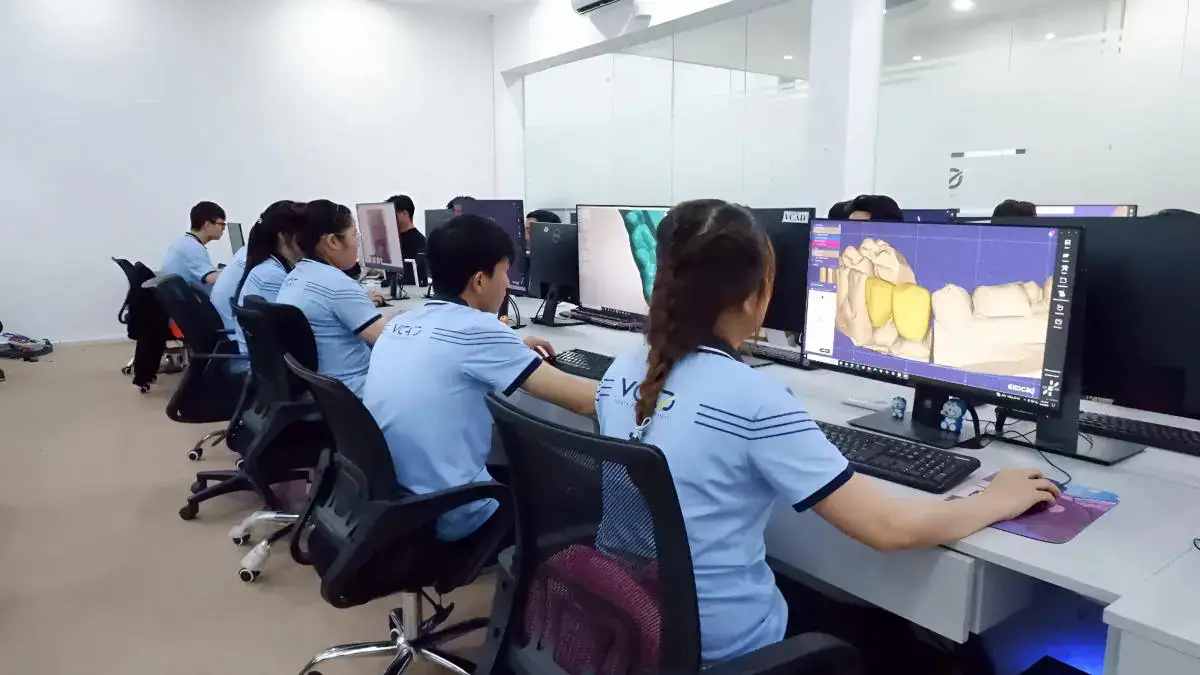
At VCAD Dental Outsourcing Lab, that process happens thousands of times each day. The lab’s CAD designers transform raw data into anatomy that not only fits but feels alive. Their workflow embodies the delicate balance between technology and intuition — a process as methodical as it is imaginative.

Let’s step into that mindset and see how digital artistry becomes scientific precision.

1. The Designer’s First Canvas – Understanding Intent


When a new case arrives at VCAD, the designer doesn’t start by opening software — they start by listening.

Every scan, photo, and note carries clues about the patient’s needs and the clinician’s expectations. Before touching a digital tool, the designer reviews the clinical prescription like a composer studying a musical score.

Key questions shape their first impression:

  • What was the treatment goal — esthetic enhancement, structural repair, or occlusal correction?


  • What is the patient’s facial morphology and smile line?


  • Which material will best serve both strength and beauty?


The designer builds a mental 3D model long before launching Exocad or 3Shape. This cognitive preparation is crucial — it prevents the design from becoming a blind mechanical task.

At VCAD, each case begins with a 5-minute “intent briefing.” Designers read the SmartRx, study reference images, and note any special instructions. By aligning with intent first, they ensure that every design choice serves a clinical purpose, not a digital default.

As one senior VCAD artist says: “The computer can calculate fit, but only humans can calculate meaning.”

2. Shaping Function – Where Anatomy Meets Engineering


Once intent is clear, the designer’s next mission is functional logic. Every tooth must interact harmoniously with its neighbors, the opposing arch, and the dynamic motion of the jaw.

In the analog era, technicians relied on experience and articulator models. In the digital world, designers rely on physics-based simulation — but the principle remains the same: anatomy must obey mechanics.

Functional Workflow at VCAD:


  1. Margin Detection & Cement Gap Calibration – Automated tools detect preparation lines within ±10 µm accuracy. Designers then adjust cement space according to material behavior (e.g., zirconia vs. e.max).


  2. Occlusal Mapping – Software overlays pressure zones using color gradients. Designers adjust cusp height and central groove depth to equalize force distribution.


  3. Articulation Simulation – Virtual jaw movements replicate real chewing paths, allowing designers to confirm disclusion and balance.


  4. Connector Optimization – In bridges or implant cases, finite element simulation ensures connectors resist bending and tensile forces.


Each step blends engineering logic with biological empathy. Designers constantly ask: “How will this move, flex, and age in the mouth?”

The result is not just a crown that fits perfectly today — but one that continues to fit after thousands of bites.

3. Sculpting Aesthetics – The Art Hidden in Microns


After function comes the soul of the restoration: esthetics. This is where design transcends precision to evoke emotion.

Digital sculpting is both science and storytelling. The designer must recreate the subtle asymmetries that make real teeth beautiful.

At VCAD, this process involves:

  • Contour Language: Every patient’s facial structure informs the curvature of the tooth. A strong jawline may call for sharper cusp transitions; a softer face may harmonize with rounded edges.


  • Light Dynamics: Designers simulate how light will reflect on polished surfaces. Proper curvature determines how brightness travels across enamel-like layers.


  • Texture Mapping: Microgrooves and natural wear lines are digitally engraved to avoid a “too perfect” artificial look.


  • Shade Interpretation: Using clinician photos, designers balance translucency and chroma, ensuring color transitions mimic dentin depth.


Each of these adjustments happens in increments smaller than a hair’s width, yet their combined effect defines realism.

A skilled designer doesn’t copy anatomy — they interpret it. They understand that beauty in dentistry isn’t symmetry; it’s believability.

That’s why VCAD designers are trained not only in dental anatomy but also in visual arts — to see like sculptors, not just operators.

4. The Dance Between Human and Machine


CAD design is not a solo performance; it’s a duet between human intuition and machine intelligence.

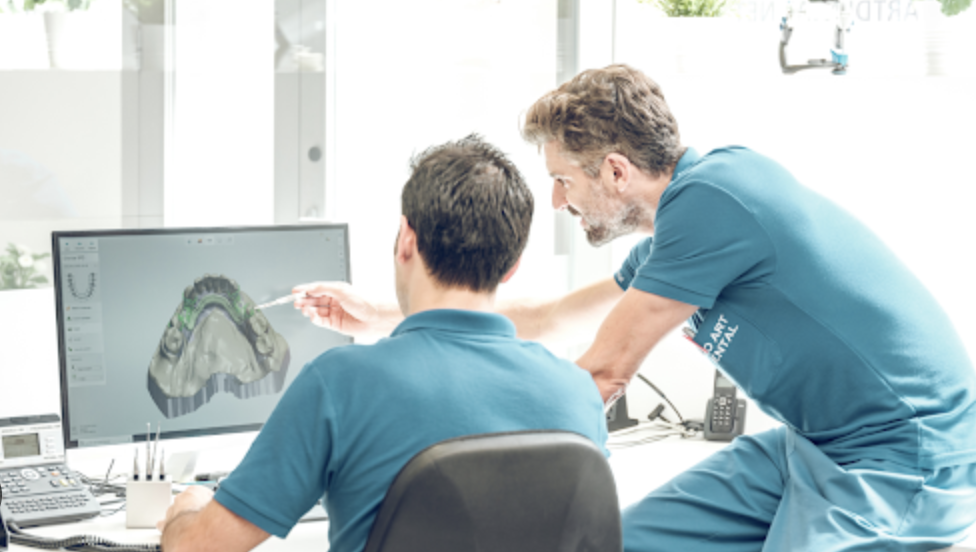
At VCAD, AI assists but never replaces the designer. Algorithms detect margins, align bites, and suggest anatomical templates. Yet the final refinement — the softening of cusp, the subtle rotation of an incisor — always comes from human judgment.

This interplay creates what VCAD calls “Augmented Artistry.”

  • AI provides speed. It reduces repetitive manual steps.


  • Human designers provide nuance. They understand emotion, proportion, and context.


Together, they achieve what neither could alone — precision that feels natural.

To maintain this harmony, VCAD limits automation to 70% of the process. The remaining 30% is deliberate craftsmanship — the time designers use to inspect, compare, and perfect.

In complex cases like full-arch implants or smile reconstructions, this balance is even more vital. Designers conduct multiple “fit rehearsals” in simulation before sending files to CAM.

It’s like an orchestra — AI keeps the tempo, but the designer conducts the music.

5. Quality Reflection – Learning from Every Design


The final step in a designer’s process is reflection. Every finished case is reviewed not as a task completed, but as a dataset of knowledge.

VCAD’s Design Performance Tracker measures how each designer’s output performs clinically:

  • Average chairside adjustment time.


  • Fit accuracy variance per tooth type.


  • Feedback ratings from partner clinics.


These metrics feed into an internal dashboard where designers analyze their patterns. If one technician consistently achieves tighter fits in posterior crowns, they share their workflow insights with others.

This transforms competition into collaboration. The lab evolves collectively, learning from its own precision.

For designers, reflection closes the loop between digital creation and real-world consequence. It’s a constant reminder that behind every polygon and pixel lies a person — smiling, eating, and living with their work.

In VCAD’s culture, mastery doesn’t mean “no more to learn.” It means always learning from what you’ve made.

Conclusion


Inside the mind of a CAD designer lies a rare balance of logic and artistry. They think like engineers, sculpt like artists, and collaborate like scientists.

At VCAD Dental Outsourcing Lab, these designers form the heartbeat of the digital workflow — turning clinical vision into digital precision that survives real-world physics and human emotion.

Their process is proof that technology alone doesn’t make excellence; interpretation does.

Every scan tells a story. Every margin line is a sentence. And every crown, bridge, or veneer becomes the final paragraph of that collaboration — where the clinician’s idea meets the designer’s imagination and the patient’s reality.

In the age of automation, the human mind remains the most sophisticated design tool ever created.


REQUEST A TRIAL ORDER

Request Sample Case VCAD