

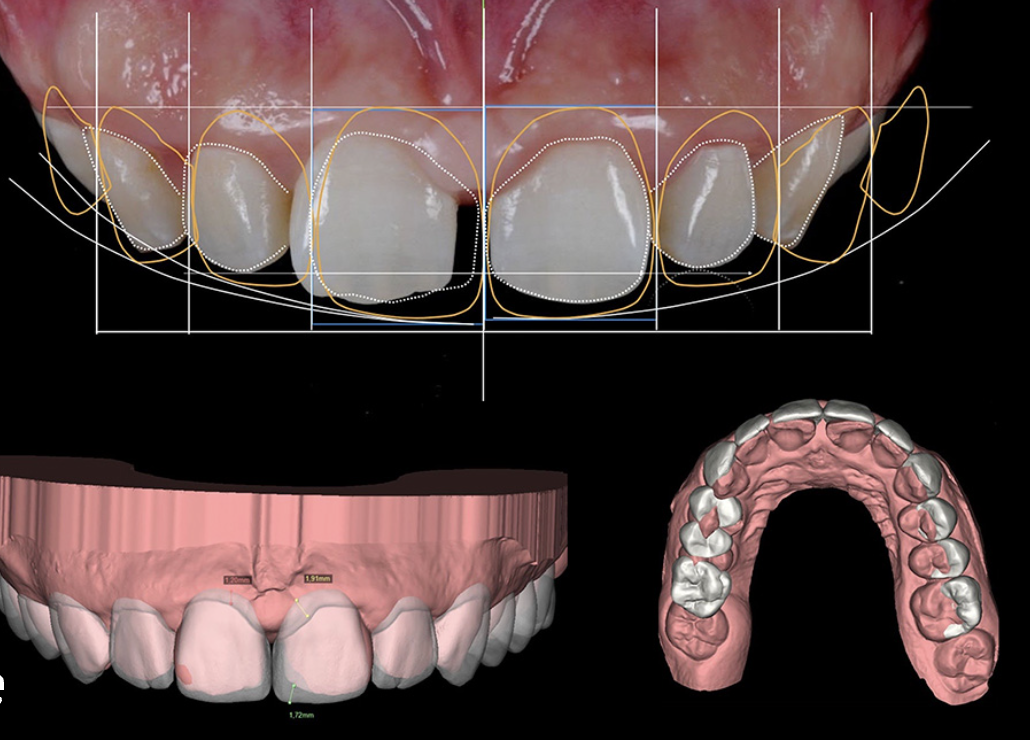
Why Communication Between Dentist and Lab Defines Case Success
Technology has revolutionized dental workflows, but even the most advanced scanners and milling units can’t fix one persistent issue — miscommunication. Behind nearly every remake, shade mismatch, or poor fit lies not a machine error, but a message error.
Dentistry is collaboration by nature: the clinician diagnoses, the lab designs, and the patient lives with the result. When these voices don’t align, precision fractures.
At VCAD Dental Outsourcing Lab, thousands of cases flow daily between clinicians and technicians around the world. The lab’s philosophy is simple: communication is the invisible margin — the space where understanding seals the gap between vision and result.
Here’s why that dialogue matters more than any tool, and how VCAD builds a communication ecosystem that transforms collaboration into consistency.
1. The Silent Cost of Miscommunication
Every dental professional knows the frustration of receiving a restoration that looks beautiful in hand but doesn’t fit in the mouth. Often, the issue isn’t poor craftsmanship but incomplete context.
Common sources of communication breakdown include:
- Ambiguous prescriptions: vague notes like “make it natural” without reference images or shade mapping.
- Missing data: absent bite scans, unclear margins, or outdated impressions.
- Assumptions: technicians interpreting requests differently from clinician intent.
Studies show that up to 35% of remakes in digital labs originate from unclear or incomplete case information — costing time, money, and patient trust.
Miscommunication doesn’t just affect logistics; it damages confidence. When a dentist doubts the lab’s interpretation, every future case becomes cautious rather than collaborative.
VCAD’s approach tackles this root problem not with more emails, but with structured clarity — systems that make information readable, standardized, and interactive.
Because in digital dentistry, the sharpest tool isn’t the scanner; it’s the sentence.
2. The Digital Prescription – Turning Requests Into Data
In the analog era, a prescription was handwritten and subjective. Today, it’s digital and data-rich — but only if used correctly.
VCAD’s SmartRx Portal transforms prescriptions into a structured communication framework. Instead of free-text descriptions, clinicians choose from dropdowns with precise options for:
- Material type and translucency level.
- Occlusal scheme preference.
- Cement space and margin design.
- Stain intensity, texture style, and surface gloss.
Each selection auto-fills standardized codes that integrate directly into the CAD system. This reduces ambiguity and speeds up design.
Still, there’s room for expression. The portal allows photo uploads, sketches, and notes for artistic intent. The result: data meets personality.
This hybrid structure — combining precision fields with creative notes — ensures that information is both machine-readable and human-understandable.
It also establishes a common visual language between dentist and technician. A clinician’s “warm A2 with enamel halo” means the same thing on both sides of the screen.
In short, SmartRx doesn’t just record orders; it records understanding.
3. Real-Time Collaboration – The Feedback Loop That Prevents Guesswork
Communication shouldn’t stop once the case leaves the clinic. The most successful outcomes happen when dentist and lab stay connected throughout the workflow.
VCAD’s Live Case Review System makes this possible. Through the portal, clinicians can:
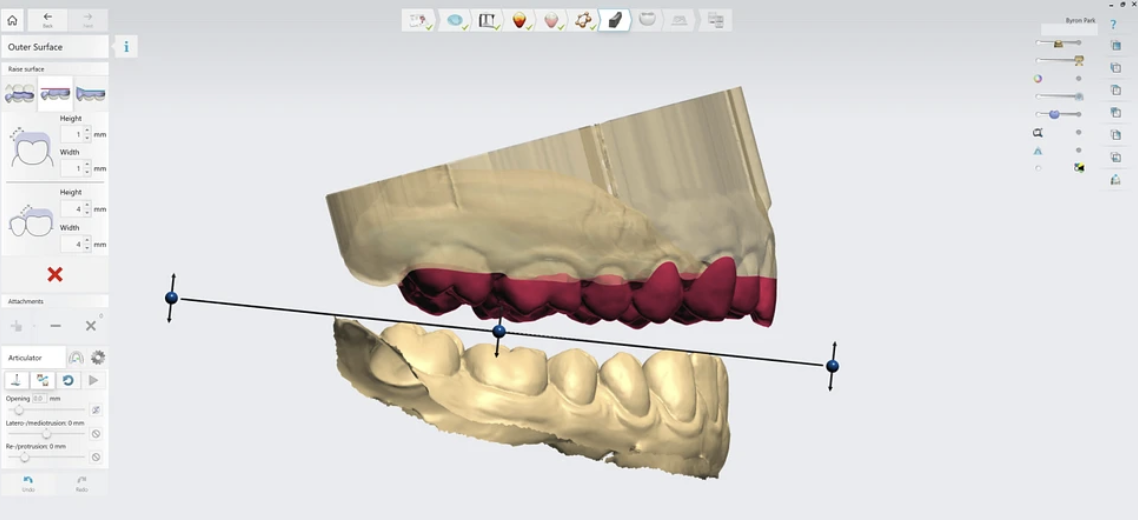
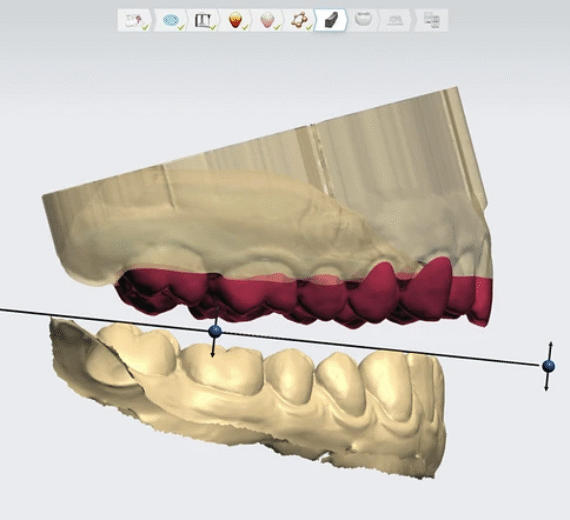
- View 3D renderings of ongoing designs in real time.
- Annotate directly on the model (“Reduce occlusal 0.2 mm here”).
- Approve or request modifications instantly.
This replaces slow email threads with direct interaction — a feedback loop that saves days per case.
The lab benefits, too. Designers receive immediate clarification, eliminating back-and-forth guessing. Communication shifts from reactive to collaborative.
Moreover, every adjustment becomes part of a case’s history, archived for learning. When similar cases arise later, technicians can review previous instructions to anticipate preferences.
The outcome is not just efficiency, but personalization — every clinician develops a unique “communication fingerprint” within VCAD’s system.
And that fingerprint shapes how the lab tailors service.
4. Empathy and Precision – The Human Dimension of Dialogue
Despite automation and AI, communication remains deeply human. The best labs know that understanding emotion is as critical as reading a scan.
VCAD trains coordinators and technicians in clinical empathy — listening not only to words, but to tone and intent.
When a clinician writes, “This patient is very anxious about esthetics,” that isn’t just a note — it’s a design cue. The technician interprets it as an instruction to soften translucency, smooth microtexture, and avoid aggressive anatomy.
Empathy transforms mechanical compliance into meaningful collaboration.
This is also why VCAD assigns dedicated case coordinators for each clinic. They act as translators — converting clinical expectations into technical parameters. These coordinators understand both languages: dental and design.
Such empathy-driven systems also reduce friction in problem-solving. When an issue arises, communication stays constructive rather than defensive. The conversation isn’t “who’s at fault,” but “how can we adapt?”
Because the goal isn’t to win arguments — it’s to win precision.
5. The Future of Communication – AI, Automation, and Shared Intelligence
By 2026, lab–dentist communication will evolve beyond text and talk. AI will interpret scans, predict intent, and propose solutions before anyone asks.
VCAD is already developing features that foreshadow this future:
- AI Prescription Assistant: suggests ideal materials based on prep design and occlusal load.
- Speech-to-Design Notes: clinicians dictate instructions directly into the portal; the system converts them into digital annotations.
- Smart Notification System: alerts both sides if inconsistencies appear between notes and design parameters.
But technology is only half the story. The other half is shared intelligence. Every conversation enriches VCAD’s central database, improving case templates and predictive communication algorithms.
As the system learns, it anticipates: if a clinician consistently requests lighter incisal edges or shorter cusps, the software automatically recommends those preferences in new cases.
The future of communication won’t just connect people — it will connect understanding.
That’s the ultimate goal: not faster conversations, but fluent collaboration.
Conclusion
Every restoration begins as a dialogue — between dentist and patient, and between dentist and lab. The difference between a good outcome and a perfect one often depends on the clarity of that conversation.
At VCAD Dental Outsourcing Lab, communication is engineered as carefully as the crowns themselves. Through structured prescriptions, live collaboration, and empathy-driven service, the lab transforms words into accuracy.
Because precision doesn’t happen in silence — it’s spoken, written, shared, and understood.
In the end, a great restoration is not just a product of technology or talent; it’s the physical proof that two minds are truly connected.