


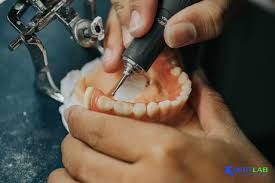
Sustainability in Digital Dentistry – Designing a Greener Future with Precision
Digital dentistry has long been defined by precision, speed, and esthetics. But the next revolution won’t come from faster machines or smarter software — it will come from sustainability.
Every crown milled, every model printed, and every case shipped carries an environmental footprint. In an age where industries are rethinking their ecological impact, dental manufacturing can no longer stay silent behind the lab walls.
At VCAD Dental Outsourcing Lab, sustainability isn’t a slogan — it’s a system. From material sourcing to waste recycling and energy management, VCAD integrates environmental awareness into every layer of production.
Because true precision means more than perfect margins; it means responsibility measured in microns and carbon alike.
1. The Hidden Footprint of Digital Dentistry
The digital workflow may seem immaterial — files sent through clouds, machines carving silently — but its footprint is tangible.
Each restoration involves multiple energy-intensive processes:
- Milling: consumes power for spindles, coolant systems, and suction units.
- 3D printing: requires UV curing, resin handling, and model post-processing.
- Material sourcing: zirconia and PMMA blanks are produced through mining and high-heat sintering.
- Packaging & shipping: global logistics add carbon to every delivery.
Multiply these by thousands of daily cases across labs worldwide, and the environmental cost becomes substantial.
VCAD recognized this early. Instead of treating sustainability as a separate project, it integrated it into the core manufacturing model. Every step — from software to shipping — is re-evaluated through the lens of efficiency and ecological impact.
Because the cleanest smile in the world shouldn’t come from a dirty process.
2. Smart Materials – Eco-Efficiency at the Source
Sustainability begins long before a crown is milled; it starts with material choice.
VCAD partners only with certified suppliers whose production meets ISO 14001 environmental standards. But beyond compliance, the lab actively explores eco-efficient materials — those that deliver durability with reduced waste.
1. High-Yield Zirconia Blocks
Traditional milling wastes up to 40% of material due to blank geometry. VCAD uses optimized nesting algorithms and multi-restoration blocks that minimize discard rates to under 10%.
2. PMMA and Resin Recycling
Waste shavings from provisional materials are collected, melted, and reformed into secondary-use components for model calibration.
3. Biocompatible Alternatives
VCAD’s R&D division collaborates with material scientists to test bio-based PMMA and resin composites derived from plant polymers — reducing dependency on petroleum-derived plastics.
4. Packaging Reduction
All case boxes are made from biodegradable pulp rather than plastic foam. Protective inserts use recyclable corrugated materials designed for minimal ink and dye.
The philosophy is simple: use less, last longer, waste nothing.
By treating sustainability as material science, not marketing, VCAD ensures that ecological awareness coexists with clinical excellence.
3. Clean Energy Manufacturing – Precision Without Pollution
While most labs focus on output speed, VCAD focuses equally on energy logic — how power is consumed, monitored, and conserved.
1. Smart Energy Grid
All VCAD milling and printing stations are connected to a real-time monitoring system that tracks consumption per machine. Idle equipment powers down automatically, saving up to 18% in daily energy use.
2. Temperature-Efficient Sintering
Traditional zirconia sintering furnaces operate at over 1,500°C for extended cycles. VCAD introduced AI-optimized sintering schedules that reduce average runtime by 12% without compromising density.
3. Renewable Energy Commitment
A portion of VCAD’s facility power is offset through solar panels and green energy credits, verified annually by local sustainability auditors.
4. Air and Dust Management
HEPA filtration systems capture zirconia and resin particles during milling, preventing airborne contamination and enabling safe dust recycling.
The result: a lab that runs clean, breathes clean, and thinks clean.
Precision without pollution isn’t an ideal — it’s the operational standard.
4. Sustainable Logistics and Global Responsibility
The global nature of outsourcing means sustainability extends beyond lab walls — it includes how restorations move across continents.
VCAD optimizes logistics through:
- Batch shipping to reduce carbon output per case.
- Regional fulfillment centers that shorten transit distances for partner clinics.
- Digital QC approvals, reducing the need for physical remakes and reshipments.
Even small steps add up: the lab replaced plastic shipping tape with paper-based alternatives and eliminated single-use bubble wraps entirely.
But environmental responsibility doesn’t stop at carbon. It also includes social sustainability — fair labor, ethical sourcing, and community impact.
VCAD ensures:
- Fair wage standards across all production teams.
- Workplace safety through ergonomically designed stations and filtered air systems.
- Skill empowerment, offering education programs for young technicians from underprivileged backgrounds.
This dual focus — planet and people — defines VCAD’s global responsibility model.
Because a sustainable business is not one that lasts longer — it’s one that makes others last longer too.
5. Designing for the Future – Circular Dentistry
True sustainability isn’t linear; it’s circular. It’s about designing systems that reuse, repair, and regenerate rather than discard.
VCAD’s vision for Circular Dentistry involves three key initiatives:
1. Digital Case Reuse
Every restoration design is archived as a reusable digital asset. If a crown chips or needs replacement, the design is remilled without rescanning — saving materials and transport energy.
2. Predictive Maintenance
Machines equipped with sensors report wear data to the central system, scheduling service before breakdowns occur. This extends equipment lifespan and reduces replacement waste.
3. Research Collaboration
VCAD partners with academic institutions on projects studying biodegradable resins, low-heat sintering materials, and 3D-printed dental components using recyclable composites.
The future lab won’t just minimize waste — it will design regeneration into its workflow.
Circular thinking transforms sustainability from a compliance checklist into a creative frontier.
Because in the end, the greenest innovation isn’t just technology that saves time — it’s technology that saves tomorrow.
Conclusion
Sustainability is no longer optional in digital dentistry; it’s inevitable. The question isn’t if labs should go green, but how intelligently they can do it.
At VCAD Dental Outsourcing Lab, sustainability has become an extension of precision — where efficiency meets ethics and design meets duty. From eco-efficient materials to renewable energy and circular production models, the lab proves that progress doesn’t have to cost the planet.
Each restoration produced at VCAD carries more than accuracy — it carries accountability.
Because the most advanced technology is not the one that works hardest, but the one that works responsibly.
In the future of dentistry, precision and sustainability will no longer be separate goals. They will be the same thing — care for the mouth, care for the earth.
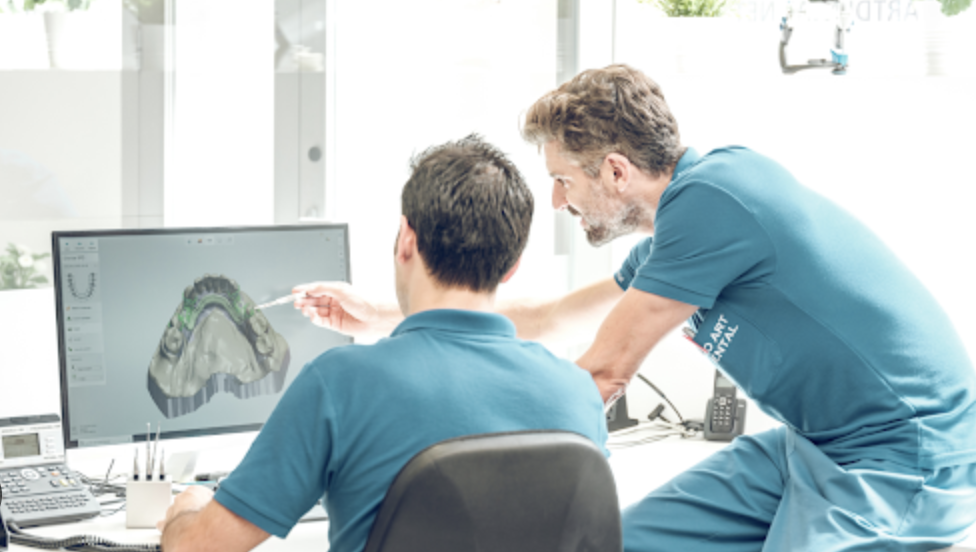
Inside the Mind of a CAD Designer – Turning Clinical Vision into Digital Reality
Every beautiful restoration begins with an invisible act of translation. A clinician imagines the perfect fit, the ideal shade, the right balance between form and function — and a CAD designer must turn that imagination into reality.
Digital dentistry often focuses on machines and materials, but the heart of precision still beats inside the mind of the designer. Behind every case file on a server is a human being interpreting, adjusting, and refining — bridging clinical intent and computational logic.
At VCAD Dental Outsourcing Lab, that process happens thousands of times each day. The lab’s CAD designers transform raw data into anatomy that not only fits but feels alive. Their workflow embodies the delicate balance between technology and intuition — a process as methodical as it is imaginative.
Let’s step into that mindset and see how digital artistry becomes scientific precision.
1. The Designer’s First Canvas – Understanding Intent
When a new case arrives at VCAD, the designer doesn’t start by opening software — they start by listening.
Every scan, photo, and note carries clues about the patient’s needs and the clinician’s expectations. Before touching a digital tool, the designer reviews the clinical prescription like a composer studying a musical score.
Key questions shape their first impression:
- What was the treatment goal — esthetic enhancement, structural repair, or occlusal correction?
- What is the patient’s facial morphology and smile line?
- Which material will best serve both strength and beauty?
The designer builds a mental 3D model long before launching Exocad or 3Shape. This cognitive preparation is crucial — it prevents the design from becoming a blind mechanical task.
At VCAD, each case begins with a 5-minute “intent briefing.” Designers read the SmartRx, study reference images, and note any special instructions. By aligning with intent first, they ensure that every design choice serves a clinical purpose, not a digital default.
As one senior VCAD artist says: “The computer can calculate fit, but only humans can calculate meaning.”
2. Shaping Function – Where Anatomy Meets Engineering
Once intent is clear, the designer’s next mission is functional logic. Every tooth must interact harmoniously with its neighbors, the opposing arch, and the dynamic motion of the jaw.
In the analog era, technicians relied on experience and articulator models. In the digital world, designers rely on physics-based simulation — but the principle remains the same: anatomy must obey mechanics.
Functional Workflow at VCAD:
- Margin Detection & Cement Gap Calibration – Automated tools detect preparation lines within ±10 µm accuracy. Designers then adjust cement space according to material behavior (e.g., zirconia vs. e.max).
- Occlusal Mapping – Software overlays pressure zones using color gradients. Designers adjust cusp height and central groove depth to equalize force distribution.
- Articulation Simulation – Virtual jaw movements replicate real chewing paths, allowing designers to confirm disclusion and balance.
- Connector Optimization – In bridges or implant cases, finite element simulation ensures connectors resist bending and tensile forces.
Each step blends engineering logic with biological empathy. Designers constantly ask: “How will this move, flex, and age in the mouth?”
The result is not just a crown that fits perfectly today — but one that continues to fit after thousands of bites.
3. Sculpting Aesthetics – The Art Hidden in Microns
After function comes the soul of the restoration: esthetics. This is where design transcends precision to evoke emotion.
Digital sculpting is both science and storytelling. The designer must recreate the subtle asymmetries that make real teeth beautiful.
At VCAD, this process involves:
- Contour Language: Every patient’s facial structure informs the curvature of the tooth. A strong jawline may call for sharper cusp transitions; a softer face may harmonize with rounded edges.
- Light Dynamics: Designers simulate how light will reflect on polished surfaces. Proper curvature determines how brightness travels across enamel-like layers.
- Texture Mapping: Microgrooves and natural wear lines are digitally engraved to avoid a “too perfect” artificial look.
- Shade Interpretation: Using clinician photos, designers balance translucency and chroma, ensuring color transitions mimic dentin depth.
Each of these adjustments happens in increments smaller than a hair’s width, yet their combined effect defines realism.
A skilled designer doesn’t copy anatomy — they interpret it. They understand that beauty in dentistry isn’t symmetry; it’s believability.
That’s why VCAD designers are trained not only in dental anatomy but also in visual arts — to see like sculptors, not just operators.
4. The Dance Between Human and Machine
CAD design is not a solo performance; it’s a duet between human intuition and machine intelligence.
At VCAD, AI assists but never replaces the designer. Algorithms detect margins, align bites, and suggest anatomical templates. Yet the final refinement — the softening of cusp, the subtle rotation of an incisor — always comes from human judgment.
This interplay creates what VCAD calls “Augmented Artistry.”
- AI provides speed. It reduces repetitive manual steps.
- Human designers provide nuance. They understand emotion, proportion, and context.
Together, they achieve what neither could alone — precision that feels natural.
To maintain this harmony, VCAD limits automation to 70% of the process. The remaining 30% is deliberate craftsmanship — the time designers use to inspect, compare, and perfect.
In complex cases like full-arch implants or smile reconstructions, this balance is even more vital. Designers conduct multiple “fit rehearsals” in simulation before sending files to CAM.
It’s like an orchestra — AI keeps the tempo, but the designer conducts the music.
5. Quality Reflection – Learning from Every Design
The final step in a designer’s process is reflection. Every finished case is reviewed not as a task completed, but as a dataset of knowledge.
VCAD’s Design Performance Tracker measures how each designer’s output performs clinically:
- Average chairside adjustment time.
- Fit accuracy variance per tooth type.
- Feedback ratings from partner clinics.
These metrics feed into an internal dashboard where designers analyze their patterns. If one technician consistently achieves tighter fits in posterior crowns, they share their workflow insights with others.
This transforms competition into collaboration. The lab evolves collectively, learning from its own precision.
For designers, reflection closes the loop between digital creation and real-world consequence. It’s a constant reminder that behind every polygon and pixel lies a person — smiling, eating, and living with their work.
In VCAD’s culture, mastery doesn’t mean “no more to learn.” It means always learning from what you’ve made.
Conclusion
Inside the mind of a CAD designer lies a rare balance of logic and artistry. They think like engineers, sculpt like artists, and collaborate like scientists.
At VCAD Dental Outsourcing Lab, these designers form the heartbeat of the digital workflow — turning clinical vision into digital precision that survives real-world physics and human emotion.
Their process is proof that technology alone doesn’t make excellence; interpretation does.
Every scan tells a story. Every margin line is a sentence. And every crown, bridge, or veneer becomes the final paragraph of that collaboration — where the clinician’s idea meets the designer’s imagination and the patient’s reality.
In the age of automation, the human mind remains the most sophisticated design tool ever created.
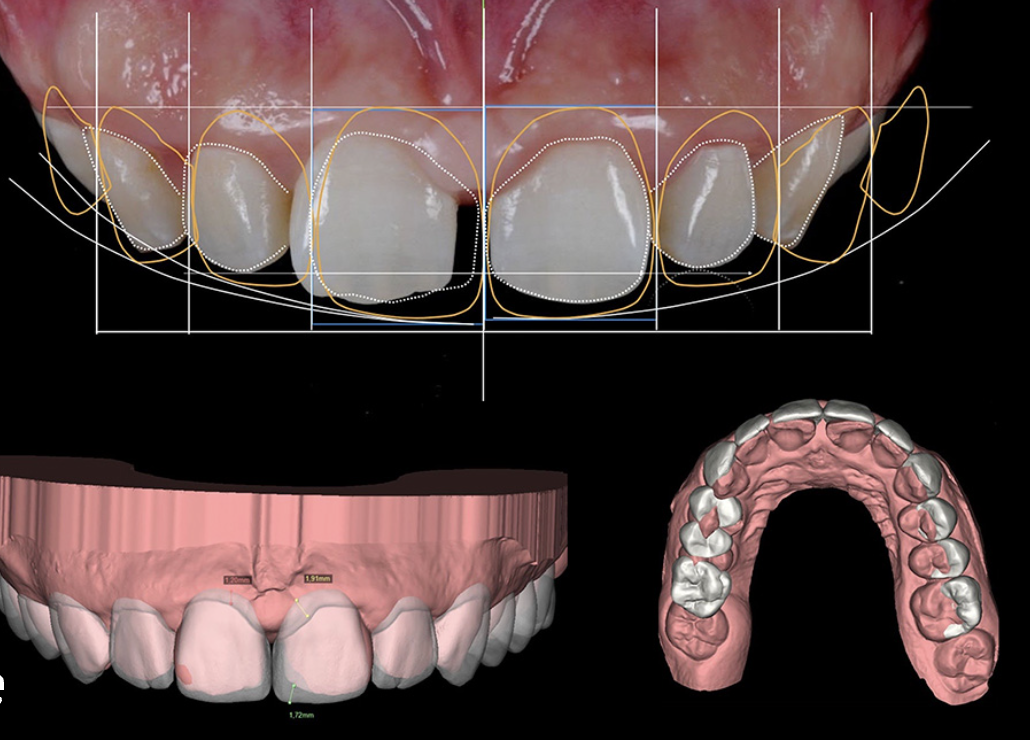
Why Communication Between Dentist and Lab Defines Case Success
Technology has revolutionized dental workflows, but even the most advanced scanners and milling units can’t fix one persistent issue — miscommunication. Behind nearly every remake, shade mismatch, or poor fit lies not a machine error, but a message error.
Dentistry is collaboration by nature: the clinician diagnoses, the lab designs, and the patient lives with the result. When these voices don’t align, precision fractures.
At VCAD Dental Outsourcing Lab, thousands of cases flow daily between clinicians and technicians around the world. The lab’s philosophy is simple: communication is the invisible margin — the space where understanding seals the gap between vision and result.
Here’s why that dialogue matters more than any tool, and how VCAD builds a communication ecosystem that transforms collaboration into consistency.
1. The Silent Cost of Miscommunication
Every dental professional knows the frustration of receiving a restoration that looks beautiful in hand but doesn’t fit in the mouth. Often, the issue isn’t poor craftsmanship but incomplete context.
Common sources of communication breakdown include:
- Ambiguous prescriptions: vague notes like “make it natural” without reference images or shade mapping.
- Missing data: absent bite scans, unclear margins, or outdated impressions.
- Assumptions: technicians interpreting requests differently from clinician intent.
Studies show that up to 35% of remakes in digital labs originate from unclear or incomplete case information — costing time, money, and patient trust.
Miscommunication doesn’t just affect logistics; it damages confidence. When a dentist doubts the lab’s interpretation, every future case becomes cautious rather than collaborative.
VCAD’s approach tackles this root problem not with more emails, but with structured clarity — systems that make information readable, standardized, and interactive.
Because in digital dentistry, the sharpest tool isn’t the scanner; it’s the sentence.
2. The Digital Prescription – Turning Requests Into Data
In the analog era, a prescription was handwritten and subjective. Today, it’s digital and data-rich — but only if used correctly.
VCAD’s SmartRx Portal transforms prescriptions into a structured communication framework. Instead of free-text descriptions, clinicians choose from dropdowns with precise options for:
- Material type and translucency level.
- Occlusal scheme preference.
- Cement space and margin design.
- Stain intensity, texture style, and surface gloss.
Each selection auto-fills standardized codes that integrate directly into the CAD system. This reduces ambiguity and speeds up design.
Still, there’s room for expression. The portal allows photo uploads, sketches, and notes for artistic intent. The result: data meets personality.
This hybrid structure — combining precision fields with creative notes — ensures that information is both machine-readable and human-understandable.
It also establishes a common visual language between dentist and technician. A clinician’s “warm A2 with enamel halo” means the same thing on both sides of the screen.
In short, SmartRx doesn’t just record orders; it records understanding.
3. Real-Time Collaboration – The Feedback Loop That Prevents Guesswork
Communication shouldn’t stop once the case leaves the clinic. The most successful outcomes happen when dentist and lab stay connected throughout the workflow.
VCAD’s Live Case Review System makes this possible. Through the portal, clinicians can:
- View 3D renderings of ongoing designs in real time.
- Annotate directly on the model (“Reduce occlusal 0.2 mm here”).
- Approve or request modifications instantly.
This replaces slow email threads with direct interaction — a feedback loop that saves days per case.
The lab benefits, too. Designers receive immediate clarification, eliminating back-and-forth guessing. Communication shifts from reactive to collaborative.
Moreover, every adjustment becomes part of a case’s history, archived for learning. When similar cases arise later, technicians can review previous instructions to anticipate preferences.
The outcome is not just efficiency, but personalization — every clinician develops a unique “communication fingerprint” within VCAD’s system.
And that fingerprint shapes how the lab tailors service.
4. Empathy and Precision – The Human Dimension of Dialogue
Despite automation and AI, communication remains deeply human. The best labs know that understanding emotion is as critical as reading a scan.
VCAD trains coordinators and technicians in clinical empathy — listening not only to words, but to tone and intent.
When a clinician writes, “This patient is very anxious about esthetics,” that isn’t just a note — it’s a design cue. The technician interprets it as an instruction to soften translucency, smooth microtexture, and avoid aggressive anatomy.
Empathy transforms mechanical compliance into meaningful collaboration.
This is also why VCAD assigns dedicated case coordinators for each clinic. They act as translators — converting clinical expectations into technical parameters. These coordinators understand both languages: dental and design.
Such empathy-driven systems also reduce friction in problem-solving. When an issue arises, communication stays constructive rather than defensive. The conversation isn’t “who’s at fault,” but “how can we adapt?”
Because the goal isn’t to win arguments — it’s to win precision.
5. The Future of Communication – AI, Automation, and Shared Intelligence
By 2026, lab–dentist communication will evolve beyond text and talk. AI will interpret scans, predict intent, and propose solutions before anyone asks.
VCAD is already developing features that foreshadow this future:
- AI Prescription Assistant: suggests ideal materials based on prep design and occlusal load.
- Speech-to-Design Notes: clinicians dictate instructions directly into the portal; the system converts them into digital annotations.
- Smart Notification System: alerts both sides if inconsistencies appear between notes and design parameters.
But technology is only half the story. The other half is shared intelligence. Every conversation enriches VCAD’s central database, improving case templates and predictive communication algorithms.
As the system learns, it anticipates: if a clinician consistently requests lighter incisal edges or shorter cusps, the software automatically recommends those preferences in new cases.
The future of communication won’t just connect people — it will connect understanding.
That’s the ultimate goal: not faster conversations, but fluent collaboration.
Conclusion
Every restoration begins as a dialogue — between dentist and patient, and between dentist and lab. The difference between a good outcome and a perfect one often depends on the clarity of that conversation.
At VCAD Dental Outsourcing Lab, communication is engineered as carefully as the crowns themselves. Through structured prescriptions, live collaboration, and empathy-driven service, the lab transforms words into accuracy.
Because precision doesn’t happen in silence — it’s spoken, written, shared, and understood.
In the end, a great restoration is not just a product of technology or talent; it’s the physical proof that two minds are truly connected.
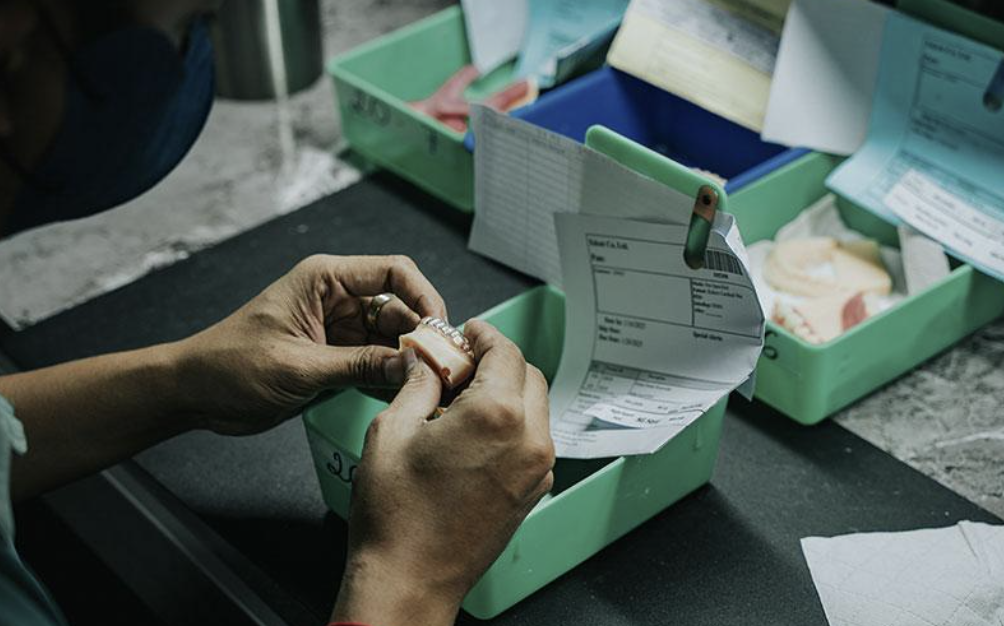
Building a Career in Digital Dental Design – Skills Every Technician Should Master
The dental lab of today looks nothing like the one from twenty years ago. Hand wax-ups, porcelain furnaces, and articulators are now joined by digital scanners, 3D printers, and AI-driven design platforms.
But while technology has transformed the tools, it hasn’t replaced the artist — it has redefined them. The future dental technician is no longer just a craftsman but a digital designer, fluent in anatomy, software, and science.
At VCAD Dental Outsourcing Lab, hundreds of technicians work in this new hybrid environment — a space where creativity meets code. Their daily work offers a glimpse of what skills and mindsets the next generation of professionals will need to master to thrive in digital dentistry.
1. From Artisan to Designer – The Mindset Shift
The biggest transformation in a technician’s career isn’t technological — it’s psychological.
Traditional craftsmanship valued manual dexterity: the steady hand that sculpts wax or layers porcelain. In the digital era, precision is produced through clicks, coordinates, and algorithms. Yet artistry still matters; it simply lives in a different medium.
To succeed, technicians must adopt a designer’s mindset — analytical, curious, and adaptive. They must learn to translate clinical problems into digital solutions.
At VCAD, training programs begin with philosophy before software. New recruits learn that their task isn’t “to make crowns,” but “to create harmony between material and motion.” Every curve, cusp, and margin must reflect both aesthetics and biomechanics.
This mindset shift also changes how success is measured. In the analog lab, perfection was judged visually. In the digital lab, it’s quantified — by micron tolerances, fit accuracy, and production efficiency.
The new professional identity combines artistry with engineering discipline. As one senior VCAD designer puts it: “We design beauty that can survive physics.”
2. Core Digital Skills – The Modern Technician’s Toolkit
The modern dental designer’s craft depends on mastering an integrated set of digital tools. By 2026, these five competencies will define employability across global labs.
1. CAD Software Proficiency
Fluency in 3Shape and Exocad is now as essential as porcelain layering once was. Beyond knowing shortcuts, designers must understand the logic of digital anatomy — contact strength, occlusal curvature, and path of insertion.
VCAD’s internal program requires new technicians to complete a 100-case simulation module, covering single crowns, implant abutments, veneers, and full-arch designs.
2. CAM Process Understanding
A great CAD model means little if it’s unmillable. Designers must grasp milling strategies, tool diameter limits, and nesting principles. Knowing how the machine “thinks” prevents costly errors before they happen.
3. Scan and Data Management
Digital designers must know how to evaluate STL quality, remove noise, and align bite data accurately. Poor data handling is the silent killer of precision.
4. Material Science Literacy
Every design decision interacts with material behavior. A technician must know how zirconia sinters, how lithium disilicate flexes, and how PMMA wears.
5. Collaboration and Communication
Design is dialogue. Technicians must communicate clearly with clinicians, interpret feedback, and document changes efficiently. English fluency and digital etiquette are as valuable as technical skill in global outsourcing environments.
The modern toolkit is less about tools and more about translation — turning complex digital data into functional, human smiles.
3. Beyond the Screen – Soft Skills That Drive Hard Results
As automation takes over repetitive tasks, what remains uniquely human becomes more valuable.
VCAD’s most successful designers share three soft-skill strengths:
Analytical Thinking
They question data instead of accepting it. If a scan looks distorted or a prescription seems inconsistent, they investigate — not to challenge authority, but to protect accuracy.
Adaptability
Digital tools evolve rapidly. A technician who resists change becomes obsolete. VCAD’s teams rotate between software modules and attend quarterly workshops to learn new plug-ins and AI functions.
Empathy
Yes, empathy — the ability to sense the patient behind the pixels. Designers who visualize the person wearing the restoration create more natural results.
In an industry obsessed with precision, soft skills ensure precision feels personal.
The balance between machine logic and human empathy defines the VCAD culture — where designers are encouraged to think like engineers but care like artists.
4. Continuous Learning – The Engine of Career Growth
The half-life of technical knowledge is shrinking. What a technician learns today may be outdated in three years. That’s why career longevity now depends on learning agility.
VCAD invests heavily in ongoing education through its internal Digital Mastery Program, which includes:
- Micro-courses on implant workflows, esthetic design, and occlusion dynamics.
- Cross-training with the QC and CAM departments to build interdisciplinary understanding.
- Mentorship sessions with senior designers who share case-based insights.
Outside the lab, professionals should pursue vendor certifications (3Shape Academy, exocad Masterclasses) and stay active in online dental tech communities.
By 2026, employers will value technicians who can prove a record of skill evolution, not just experience years.
In essence, your degree gets you hired; your learning keeps you relevant.
VCAD technicians are encouraged to treat every case as a classroom. The feedback loop — from design verification to clinical result — is a living textbook that teaches precision through consequence.
The lesson is simple: the lab doesn’t make experts; learning does.
5. The Future of the Profession – From Operator to Innovator
Looking ahead, the role of dental technicians will evolve into something broader — part designer, part scientist, part innovator.
Technicians will:
- Collaborate with AI systems that suggest design adjustments.
- Use digital twins to simulate bite dynamics before production.
- Participate in remote co-design sessions with clinicians in real time.
- Contribute to material R&D, testing new translucent ceramics and hybrid composites.
In this future, career growth won’t follow the old path of “junior → senior → supervisor.” Instead, it will branch into specializations — implant design strategist, occlusion analyst, digital aesthetician, or AI systems integrator.
VCAD is already nurturing this future workforce. Its internal talent map identifies potential innovators and mentors them toward leadership roles in R&D, AI integration, and clinical collaboration.
The next generation of dental technicians will not be hidden behind machines. They will stand at the frontier where biology meets technology — shaping smiles with data and imagination alike.
Conclusion
Building a career in digital dental design is no longer about learning software; it’s about adopting a philosophy of precision and curiosity.
The technicians of tomorrow must combine mechanical knowledge with digital fluency, creative vision with scientific reasoning, and personal empathy with global collaboration.
At VCAD Dental Outsourcing Lab, this evolution is already underway. The company’s training ecosystem shows that when technicians grow beyond repetition into reflection, they don’t just make restorations — they make progress.
In the coming years, the most valuable professionals won’t be those who know everything, but those who never stop learning.
Because in digital dentistry, knowledge ages fast — but mastery renews itself with every new smile designed.
The Changing Landscape of Global Dental Outsourcing – What 2026 Will Look Like
The dental industry is no longer confined by geography. In the past decade, digital transformation and global logistics have turned local laboratories into international collaborators. What was once a physical exchange of models has become a real-time transfer of data, design, and trust.
As 2026 approaches, this transformation is accelerating. The global dental outsourcing market — valued at over USD 3.2 billion in 2024 — is projected to grow at nearly 12% annually, fueled by advances in digital scanning, AI design, and cost-efficient manufacturing networks.
But this growth isn’t just about cheaper production. It’s about a redefinition of partnership, where precision, speed, sustainability, and data transparency become the real competitive currencies.
At VCAD Dental Outsourcing Lab, these shifts aren’t predictions; they’re the lab’s daily reality. Serving clinics across North America, Europe, and Asia, VCAD stands at the intersection of efficiency and innovation — where outsourcing is no longer a service, but a system.
Here’s how the landscape is changing — and what the world of digital dental outsourcing will look like by 2026.
1. From Cost Efficiency to Capability Partnerships
Historically, outsourcing was driven by one factor: cost. Clinics and labs in developed markets delegated labor-intensive production to regions with lower expenses. But as technology democratized access to high-end equipment, the outsourcing equation shifted from cheap labor to smart collaboration.
By 2026, capability outsourcing will define the industry. Clinics will seek partners who can:
- Integrate seamlessly with their digital workflows.
- Offer specialized design expertise for complex restorations.
- Deliver consistent quality verified by data, not promises.
VCAD exemplifies this shift. Its One-Contact Platform allows global clinicians to upload cases, review designs in real time, and communicate directly with assigned technicians — all without friction.
In this new paradigm, outsourcing labs are no longer “external vendors.” They become strategic extensions of clinical practice.
Dentists retain creative control while gaining an entire digital infrastructure: CAD teams, AI analytics, and precision manufacturing — all operating under their brand’s clinical philosophy.
The winners of 2026 will be those who outsource intelligence, not just effort.
2. The Rise of 24-Hour Global Workflows
Time zones used to be obstacles; now they are assets.
As digital outsourcing networks mature, asynchronous production has become the new form of efficiency. A clinician in Los Angeles sends scans at 6 PM; a technician in Ho Chi Minh City begins design immediately; by morning, the restoration is ready for review.
This 24-hour production rhythm creates a perpetual motion of productivity — dentistry that never sleeps.
VCAD was among the first to systematize this advantage. By leveraging its Vietnam-based operations, the lab transforms time differences into turnaround benefits. With 8-hour CAD design and 2-day production cycles, clients effectively gain an extra working day per week without expanding their staff.
By 2026, this model will evolve even further:
- Cloud-based manufacturing hubs will distribute production dynamically based on capacity and proximity.
- AI load-balancing systems will assign cases to available designers or machines globally.
- Predictive scheduling will estimate case delivery before design even begins.
The result: zero idle time, zero missed communication, and a new kind of global rhythm — one where distance disappears in the flow of data.
3. Data Transparency and Trust – The New Differentiator
In a crowded outsourcing market, how can clinics know which lab to trust? The answer, increasingly, will be data transparency.
By 2026, global clients will demand real-time visibility into their outsourced production — not just tracking numbers, but performance metrics: remake rates, QC reports, and sustainability audits.
VCAD’s approach offers a glimpse into that future. Its QC Dashboard allows clients to view:
- Material batch certifications.
- Digital tolerance reports (CAD vs CAM deviation).
- AI-analyzed remake causes and correction rates.
Each case carries a traceable QC passport, ensuring that every restoration can be verified, not just visually approved.
Transparency is more than accountability — it’s differentiation. In the next era of outsourcing, trust will be measurable.
Labs that can show data will dominate those that only make claims. And clinics will choose partners who align with their brand values — accuracy, ethics, and environmental responsibility — not merely pricing.
4. Automation, AI, and the Rebirth of Human Expertise
There’s a myth that automation will replace technicians. In truth, automation will refocus them.
By 2026, AI will handle repetitive CAD tasks — margin detection, occlusion balancing, nesting optimization — freeing technicians to do what machines cannot: interpret nuance, understand esthetics, and empathize with patient needs.
VCAD already implements this synergy. AI detects margin lines and predicts contact points, but human designers refine anatomy, adjust translucency, and validate occlusal logic.
The result is a human-in-the-loop system — automation accelerates, but artisans perfect.
Moreover, the role of technicians is expanding into data interpretation. They’re no longer just designers; they are data analysts, reviewing metrics from hundreds of cases to continuously refine standards.
Outsourcing labs that train their teams for this hybrid role — technical artistry combined with analytical reasoning — will define the next generation of professionals.
The global lab of 2026 will look less like a factory and more like a research hub — a place where human creativity and artificial intelligence collaborate to restore smiles with scientific precision.
5. Sustainability and Ethical Globalization
Outsourcing often raises questions about sustainability and ethics: carbon footprint, material sourcing, and fair labor practices. The future will demand that global efficiency also mean global responsibility.
By 2026, clients will expect labs to publish environmental and social responsibility metrics alongside their technical ones.
VCAD is already taking that lead through:
- Eco-friendly packaging using biodegradable pulp containers.
- Recycling of zirconia waste dust and PMMA remnants.
- Carbon offset partnerships supporting reforestation in Southeast Asia.
- Energy-efficient milling operations monitored through smart power grids.
Beyond environment, ethical outsourcing means respecting both people and privacy. VCAD adheres to HIPAA and GDPR standards globally, ensuring patient data remains secure even across borders.
Ethical globalization isn’t just moral; it’s strategic. In an age where consumers scrutinize brands for authenticity, clinics that partner with responsible labs gain reputational advantage.
Sustainability, once peripheral, has become the signature of premium outsourcing.
Conclusion
Global dental outsourcing is no longer about distance; it’s about design — of systems, data, and trust.
As 2026 approaches, the most successful labs will not compete on cost, but on collaboration intelligence: the ability to connect seamlessly, predict outcomes, and uphold transparency from scan to smile.
VCAD Dental exemplifies this evolution. It represents the shift from vendor to partner, from manufacturer to collaborator, from efficiency to empathy.
In this changing landscape, the labs that thrive will be those that see outsourcing not as delegation, but as symphony — a global collaboration where every time zone, technician, and algorithm plays in tune with the same rhythm: precision without borders.
Because the future of dentistry isn’t global by geography; it’s global by design.
The Rise of Digital Twins in Dentistry – Predicting Outcomes Before Milling Begins
Dentistry has always balanced art and anatomy, but the next decade will add another dimension — simulation. As design and manufacturing become increasingly digital, the industry is entering an era where every restoration can exist twice: once virtually and once physically.
This concept, known as the digital twin, is reshaping how dental labs, clinicians, and patients understand success. Instead of discovering problems after milling, labs can now predict them before production even starts.
At VCAD Dental Outsourcing Lab, digital twins aren’t theoretical. They are woven into daily workflow, guiding decisions, validating designs, and ensuring every restoration behaves as beautifully as it looks.
1. What a Digital Twin Really Is
The term “digital twin” originated in aerospace engineering — a complete virtual replica of a physical asset that mirrors its condition, behavior, and lifecycle. In dentistry, the principle is the same: create a virtual version of the patient’s oral environment and simulate how a restoration will perform under real conditions.
At VCAD, a digital twin isn’t just a 3D model. It’s a living simulation composed of:
- Anatomical data: intraoral scans, CBCT bone structures, soft-tissue topography.
- Material data: mechanical properties of zirconia, lithium disilicate, or resin.
- Functional data: occlusal dynamics, muscle force vectors, and bite motion paths.
This multidimensional model allows technicians to test restorations virtually — applying pressure, light, and even aging scenarios — before a single toolpath is generated.
Digital twins bridge imagination and reality. They replace assumption with analysis, turning “I think it will fit” into “we know it will fit.”
2. How VCAD Builds the Digital Twin
Creating a true digital twin requires integration between disciplines that rarely speak the same language: scanning, CAD/CAM engineering, and biomechanics. VCAD unites them into a coherent digital architecture called the VCAD Simulation Matrix.
1. Data Fusion
The process starts with merging intraoral STL files and CBCT DICOM data. AI-based alignment matches bone landmarks with surface anatomy at a tolerance under 40 µm. This generates a hybrid dataset that includes both soft and hard tissue geometry.
2. Material Profiling
Each chosen material in VCAD’s library carries a profile — density, elastic modulus, fracture resistance, and translucency. These values feed into the simulation to predict stress and deformation.
3. Functional Mapping
Jaw-motion data captured from digital articulators or facial scanners is imported to simulate realistic movement. The twin doesn’t just sit in occlusion; it moves through it.
4. AI Validation Layer
Before milling, algorithms analyze the twin for weak zones, sharp internal corners, or thin connectors that could fail under load. Designers receive corrective suggestions instantly.
By the time a restoration reaches the CAM stage, every geometric decision has already been stress-tested in silico.
3. Predictive Manufacturing – Seeing the Future of Fit
Traditional workflows confirm quality after production; predictive manufacturing flips the sequence. With digital twins, VCAD predicts the outcome before the machine starts.
1. Virtual Fit Testing
The twin simulates cement space, margin adaptation, and proximal contacts at micron accuracy. The system projects how the restoration will seat on the prepared tooth, factoring in adhesive film thickness.
2. Force Simulation
Finite Element Analysis (FEA) visualizes occlusal pressure as a color-coded heatmap. Technicians can redistribute cuspal contacts digitally, avoiding high-stress areas that might lead to chipping or screw loosening.
3. Thermal and Hydrothermal Aging
Software models temperature cycles and moisture exposure equivalent to years of oral use. Weak points appear before they can exist physically.
4. Machine Readiness Check
The twin also verifies whether the chosen milling block and toolset can reproduce the geometry without overcutting. If a risk appears, the CAM planner adjusts toolpaths automatically.
Predictive manufacturing transforms trial-and-error into trial-and-truth — producing restorations that arrive pre-validated rather than merely polished.
4. From Simulation to Clinical Reality – The Collaboration Loop
A digital twin has no value unless it informs the clinician. VCAD turns simulation data into practical insight through its Clinical Feedback Interface.
When a case is complete, clinicians receive:
- A Fit Report: 3D visuals showing predicted versus actual seating.
- Force Distribution Map: a snapshot of functional pressure zones.
- Material Stress Summary: recommendations for future cases with similar anatomy.
During follow-up, dentists can upload post-treatment scans. The system overlays them on the original twin to measure real-world deviation. These differences train VCAD’s AI models, improving prediction accuracy over time.
This creates a virtuous circle: simulation → production → clinical feedback → smarter simulation.
Clinicians gain confidence, technicians gain foresight, and patients gain restorations that simply fit.
The more the network grows, the smarter the twins become — because each case teaches the next how to succeed.
5. The Future – Intelligent Ecosystems, Not Individual Cases
Digital twins are not the end goal; they are the beginning of an intelligent dental ecosystem. As AI and cloud connectivity expand, these virtual replicas will interact across global networks.
Imagine a world where:
- A clinician’s scan in Toronto automatically compares with thousands of prior twins to suggest optimal design parameters.
- Material databases update themselves based on worldwide performance data.
- Predictive systems forecast how a crown will age under a patient’s specific bite force and diet profile.
VCAD is already building this foundation. The lab’s Twin Analytics Hub aggregates anonymized case data, creating a collective intelligence that benefits every partner clinic. Each new case refines the global model, making dentistry less reactive and more anticipatory.
Yet amid this technological leap, VCAD preserves a guiding truth: technology should enhance, not eclipse, human judgment. A twin can simulate muscle motion, but only a clinician can read emotion — the smile, the relief, the trust.
The future of digital dentistry belongs to this partnership: artificial precision guided by authentic perception.
Conclusion
Digital twins mark the transition from measurement to foresight. They allow dental professionals to see the outcome before it exists, merging design, biology, and data into one predictive framework.
For VCAD Dental, the goal isn’t merely faster production; it’s certainty — restorations that function as expected because their performance was already proven in the virtual world.
Every patient deserves that assurance. Every clinician deserves that confidence. And every technician deserves tools that let science and art move in unison.
In a few years, asking whether a lab uses digital twins will sound as outdated as asking if it uses CAD/CAM. The technology will be invisible — woven into every smile, every crown, every quiet moment when precision meets peace of mind.
Data Integrity in Dental Manufacturing – Why Accuracy Begins With Information Management
In modern dentistry, precision doesn’t start with a bur or a milling spindle — it starts with data. Every margin line, every bite alignment, and every shade record is a set of digital instructions that determines what a restoration will become.
A single corrupted scan, mislabeled file, or misread prescription can ripple through production, producing errors invisible until it’s too late. When thousands of cases flow through a global lab network daily, the challenge isn’t designing faster; it’s protecting accuracy at the information level.
At VCAD Dental Outsourcing Lab, data integrity is treated as the first form of craftsmanship. Before machines carve zirconia, the lab engineers the reliability of the digital thread connecting clinician to technician.
Here’s how information management, when handled with scientific discipline, becomes the foundation of precision manufacturing.
1. Why Data Integrity Is the New Quality Control
For decades, quality control meant physical inspection — verifying margins, contacts, and color. In the digital era, that’s no longer enough. Today’s restorations are born as code, and if the code is wrong, the craft can’t save it.
Consider the average digital case:
- Three STL files (upper, lower, bite)
- One Rx form with clinical notes
- Multiple shade photos and material requests
- Communication threads between clinician & lab
Each case may generate > 200 data points before a single toolpath is written. If even one entry is mismatched — a swapped jaw orientation or an outdated STL revision — the resulting crown may be flawless geometrically yet wrong biologically.
That’s why VCAD treats data integrity as a preventive form of quality control.
Rather than catching errors at the end, the lab eliminates them at the start through an integrated verification pipeline: automated file validation, metadata cross-checking, and human contextual review.
Accuracy begins not with cutting tools but with clean data flow. Once information travels perfectly, precision naturally follows.
2. The Architecture of VCAD’s Data Management System
Behind every on-time restoration lies an invisible digital infrastructure. VCAD’s Data Integrity Management System (DIMS) ensures that every case entering the portal remains traceable, consistent, and protected throughout its lifecycle.
1. Case Traceability Matrix
Each upload automatically receives a unique Case ID embedded into all derivative files — designs, toolpaths, QC reports, and invoices. No file ever exists without lineage. A clinician can open a case months later and reconstruct its full genealogy: when it was scanned, designed, milled, and approved.
2. Checksum and Version Control
All STL and DICOM files pass through checksum algorithms that detect corruption or silent edits. Version control records every design iteration, allowing instant rollback if inconsistencies appear.
3. Structured Metadata Library
Material type, restoration category, shade code, and clinical priority are stored in structured fields rather than free text. This prevents confusion from non-standard naming (“Zr HT A2” vs “Zirconia A2 High Translucency”).
4. Data Security Layer
Files are encrypted during transfer and storage using ISO 27001-compliant protocols. Role-based access ensures that only authorized technicians can open or edit a case.
The result is a manufacturing environment where data moves like a calibrated instrument — no drift, no noise, no loss.
3. Human Context in a Digital Pipeline
Technology can detect errors, but only humans can interpret context. A file may be technically valid yet clinically ambiguous: an “onlay” that looks suspiciously like a full crown, or a shade note that contradicts the photograph.
At VCAD, every case passes a human context checkpoint before design begins.
A trained case coordinator reviews:
- Preparation type vs requested material (thin veneer requests flagged for strength check).
- Shade images for lighting consistency.
- Margin clarity and gingival data in the scan.
If anything is unclear, the coordinator contacts the clinician for confirmation within minutes — not hours or days.
This combination of automation + human intuition bridges what VCAD calls the “semantic gap”: the difference between what the file says and what the clinician means.
Because data integrity isn’t only about bits and bytes; it’s about preserving intent.
When intent remains intact, the digital workflow becomes a true extension of the clinician’s mind, not just their scanner.
4. Integrating Data Integrity Into Manufacturing Precision
Once a case enters the production line, data integrity shifts from prevention to control. VCAD uses a closed-loop system that links design, CAM, and QC through shared metadata.
1. Design Lock-In
After CAD approval, the system creates a read-only snapshot with all parameters — cement gap, occlusal thickness, margin offset — stored as hash values. Any post-approval edit requires digital sign-off from a supervisor.
2. Machine Calibration via Data Logs
Each milling machine pulls its toolpath directly from the verified CAD repository. Calibration data (tool length, spindle temperature, run-time history) is logged and linked to the Case ID. If a fit issue arises, engineers can trace not only the file but the machine’s state during production.
3. Cross-Platform Data Consistency
Whether a case is designed in 3Shape or Exocad, milled on imes-icore or Roland, the output follows a unified data schema. VCAD’s middleware translates between formats to ensure dimensional coherence.
4. QC Feedback Integration
Inspection data feeds back into the digital file: actual vs planned dimensions, color spectra, and fit records. This creates a living “digital twin” of every restoration — a dataset for continuous improvement.
Through this integration, VCAD turns data integrity into manufacturing memory. The system remembers every measurement so that future cases inherit past accuracy.
5. Beyond Technology – The Ethics of Data Integrity
Precision isn’t only a technical goal; it’s an ethical responsibility. Each digital case represents a human patient — their anatomy, their privacy, their trust.
VCAD treats information security as a moral contract. The lab complies with GDPR and HIPAA standards, ensuring that personal data is used only for manufacturing and never for external analytics without consent.
Training programs reinforce this mindset: technicians learn that a patient’s STL file is not a commodity but a biometric signature. Deleting redundant files after project completion is mandatory, not optional.
Moreover, VCAD’s clients retain data ownership. The lab acts as custodian, not proprietor — a crucial distinction in a world where data often outlives the patient record.
Ethical data integrity extends beyond compliance; it’s about respect. When patients trust digital dentistry with their anatomy, the industry must respond with digital honor.
VCAD’s system ensures that precision and privacy coexist — because one without the other isn’t progress; it’s regression disguised as innovation.
Conclusion
In a field where microns decide success, data is the new material. Steel machines can cut perfectly, but only if they follow perfect instructions.
VCAD’s approach to data integrity proves that accuracy doesn’t begin at the mill; it begins at the moment information is born. Through automated verification, human context, and ethical custodianship, the lab creates not just restorations but a digital ecosystem of trust.
When data flows purely, errors vanish, efficiency accelerates, and craftsmanship finds a new ally in information science.
In the future of digital dentistry, those who master materials will succeed today — but those who master data will define tomorrow.
Material Science in Dentistry: What Labs Need to Know About the Next Generation of Ceramics
Dentistry is quietly undergoing a materials revolution. What used to be an art of porcelain layering and hand mixing is now a discipline of physics, chemistry, and nanotechnology. Each generation of ceramic advances not only beauty but the fundamental science of how restorations interact with light, pressure, and time.
At VCAD Dental Outsourcing Lab, every restoration begins with material intelligence — understanding not only what a ceramic looks like, but how it behaves. From multilayer zirconia to hybrid glass ceramics, the lab’s philosophy is simple: form follows science.
Let’s explore how the next generation of dental ceramics is transforming the relationship between design, manufacturing, and performance — and how VCAD leads that evolution.
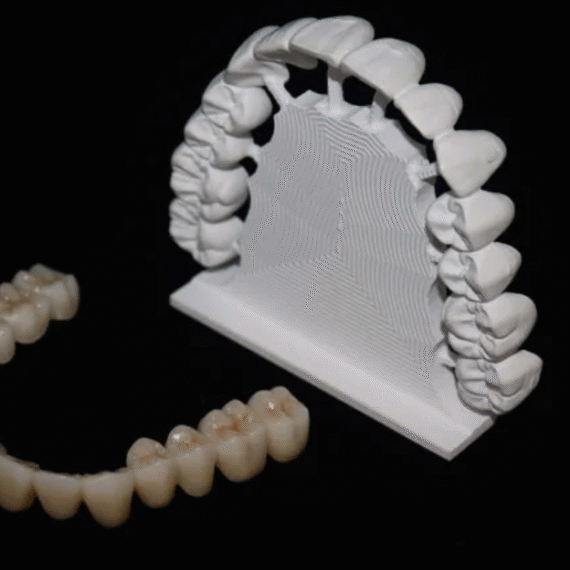
1. The Evolution of Dental Ceramics
Ceramics have always defined the aesthetics of dentistry. But in the digital era, they have become equally important for function and predictability.
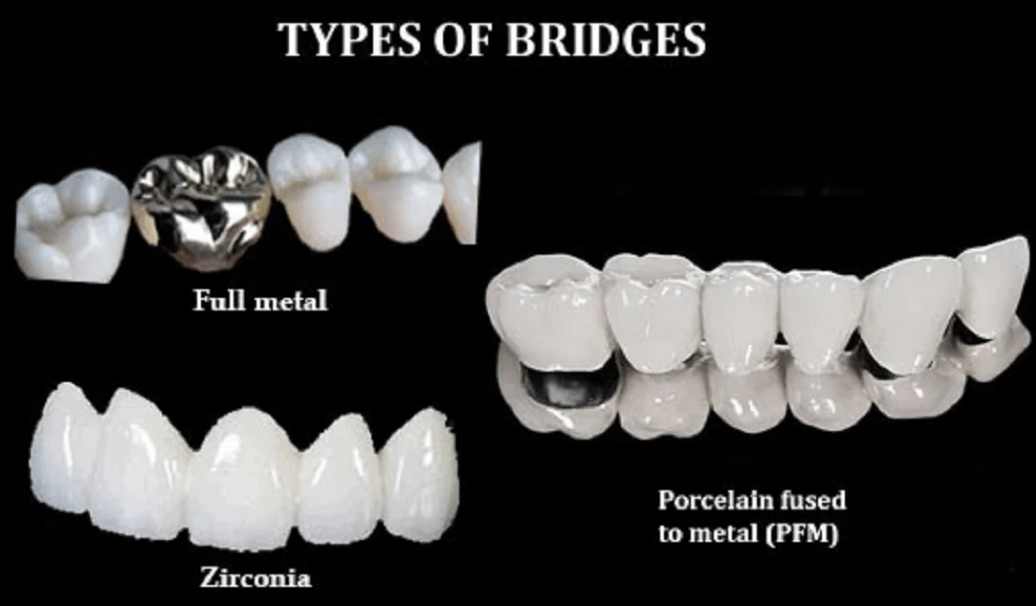
Early porcelain-fused-to-metal (PFM) systems offered strength but lacked optical depth. Pure feldspathic porcelain delivered translucency but fractured under stress. The last two decades changed everything with zirconia and lithium disilicate, which combine strength, beauty, and digital compatibility.
Now, a new generation has emerged — multilayer, monolithic, and hybrid materials engineered for CAD/CAM workflows.
At VCAD, technicians classify ceramics into four evolutionary stages:
- First-generation (PFM): Strength from metal, beauty from porcelain. Labor-intensive and inconsistent.
- Second-generation (Pressable ceramics): Lithium disilicate improves translucency but requires manual layering.
- Third-generation (Monolithic zirconia): Machine-milled strength but initially too opaque.
- Fourth-generation (Multilayer zirconia and hybrid composites): Gradient translucency, balanced flexural strength, fully digital processing.
Each generation solved one problem and revealed another. VCAD’s material R&D focuses on uniting them all — the strength of zirconia, the optical realism of glass, and the manufacturing efficiency of digital design.
The evolution of materials isn’t about replacement; it’s about convergence.
2. Understanding Material Behavior – The Science Beneath the Surface
To design restorations that last, labs must understand how ceramics behave beyond their catalog values.
1. Microstructure and Strength
Zirconia’s strength (900–1,200 MPa) comes from transformation toughening — crystals expand when stressed, stopping cracks from spreading. But as translucency increases (with 5Y or 6Y yttria content), crystal size grows, and flexural strength drops. VCAD balances these trade-offs by matching materials to indication:
- Posterior bridges → 3Y-TZP zirconia (high strength).
- Anterior veneers → 5Y or 6Y zirconia (high translucency).
2. Optical Properties and Light Dynamics
Ceramics interact with light differently depending on their crystalline density and glass content. Translucent ceramics refract light in a way that mimics enamel scattering. VCAD technicians calibrate layer thickness to control brightness gradients — ensuring vitality without excessive translucency that may gray out the tone.
3. Thermal Expansion and Bonding
Each material expands differently under temperature changes. VCAD engineers verify the Coefficient of Thermal Expansion (CTE) compatibility between frameworks and veneering porcelains to prevent delamination.
4. Aging and Hydrothermal Stability
Zirconia can undergo low-temperature degradation when exposed to moisture. Through controlled sintering cycles and surface polishing, VCAD minimizes this transformation, extending long-term stability.
This scientific precision transforms ceramics from artistic guesses into predictable engineering materials.
As one VCAD technician puts it: “We don’t just match shades — we match physics.”
3. Multilayer Zirconia – Engineering Light and Strength
Multilayer zirconia represents one of the greatest achievements in dental material innovation. It combines gradient translucency with color saturation, mimicking natural enamel-to-dentin transition.
At VCAD, multilayer blocks are carefully selected and milled with directional orientation in mind — the top layer reserved for enamel translucency, the middle for chroma, and the base for strength.
1. Optical Gradient Design
By digitally aligning crown orientation with material gradient, designers ensure that incisal edges capture light naturally while cervical areas retain warmth. This avoids the “flat white” appearance typical of early zirconia restorations.
2. Strength Gradient Simulation
Finite element analysis (FEA) within VCAD’s CAD system simulates stress distribution during mastication. The stronger base of the zirconia bears occlusal load, while the translucent layer handles esthetics. This prevents catastrophic failure while maintaining lifelike appearance.
3. Controlled Sintering Profiles
Different layers of zirconia shrink at slightly different rates during sintering. VCAD uses custom sintering schedules, developed through years of calibration, to equalize contraction and prevent internal tension.
4. Surface Texture and Glaze Optimization
Once milled, each restoration undergoes precision polishing. Smooth surfaces reduce plaque retention and increase optical clarity — because a perfectly finished surface reflects light more uniformly, appearing more “alive.”
Through this methodology, VCAD achieves the ideal marriage of physics and perception — restorations that work hard and look effortless.
4. The Rise of Hybrid Ceramics and Composite Materials
The next frontier in dental material science is not pure ceramic — it’s hybridization.
Hybrid ceramics combine ceramic fillers with polymer matrices to mimic the elasticity of dentin while preserving esthetics. Examples include VITA Enamic, Cerasmart, and other nano-resin composites.
VCAD uses hybrid materials strategically for specific indications: long-term temporaries, minimally invasive restorations, and implant provisional frameworks.
Key advantages include:
- Shock Absorption: The polymer network absorbs occlusal stress, reducing chipping.
- Milling Efficiency: Hybrids mill faster and with less tool wear.
- Repairability: They can be easily polished or re-bonded chairside.
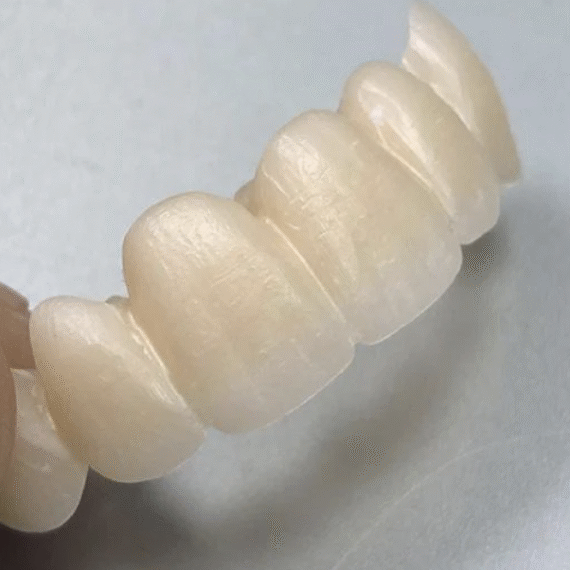
However, hybrid materials require disciplined calibration. Their lower modulus means they deform slightly under pressure, demanding precise cement space settings and bonding protocols.
To manage this, VCAD’s AI system adjusts cement gap automatically based on the chosen hybrid material’s modulus of elasticity.
These adaptive workflows ensure consistency even when working with materials that behave unpredictably in less controlled environments.
The message is clear: the future of dental ceramics isn’t rigidity — it’s responsive intelligence.
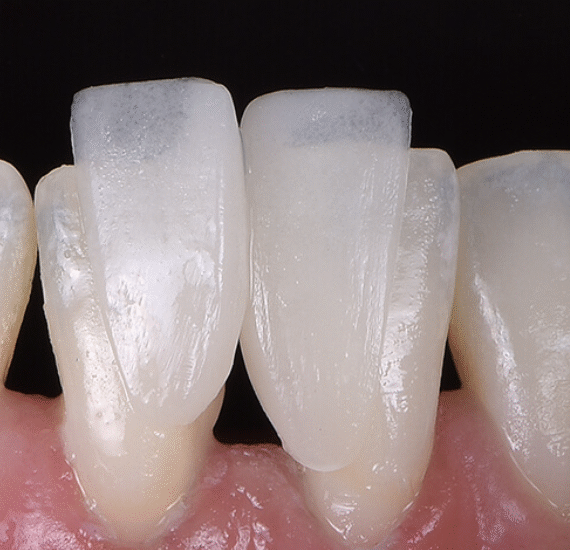
5. Data-Driven Material Selection – Precision Through Knowledge
Material choice is no longer a matter of habit or brand loyalty; it’s a decision grounded in data.
VCAD’s Material Intelligence Platform tracks every restoration produced: what material was used, where it was placed, how long it lasted, and what clinical feedback it received.
Over time, this creates a living database that reveals performance patterns:
- Which zirconia brands deliver lowest fracture rates.
- Which translucency levels best match natural enamel in different ethnic skin tones.
- Which sintering profiles yield the most consistent fits.
This data feeds directly into VCAD’s Material Recommendation Engine, guiding technicians and partner clinics toward evidence-based choices.
The system turns experience into algorithmic knowledge. Instead of guessing, VCAD predicts.
And because material science evolves constantly, the lab maintains active collaboration with universities and suppliers to test emerging ceramics — from graphene-reinforced composites to bio-active glass hybrids that promote tissue integration.
Ultimately, VCAD views material innovation not as a product race but as an ethical commitment: to deliver restorations that are safer, stronger, and scientifically justified.
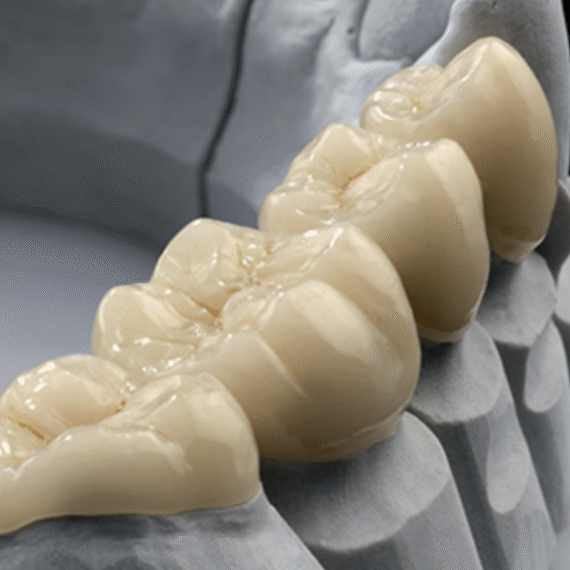
Conclusion
Ceramics are no longer inert materials — they are engineered ecosystems where light, structure, and chemistry interact.
At VCAD Dental Outsourcing Lab, understanding these interactions defines the very concept of precision. From multilayer zirconia to hybrid composites, each material is not just selected but studied, calibrated, and continuously improved through data feedback.
This fusion of material science and digital engineering elevates dentistry from craftsmanship to evidence-based artistry.
Because in the end, the patient never asks what brand of zirconia was used — they simply trust that their smile feels natural, functions perfectly, and endures over time.
That trust is built on invisible science. And at VCAD, science is not behind the smile — it is the smile.
Beyond Aesthetics: Functional Occlusion Design in the Digital Era
In dentistry, beauty captures attention, but function sustains satisfaction. A restoration can look flawless under studio lights yet fail in the patient’s mouth if it disregards one fundamental truth — the harmony of occlusion.
As digital dentistry evolves, it’s tempting to focus on color, texture, and translucency while underestimating occlusal dynamics. Yet behind every long-lasting smile lies the invisible architecture of force balance, muscle adaptation, and biomechanical logic.
At VCAD Dental Outsourcing Lab, functional occlusion design isn’t an afterthought; it’s the backbone of precision. Every CAD case, from a single veneer to a full-arch restoration, is shaped not only by esthetics but by physics — the science of how teeth move, meet, and endure.
Let’s explore how the digital era is transforming functional occlusion from guesswork into a data-driven discipline, and how VCAD engineers that transformation every day.
1. Why Function Defines Longevity
Dental restorations live in a battlefield of pressure. Every bite, swallow, and grind applies complex multidirectional forces. The difference between a restoration that lasts 10 years and one that fractures in 10 months often comes down to how well it respects occlusal harmony.
Traditional design relied heavily on technician intuition — the “eye and feel” method. But this approach couldn’t fully predict micro-interferences, eccentric contacts, or muscle-driven stress points. Once digital design arrived, it promised mathematical perfection — yet early CAD systems often oversimplified real occlusion, producing restorations that looked ideal on-screen but required endless chairside adjustments.
VCAD’s philosophy bridges both worlds: digital precision guided by clinical intelligence.
Before any design begins, each scan is analyzed through occlusal mapping software that detects high-pressure zones based on 3D articulation models. These maps visualize where forces concentrate, allowing technicians to adjust cusp angles and contact areas accordingly.
But the process doesn’t end in software. Every adjustment is grounded in clinical logic — maintaining anterior guidance, preserving posterior stability, and ensuring disclusion during lateral movement.
In short, the goal isn’t simply to make a crown that fits — it’s to make one that behaves correctly.
Aesthetic perfection draws admiration; functional perfection earns loyalty.
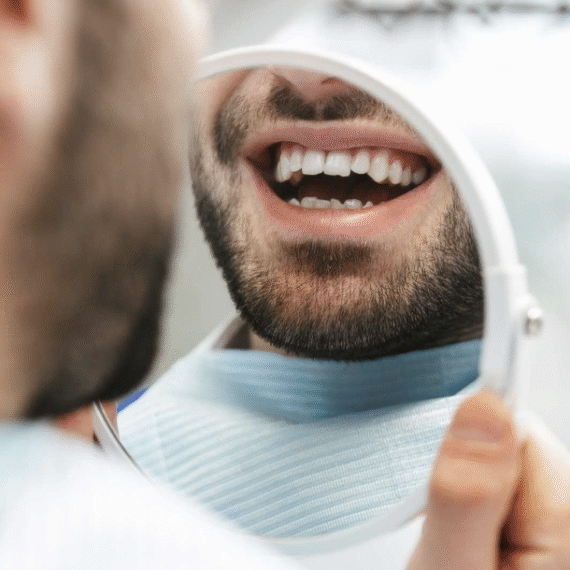
2. The Science Behind Functional Occlusion
Occlusion design is both mechanical and biological. It’s where dental anatomy meets muscle physiology and material engineering.
- Biomechanics of Force Distribution
Every occlusal contact transfers load through enamel, dentin, bone, and muscle. Imbalanced contacts amplify stress on individual units, causing microcracks or TMJ discomfort. Digital tools at VCAD simulate load paths, ensuring forces disperse symmetrically across the arch.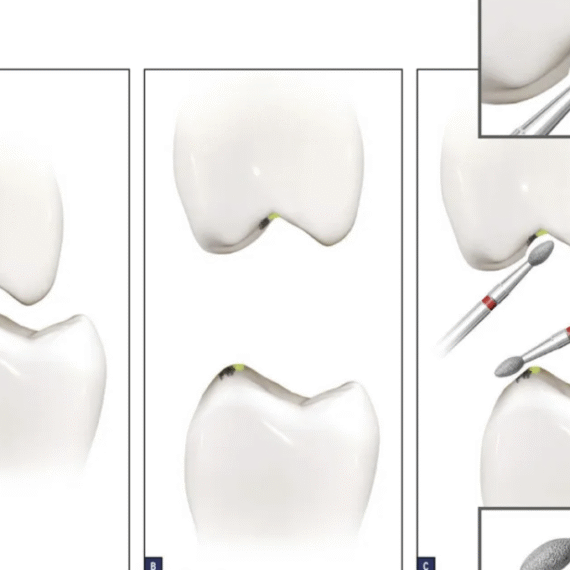
- Dynamic Motion Analysis
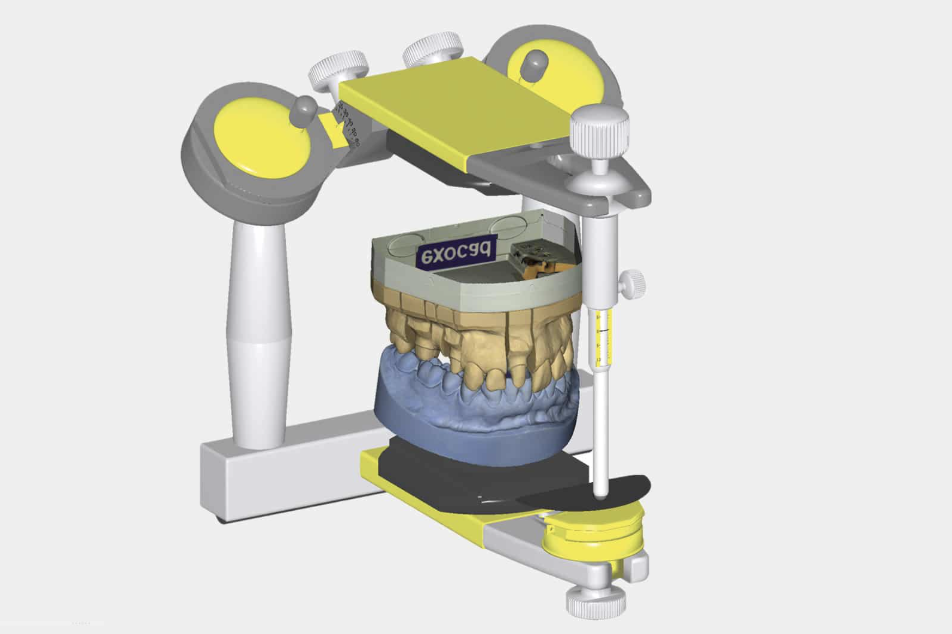
Using virtual articulators integrated with CAD systems, VCAD recreates mandibular movement in all three planes. Instead of designing in static bite, technicians visualize motion — protrusive, lateral, and retrusive. Each movement reveals how cusps should rise, glide, and release. - Material–Force Compatibility
Different materials behave differently under load. A zirconia crown tolerates compressive stress but risks chipping under sharp lateral force. Lithium disilicate offers beauty but needs thickness optimization. VCAD calibrates occlusal anatomy based on both material mechanics and functional demand. - AI-Assisted Occlusion Prediction
Through thousands of analyzed cases, VCAD’s AI algorithms now predict probable interference zones for specific tooth types and prep styles. When a CAD designer models an upper molar, the system flags potential collision points even before simulation.
This fusion of science and data ensures that every restoration embodies both beauty and biomechanical wisdom. Function, once invisible, becomes measurable — and therefore controllable.
3. Digital Tools that Redefine Functional Precision
The revolution of occlusion design lies in how software, scanning, and simulation technologies merge into one intelligent pipeline.
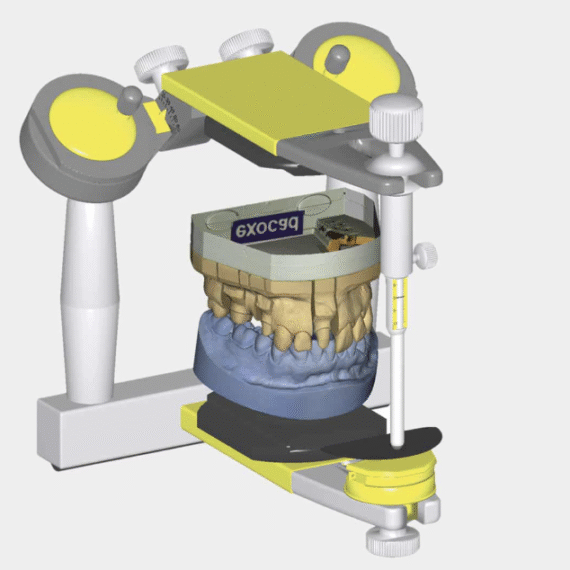
1. Digital Articulation & Real-Time Feedback
VCAD employs advanced articulator modules in 3Shape and Exocad to simulate movement dynamically. Technicians can adjust cusp inclines while observing virtual jaw motion. Any excessive contact automatically highlights in red, indicating high-load regions.
This replaces guesswork with geometry. Adjustments are quantified: “reduce 0.2 mm” instead of “just a bit lower.”
2. Occlusal Clearance Optimization
Before milling, the system verifies minimal clearance between opposing surfaces based on cement thickness and material requirements. This ensures bonding integrity without over-reduction.
3. Integration with Intraoral Scanner Data
Every patient’s bite record differs slightly from the articulator default. VCAD aligns digital bite data directly from intraoral scanners to the CAD design, achieving true patient-specific articulation.
4. Force Heatmaps and Predictive Modelling
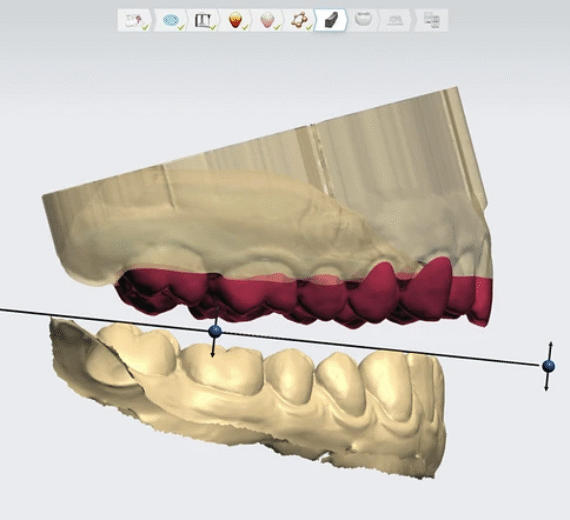
An internal VCAD innovation — the “Force Heatmap Dashboard” — overlays visual pressure distribution on digital models. Designers instantly see high-stress points, modify anatomy, and confirm correction before milling.
These digital systems allow VCAD to maintain functional repeatability across thousands of cases monthly. What used to depend on manual artistry now rests on measurable parameters — without losing the human intuition that interprets them.
In dentistry, precision doesn’t mean rigidity; it means predictability.
5. The Clinician–Lab Feedback Loop
Functional occlusion design cannot exist in isolation — it’s a conversation between the mouth and the monitor.
VCAD has built this loop through clinical feedback integration. Every partner clinic contributes performance data:
- Chairside adjustment time per case.
- Patient comfort ratings after insertion.
- Follow-up reports on wear or fracture.
This information feeds back into VCAD’s AI performance model, refining design algorithms and technician training.
When patterns emerge — for instance, a specific occlusal morphology producing slight high contacts in posterior second molars — VCAD updates its global design library to prevent recurrence.
This loop transforms experience into evolution. Each restoration doesn’t just serve one patient; it teaches the system how to serve the next better.
Moreover, VCAD encourages two-way communication:
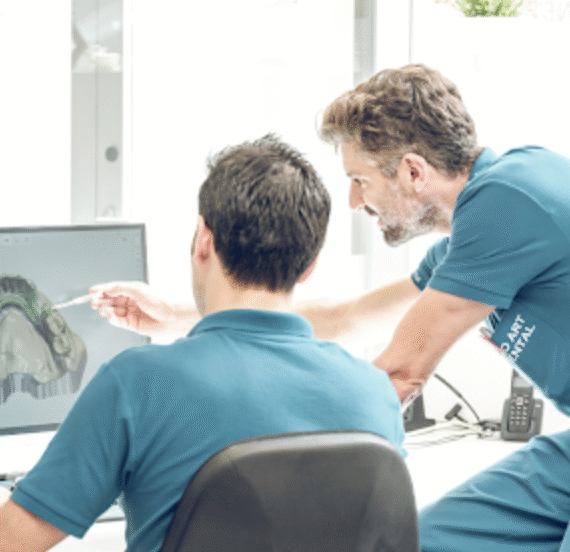
Clinicians can mark adjustments directly on digital models and upload them back to the portal. The lab team reviews and tags these modifications, ensuring knowledge retention.
The outcome is a constantly learning ecosystem — a lab that improves not by assumption but by accumulation.
Functional excellence, after all, is not built in one design — it’s cultivated through continuous feedback.
6. Function Meets Esthetics – The Philosophy of Balance
It’s easy to imagine esthetics and function as opposing forces — one emotional, one technical. But in reality, they are inseparable. The most beautiful smile collapses without proper function, and the most functional crown feels foreign if it lacks visual harmony.
VCAD’s design philosophy embraces both through the principle of “aesthetic biomechanics.”
Every restoration follows three rules:
- Form Follows Function – The anatomy mirrors natural wear patterns, ensuring both comfort and realism.
- Light Follows Contour – Proper cusp curvature enhances reflection, creating natural brightness without over-staining.
- Color Follows Movement – Translucency gradients are adjusted along functional paths, imitating how natural enamel thins toward occlusal edges.
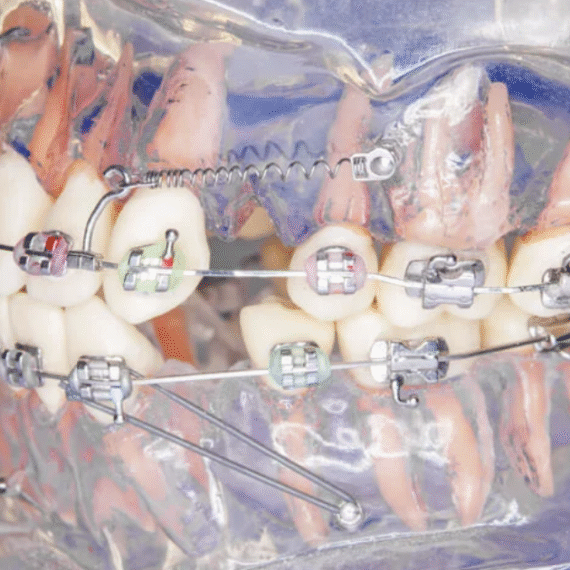
This synthesis allows technicians to design restorations that work like nature and look like art.
The digital era doesn’t replace the human eye — it refines it. Tools amplify intuition; data strengthens creativity.
For VCAD, the ultimate measure of success isn’t the scan, the software, or even the smile. It’s time itself — how long the restoration endures without losing beauty or balance.
Because when function and esthetics move together, time becomes their witness.