


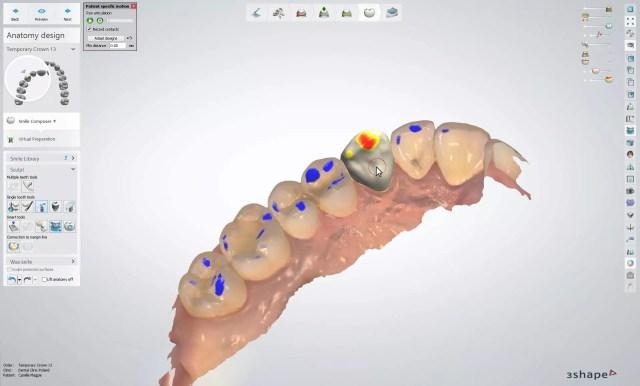
Remakes are one of the most persistent inefficiencies in dental laboratory workflows. Each remake represents more than a single failed case—it reflects a breakdown in data integrity, communication, design accuracy, or process control. As digital workflows become the standard, the opportunity to reduce remakes shifts from manual correction to system-level management.
Article content
ToggleFrom a laboratory perspective, the ability to reduce dental remakes is not achieved by isolated improvements. It requires structured control across the entire digital case lifecycle, from intake and validation to CAD design, manufacturing alignment, and communication.
This article analyzes the primary causes of remakes and outlines how digital case management systems reduce variability and improve consistency across workflows.
Remakes as a System-Level Issue, Not a Single Failure Point
Remakes are often attributed to individual errors—scan inaccuracies, design mistakes, or production issues. However, in most workflows, remakes are cumulative results of multiple small inconsistencies.
Common Symptoms of Remake-Prone Workflows
- High chairside adjustment rates
- Frequent occlusal discrepancies
- Inconsistent marginal adaptation
- Repeated need for case clarification
Underlying Reality
Each remake indicates that one or more stages in the workflow failed to align. Effective reduction requires identifying and controlling these stages systematically.
Intake Control: Preventing Errors Before They Enter the Workflow
The first opportunity to reduce dental remakes occurs at case intake.
Typical Intake Failures
- Missing scan components (antagonist or bite)
- Poor margin visibility
- Incomplete or unclear prescriptions
- File compatibility issues
Impact on Workflow
When these issues are not addressed at intake:
- Designers must interpret incomplete data
- Variability increases
- Errors propagate into design and production
Structured Intake Quality Control
Effective intake QC includes:
- Verification of scan completeness and integrity
- Validation of file formats and compatibility
- Confirmation of case instructions
Cases that do not meet criteria are paused until corrected.
Result
- Reduced ambiguity in design
- Lower risk of downstream errors
- Improved consistency across cases
Scan Data Quality and Its Direct Link to Remakes
Digital workflows depend entirely on scan data accuracy.
Scan-Related Causes of Remakes
- Distorted or incomplete geometry
- Unclear preparation margins
- Inaccurate bite registration
Design Limitations
CAD systems cannot reconstruct missing or inaccurate data. Instead, they must operate within the constraints of the provided scan.
Workflow Implication
Improving scan quality directly reduces remake rates by:
- Enhancing margin definition
- Stabilizing occlusal relationships
- Supporting accurate internal fit
Margin Definition as a Critical Control Point
Margin accuracy is central to restoration fit and longevity.
Margin-Related Remake Causes
- Overextended or underdefined margins
- Inconsistent interpretation of preparation edges
- Poor visibility in scan data
Impact on Outcomes
- Open margins or incomplete seating
- Increased chairside adjustment
- Higher likelihood of remake
Workflow Control
Standardizing margin definition through:
- Clear intake validation
- Consistent CAD protocols
- Design-level quality checks
is essential to reduce variability.
Occlusal Design and Its Contribution to Remakes
Occlusal discrepancies are a frequent cause of remakes.
Sources of Occlusal Error
- Inaccurate bite registration
- Misalignment between arches
- Inconsistent occlusal parameter settings
Resulting Issues
- High or low contact points
- Uneven load distribution
- Need for extensive adjustment
Digital Workflow Advantage
Structured CAD design can:
- Apply consistent occlusal parameters
- Simulate articulation
- Reduce variability in contact design
This improves predictability and reduces the need for correction.
Internal Fit and Seating Accuracy
Internal fit directly affects how a restoration seats.
Causes of Poor Fit
- Incorrect cement gap settings
- Inaccurate margin placement
- Distortion in scan geometry
Impact on Remakes
- Tight or incomplete seating
- Occlusal discrepancies due to misfit
- Increased likelihood of case rejection
Workflow Solution
Consistent application of internal fit parameters, aligned with accurate scan data, improves seating and reduces remake rates.
Communication Gaps as a Source of Variability
Communication is a critical but often overlooked factor.
Common Communication Issues
- Missing material selection
- Unclear restoration type
- Lack of case-specific instructions
Impact on Design
- Designers rely on assumptions
- Variability increases
- Risk of incorrect design decisions
Structured Communication Systems
- Standardized submission forms
- Defined required parameters
- Feedback loops for clarification
These systems reduce ambiguity and improve consistency.
Quality Control Integration Across Workflow Stages
Quality control must be applied at multiple points to effectively reduce dental remakes.
Intake-Level QC
- Ensures case readiness
- Prevents flawed data from entering the workflow
Design-Level QC
- Verifies margin accuracy
- Confirms occlusal and contact parameters
Pre-Production QC
- Validates manufacturability
- Identifies potential issues before fabrication
Workflow Impact
Multi-stage QC prevents cumulative errors and reduces the need for rework.
Design Standardization and Its Role in Consistency
Variability in design execution is a major contributor to remakes.
Sources of Design Variability
- Different designers applying different logic
- Lack of defined parameter sets
- Case-by-case interpretation without standards
Standardization Approach
- Defined design protocols
- Consistent parameter application
- Structured training and workflow guidelines
Outcome
- Reduced variation between cases
- Improved predictability
- Lower remake rates
Aligning Design with Manufacturing Processes
Design must be compatible with production capabilities.
Misalignment Issues
- Inadequate thickness for material
- Incorrect scaling or compensation
- Designs that cannot be manufactured accurately
Impact on Remakes
- Production errors
- Dimensional inaccuracies
- Need for redesign and re-fabrication
Integrated Workflow
Aligning CAD design with manufacturing constraints ensures that designs translate accurately into physical restorations.
Turnaround Pressure and Its Effect on Remake Rates
Efforts to accelerate turnaround time can increase variability.
Speed-Driven Risks
- Reduced time for design refinement
- Limited quality control
- Increased likelihood of errors
Balanced Workflow Approach
- Controlled processing timelines
- Integration of QC without interruption
- Focus on first-time accuracy
Key Insight
Reducing remakes requires prioritizing consistency over speed.
Data Management and File Integrity
File handling plays a role in maintaining consistency.
Data-Related Issues
- File corruption or loss during transfer
- Incompatible formats
- Inconsistent data structure
Workflow Control
- Standardized file submission protocols
- Support for multiple formats
- Verification of file integrity at intake
These measures ensure that design is based on accurate and complete data.
Continuous Feedback and Workflow Improvement
Reducing remakes is an ongoing process.
Feedback Mechanisms
- Tracking adjustment and remake patterns
- Identifying recurring issues
- Updating protocols based on findings
Long-Term Impact
- Improved submission quality
- More consistent design output
- Reduced variability across workflows
Managing Remakes in High-Volume Environments
As case volume increases, small inefficiencies become more significant.
Impact of High Remake Rates
- Increased production workload
- Reduced throughput
- Higher operational complexity
Control Strategies
- Standardized intake and design processes
- Consistent QC integration
- Structured communication
These strategies help maintain efficiency at scale.
Conclusion: Reducing Remakes Through Workflow Control
To reduce dental remakes, laboratories must shift from reactive correction to proactive workflow management.
Key factors include:
- High-quality scan data
- Accurate margin definition
- Consistent occlusal and fit design
- Structured communication
- Integrated quality control
Digital case management provides the framework for controlling these variables, reducing variability, and improving consistency.
In modern dental workflows, remakes are not eliminated by isolated improvements. They are reduced by building a system where each stage supports accuracy, continuity, and predictable outcomes from the beginning.