


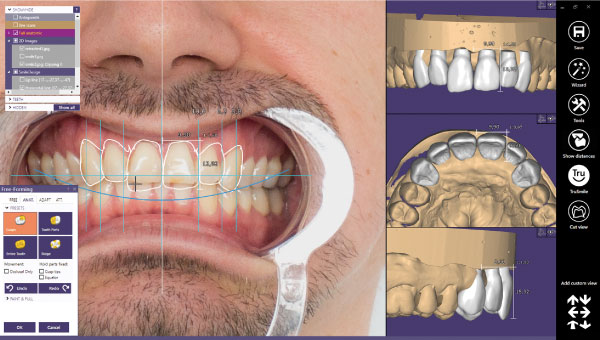
In a digital production environment, Implant Restoration outsourcing is no longer treated as occasional overflow support. For many modern dental labs, it is a structured extension of internal workflow. Implant cases require more than design speed. They require accurate file handling, component awareness, restorative planning discipline, and controlled communication between the submitting team and the production team. When any of those elements are weak, delays tend to appear at the most expensive points in the workflow: design revision, component mismatch, remake risk, and chairside adjustment.
That is why implant outsourcing should be evaluated as a workflow system rather than a simple production service. A practical approach to Implant Restoration outsourcing must consider how files are submitted, how cases are reviewed, how implant libraries are matched, how restorative limitations are identified early, and how manufacturing decisions align with the intended clinical result. For labs working under time pressure and variable case complexity, that structure matters far more than generic promises of speed.
Why implant cases behave differently from conventional restorative outsourcing
Single-unit crown and bridge cases can often move through a standard digital workflow with relatively limited complexity once scan data is clean and the prescription is clear. Implant work behaves differently. Even apparently straightforward cases can become unstable if there is ambiguity around scan bodies, implant systems, screw access direction, tissue contour, restorative space, or prosthetic design intent.
This is what makes Implant Restoration outsourcing more technically demanding than general digital design support. The design phase must account for the restorative objective and the mechanical pathway at the same time. A crown may be designed around anatomy and fit. An implant restoration must also be designed around component compatibility, insertion logic, emergence profile, access positioning, and material behavior. These constraints are not secondary details. They shape whether the case can move smoothly into fabrication and delivery.
From one angle, outsourcing implant work may appear risky because the cases are less forgiving. From another angle, that is precisely why a specialized external workflow can be useful. When implant cases are handled by a team already structured around these variables, internal labs can reduce pressure on in-house designers and technicians without lowering technical discipline.
A practical outsourcing workflow starts with case selection
Not every implant case should be outsourced in the same way. A practical system begins by identifying which case types are appropriate for external design and fabrication support, and which cases may require closer internal control. This is not a question of trust alone. It is a question of case predictability.
Straightforward posterior implant crowns with clear scan data, known implant systems, stable bite registration, and conventional restorative goals are generally well suited for outsourced Implant Restoration workflows. By contrast, cases involving limited restorative space, uncertain implant angulation, esthetic zone constraints, multi-unit coordination, or incomplete records demand more communication and tighter review before they are released.
This distinction matters because outsourcing works best when the workflow is selective rather than indiscriminate. Some labs assume that the goal is to move as many implant cases out as possible. A more disciplined view is that the goal is to move the right implant cases through the right external pathway, with appropriate triage from the beginning. That is where practical efficiency begins.
File submission quality determines the speed of implant outsourcing
A great many delays in outsourced implant work are caused before design starts. They begin with incomplete or unstable submissions. In conventional restorative work, imperfect data may still be workable in some situations. In Implant Restoration, incomplete data has a higher chance of stopping the workflow entirely.
A usable implant submission should clearly establish the scan relationship, implant location, restorative site, and intended restoration type. The case should include clean digital impressions, antagonist data, bite information, and clear identification of the implant system and scan body used. If the restoration involves a specific component path, custom abutment plan, or screw-retained design, that information should be established early rather than left for the design team to infer.
There are two opposing habits in case submission. One is to send only the minimum files and assume the lab will figure out the rest. The other is to overload the case with poorly organized information. Neither approach is efficient. The best implant outsourcing workflow uses complete and structured input: enough information to support accurate design, but organized clearly enough that the design team can review it without interpretive guesswork.
This is where many labs quietly lose time. Not in design itself, but in digital housekeeping. The workflow goblin lives there.
Implant library control is a non-negotiable part of the process
Any practical guide to Implant Restoration outsourcing has to address implant libraries. Library mismatch remains one of the most common sources of avoidable friction in digital implant workflows. If the case is built on the wrong library, or if the scan body data does not align with the intended component pathway, the design may look plausible on screen while being technically incorrect in production.
A competent outsourcing workflow therefore begins with explicit library verification. The design team must know exactly which implant system, platform, and restorative components are being used. This is especially important in labs handling multiple implant brands across different markets, where small naming similarities can conceal large technical differences.
The practical lesson here is simple: implant outsourcing should never depend on assumption-based component interpretation. If a lab wants predictable external support, the implant reference pathway must be as clear as the margin line in a conventional crown case. Otherwise, the project enters design with a structural weakness that no amount of later polishing can fully repair.
Design decisions in implant work must be manufacturing-aware
One of the clearest differences between ordinary digital design and outsourced Implant Restoration design is that implant work must be evaluated as both a restorative file and a production object. The anatomy cannot be separated from the mechanics. A design that appears acceptable in CAD may still create manufacturing or delivery problems if restorative thickness, channel position, emergence contour, or component interface behavior are not considered properly.
For example, screw access should not be judged only by location on the screen. It must be considered in relation to the intended occlusal scheme, material thickness, esthetic acceptability, and post-processing practicality. Emergence profile should not be shaped only for visual smoothness. It must reflect tissue conditions, cleansability expectations, and restorative support requirements. Material choice influences not just esthetics or strength, but milling behavior, fit verification, and finishing consistency.
This is why modern labs often benefit from implant outsourcing partners who understand fabrication logic, not just CAD operation. From one perspective, design is a digital task. From another, more accurate perspective, implant design is a pre-manufacturing task. The second view is the one that keeps cases out of trouble.
Communication standards determine whether outsourcing stays efficient
Implant cases fail quietly when communication is vague. A team may assume the design lab understands the intended pathway, while the design lab assumes the submitting team has approved certain technical compromises. That mutual assumption is a classic source of avoidable revision.
A structured Implant Restoration outsourcing workflow should define how communication happens before, during, and after design. Before design, the case should identify the restoration type, retention method, component expectations, and any constraints related to access direction, esthetics, soft tissue profile, or occlusal limitations. During design, questions should be raised early when input is incomplete. After design, approval and production release should follow a clear review path rather than informal acceptance.
Some labs underestimate this communication layer because they think technical skill is the main variable. Technical skill matters, of course. But a highly skilled team working from incomplete assumptions will still produce unstable outcomes. Practical outsourcing depends on communication discipline at least as much as design ability.
Turnaround should be measured by resolution, not by file delivery alone
One of the most misleading ways to evaluate outsourced implant support is to ask how quickly a design file is returned. That can be a useful metric, but only in a narrow sense. The more meaningful question is how quickly the case reaches a production-ready and clinically usable result with minimal redesign.
For Implant Restoration workflows, turnaround should therefore be measured in stages. How long does intake review take? How quickly are missing details identified? How efficiently can the design team produce a technically valid first version? How often do cases return for revision because of unclear instructions, component ambiguity, or manufacturing mismatch? These questions reveal more about workflow performance than a simple turnaround headline.
This creates two possible management styles. One prioritizes rapid delivery of draft files. The other prioritizes fewer correction loops and smoother movement into fabrication. For implant work, the second style is usually more valuable. A fast first file that later collapses into clarification and redesign is not truly fast. It is only early.
Quality control in implant outsourcing must happen before final inspection
In conventional production thinking, quality control is often imagined as a final checkpoint. In outsourced Implant Restoration, that approach is too late. By the time a problem appears at final inspection, the case has already consumed design time, component coordination, and manufacturing capacity.
A stronger workflow applies quality control in layers. At intake, QC confirms file usability, implant identification, and completeness of prescription data. During design, QC checks interface alignment, restorative feasibility, anatomical logic, and material suitability. Before fabrication, QC verifies that the approved design is consistent with the selected production pathway. After fabrication, QC confirms that the output reflects the intended design and component relationship.
This layered approach matters because implant cases are rarely damaged by a single dramatic mistake. More often, they are weakened by a sequence of small unchallenged assumptions. Quality control is the mechanism that interrupts that sequence before it becomes expensive.
How modern labs should evaluate an implant outsourcing partner
A practical outsourcing partner for implant work should not be judged only by the list of services offered. The more important question is whether the partner’s process fits the technical rhythm of implant cases. That includes file compatibility, implant library handling, case triage, design-to-manufacturing awareness, communication responsiveness, and repeatable QC structure.
For labs, the most useful external partner is not necessarily the one that claims to handle every implant situation identically. It is the one that recognizes where cases differ and responds with appropriate review depth. Standardized workflow is valuable, but false uniformity is not. Implant cases need controlled variation in handling because they carry controlled variation in risk.
A modern lab should therefore look for signs of process maturity rather than broad claims. Does the partner identify missing information early? Does the team ask the right questions when the pathway is unclear? Is the design logic grounded in manufacturing reality? Are revisions driven by technical discipline rather than by reactive correction? Those questions are far more revealing than general descriptions of digital capability.
Conclusion
A practical approach to Implant Restoration outsourcing begins with one simple principle: implant cases should move through an external workflow only when that workflow is technically structured enough to protect accuracy, communication, and production predictability. Outsourcing is not merely a way to move work out of the lab. It is a way to extend the lab’s technical system beyond its internal walls.
For modern dental labs, the value of outsourced implant work lies in disciplined case selection, strong file submission standards, verified library control, manufacturing-aware design, clear communication, and layered quality control. When these elements are present, outsourcing supports workflow efficiency without turning implant cases into black-box production.
That is the practical goal. Not just faster output, but a more stable and manageable Implant Restoration process from intake to fabrication.