


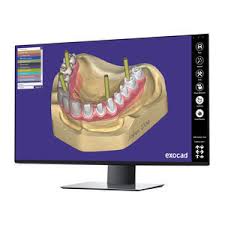
In implant prosthetics, the quality of the final result is rarely determined by a single design decision. It is shaped by a chain of technical choices: how the implant position is interpreted, how the restorative space is evaluated, how the abutment is designed, how the crown is supported, and how the case is prepared for manufacturing. For dental labs, prosthodontists, oral surgeons, and digitally active clinics, the value of a specialized design service lies in how reliably those decisions are made before production begins.
That is why Implant Crown design services should not be viewed as isolated CAD tasks. In a modern workflow, custom abutment design and implant crown design are closely linked stages within one restorative process. If they are handled separately without coordination, the result may look acceptable on screen while creating problems in fit, emergence, screw access, occlusion, or manufacturing consistency. If they are developed together, the workflow becomes more stable and the restoration is more likely to move cleanly from file submission to fabrication.
Why custom abutment design cannot be separated from implant crown design
A custom abutment is not simply a connector between implant and crown. In many cases, it defines the restorative foundation. Margin position, emergence contour, axial alignment, soft tissue support, and available crown thickness are all influenced by the abutment design. Once these variables are set poorly, the Implant Crown design becomes constrained from the start.
This is the main reason dental professionals benefit from integrated design services rather than fragmented case handling. A crown designed without abutment awareness may require compensation in contour, occlusal anatomy, or internal relief. An abutment designed without crown planning may create esthetic compromise, excess cement risk, or unstable restorative proportions. Neither outcome supports a controlled implant workflow.
From one perspective, these are two design components. From a more accurate laboratory perspective, they are one prosthetic system. The abutment and crown should be developed in relation to each other, not in sequence without technical dialogue.
The design service begins long before the first CAD step
In implant cases, efficient design starts with case intake, not with software tools. Before any custom abutment or Implant Crown file is created, the submission needs to be reviewed for completeness and usability. This includes the scan quality, bite relationship, implant identification, scan body data, restorative site clarity, and the intended retention pathway.
A digital implant case may arrive quickly, but that does not mean it is ready for design. If the scan body is not captured clearly, if the bite is unstable, or if the implant system is not identified accurately, the case enters the workflow with technical uncertainty. That uncertainty does not disappear during design. It usually becomes more expensive later.
For this reason, professional design services for dental professionals should include an intake review process that identifies missing information early. This is not merely administrative control. It is technical risk management. A case that pauses at intake for clarification is often cheaper to resolve than a case that proceeds into design and then returns because the component pathway was interpreted incorrectly.
Implant position and restorative space determine the design pathway
Every implant case carries a mechanical reality that limits what can be designed. Implant angulation, restorative clearance, adjacent dentition, occlusal scheme, interproximal space, and soft tissue conditions all influence whether the case is best served by a custom abutment with a cement-retained crown, a screw-retained restoration, or another prosthetic approach. Even when the restorative direction is already chosen, those variables still define how the design should be executed.
A good design service does not treat every Implant Crown case as a standard single-unit exercise. It evaluates whether the implant position supports a straightforward crown form, whether the screw channel creates functional compromise, whether the abutment needs to correct angulation, and whether crown thickness remains appropriate across the occlusal and axial surfaces. These considerations shape both prosthetic behavior and manufacturing predictability.
This is where a lab-driven approach matters. The design team is not only asking whether the restoration looks acceptable digitally. It is asking whether the chosen geometry will translate cleanly into fabrication and final use. That distinction is where many weak implant workflows begin to wobble.
Custom abutment design is about control, not ornament
There is a temptation in digital dentistry to think of customization as a matter of visual refinement. In practice, custom abutment design is more about technical control than esthetic embellishment. The abutment must establish a rational margin position, support the intended crown contour, respect tissue behavior, and allow the final restoration to function within the available restorative envelope.
When designed properly, the custom abutment helps the Implant Crown sit within a more predictable geometry. It can improve path of insertion, support emergence, and reduce the need for overcontoured crown anatomy. It can also help the lab manage cement space and restorative thickness more consistently. When designed poorly, the crown often becomes an awkward correction layer sitting on top of an unstable base.
For dental professionals outsourcing these services, this means the most useful design partner is not the one that simply produces a custom abutment quickly. It is the one that designs the abutment in direct relation to the final crown form, restorative limitation, and production pathway.
Implant crown design must balance anatomy, access, and manufacturing logic
An implant-supported crown is never only an anatomical form. It is also a manufactured object built around a mechanical interface. This matters because a visually attractive design may still perform poorly if screw access is poorly positioned, occlusal thickness is inconsistent, or the internal support geometry creates weakness during milling or finishing.
Strong Implant Crown design services therefore operate at the intersection of restorative anatomy and manufacturing logic. Proximal contact strength, occlusal contact distribution, crown contour, access channel location, and material thickness all have to be evaluated together. The design must support not only the digital ideal, but also the practical reality of fabrication.
There are two ways to approach implant crown design. One focuses on screen appearance and rapid output. The other focuses on how the crown will behave in production and in downstream laboratory handling. For dental professionals who depend on consistency, the second approach is far more valuable. A crown that requires repeated adjustment because the design ignored manufacturing behavior is not truly efficient, no matter how fast the initial file was delivered.
File compatibility and implant library control are central to service quality
For design services in implant prosthetics, software compatibility is not a background issue. It is a workflow issue. A case may fail before meaningful design begins if the submitted files are incomplete, incompatible, or built around unclear implant library information. This is especially relevant in environments where different clinics and labs work across multiple scanner ecosystems, CAD platforms, and implant systems.
A reliable Implant Crown service must therefore include disciplined implant library verification and practical file handling. The design team should know exactly which implant system, platform, and restorative components are intended before designing the abutment or crown. Assumption-based library matching may seem efficient in the short term, but it introduces risk into the most sensitive part of the digital implant workflow.
From a practical standpoint, dental professionals should expect a design service to reduce ambiguity, not absorb it silently. If a case contains uncertainty around scan body identification, implant platform, or restorative component selection, that should be addressed before the design moves forward.
Communication quality determines whether the service supports or slows the lab
Even technically capable design services become inefficient when case communication is vague. Implant cases often include assumptions that remain unspoken: margin expectations, screw access tolerance, preferred retention style, tissue contour priorities, and restorative material direction. If these are not clarified, the design team is forced to interpret rather than execute.
For outsourced custom abutment and Implant Crown services, communication should define the intended restorative pathway as clearly as possible. This includes whether the case is cement-retained or screw-retained, whether a specific abutment design preference exists, whether there are site-specific esthetic constraints, and whether occlusal or interproximal adjustments need particular attention. In more advanced cases, the design team may also need information about adjacent restorative plans, soft tissue objectives, or component-specific instructions.
The point is not to flood the case with unnecessary notes. The point is to eliminate technical ambiguity where it changes the design outcome. Clear communication saves time because it reduces design revisions driven by interpretation rather than by true case change.
Quality control should be built into the design service, not left to the end
For implant cases, quality control cannot be treated as a final inspection event. By the time the crown or abutment reaches final review, a large amount of technical value has already been invested. If the restoration logic is wrong at that stage, the workflow has already lost time.
This is why effective Implant Crown design services require layered quality control. At intake, QC confirms that the submitted files and implant references are sufficient. During design, QC checks emergence profile, margin logic, abutment geometry, access position, occlusal clearance, and restorative feasibility. Before fabrication, QC verifies that the approved design still aligns with the intended production route. This kind of staged review reduces the chance that a design error survives all the way to manufacturing.
From a laboratory viewpoint, this matters more than polished presentation. A calm, disciplined QC process does more for case predictability than any decorative description of digital capability. Dentistry has enough chaos goblins already.
What dental professionals should expect from a dedicated design service
Dental professionals using custom abutment and Implant Crown design services should expect more than CAD execution. They should expect a technically structured workflow that supports file review, component verification, restoration planning, design consistency, and manufacturing awareness.
For labs, this kind of service helps extend internal capacity without fragmenting the restorative process. Instead of sending one case out for design and handling the consequences later, the lab can work with a partner whose output is already shaped by production logic. For clinics and specialists, the benefit is similar. The service should translate clinical data into a prosthetically coherent design file rather than merely generating a digital crown shape.
This does not mean every case becomes simple. Implant work remains sensitive to scan quality, component accuracy, restorative space, and prosthetic limitations. But a dedicated service should make those limitations visible early, manage them consistently, and reduce avoidable back-and-forth across the workflow.
Conclusion
Custom abutment and Implant Crown design services are most useful when they function as a technical extension of the dental laboratory workflow, not as disconnected digital drafting support. In implant prosthetics, the abutment and crown must be designed together, reviewed within the same restorative logic, and prepared with manufacturing reality in mind.
For dental professionals, the practical value of these services lies in structured intake, accurate implant library control, coordinated abutment-crown planning, clear communication, and multi-stage quality control. When those elements are present, the design process supports better workflow efficiency and stronger manufacturing consistency without relying on guesswork or repeated correction.
That is what professional implant design support should do. Not simply create files, but help dental teams move from digital input to production-ready restorations with greater clarity, technical control, and restorative predictability.