


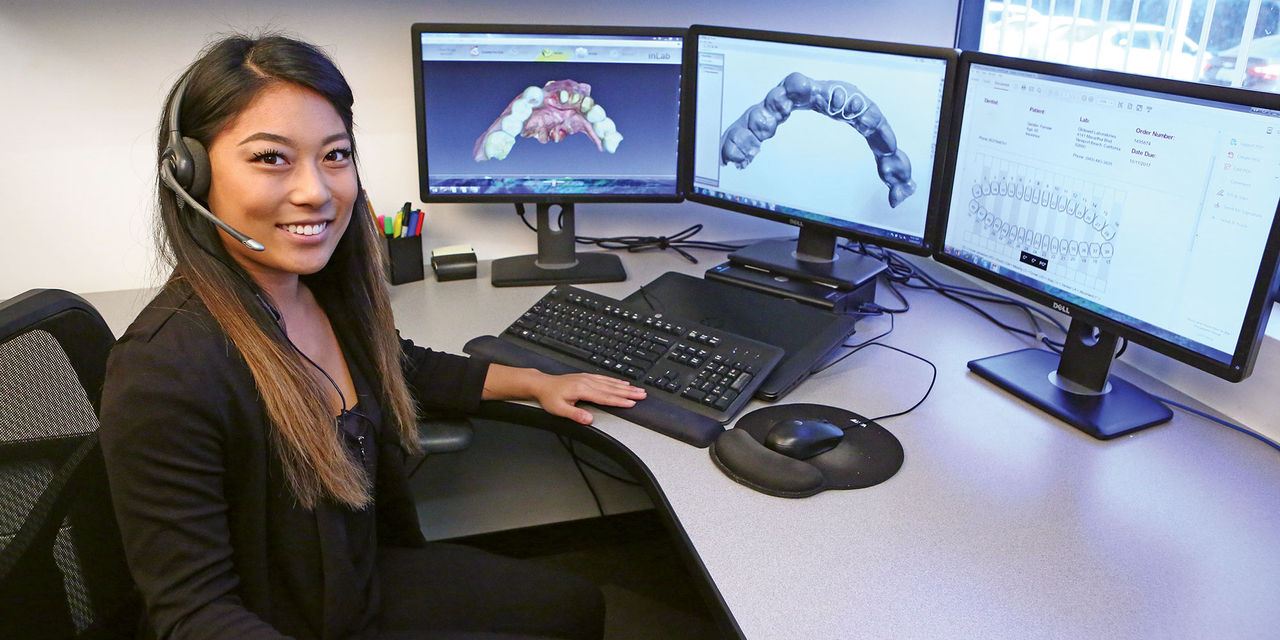
In a digital production environment, delays rarely begin at milling, printing, or final finishing. They usually begin earlier, when a case is submitted with incomplete files, unclear instructions, inconsistent naming, or unresolved technical assumptions. For dental labs, clinics, prosthodontists, and oral surgeons, sending cases to an Outsourcing Dental lab efficiently is not simply an administrative task. It is a workflow discipline that directly affects turnaround, design accuracy, manufacturing predictability, and remake risk.
A well-organized outsourcing relationship does not depend on speed alone. It depends on whether the submitted case can move from intake to review, from review to design, and from design to fabrication without unnecessary interruption. That means the sending team must understand what the receiving lab actually needs to begin work correctly. It also means the outsourcing lab must operate with clear intake standards, file compatibility, communication logic, and quality control checkpoints.
When those conditions are in place, outsourcing supports efficiency. When they are not, delays begin before the first technical step. The practical question, then, is not only how to send a case, but how to send it in a way that protects workflow continuity from the start.
Delays usually come from missing clarity, not from distance
A common assumption is that sending work to an external lab becomes slower mainly because the lab is outside the building, outside the city, or outside the country. In reality, physical distance is often less important than workflow clarity. A case can move quickly across time zones if the file package is complete and the instructions are technically usable. On the other hand, a case can stall immediately if the lab receives incomplete scans, missing bite data, unclear restorative intent, or unresolved implant details.
This is why an Outsourcing Dental workflow should be treated as an extension of internal production, not as a casual transfer of files. The sending team should assume that the receiving lab cannot safely guess what was not submitted. If the restorative pathway is unclear, the case will pause. If the file naming is inconsistent, the case may require manual sorting. If the implant system is not confirmed, the design team cannot proceed reliably. None of these delays are caused by outsourcing itself. They are caused by poor submission structure.
From one angle, that may sound obvious. From another, it is exactly where many labs quietly lose time. The workflow gremlin is usually hiding in intake, not in manufacturing.
Start with a complete and structured digital file set
The fastest way to slow down an outsourced case is to submit only part of what the lab needs and expect the rest to be inferred later. A clean submission should include all core files required for the specific restoration type. For standard fixed cases, that typically means the preparation scan, antagonist scan, and bite scan. For more advanced or esthetic cases, photographs or additional design references may also be needed. For implant cases, scan body data, implant system identification, and restorative intent should be established before submission.
This matters because an Outsourcing Dental lab can only move as fast as the file package allows. If the receiving team has to request antagonist data, verify which arch is final, or determine whether the bite relationship is trustworthy, the workflow already begins with interruption. A complete file set does not guarantee perfect speed, but an incomplete one almost guarantees avoidable delay.
Structure is just as important as completeness. Files should be organized clearly, with consistent naming that makes the patient case, arch, unit, and restoration type easy to identify. A technically strong case can still lose time if the lab has to decipher which file belongs to which situation.
File quality matters as much as file presence
Submitting the correct number of files is not enough if the files themselves are weak. A scan can be present and still be unusable. Margins may be indistinct. Bite relationships may be unstable. Scan body capture may be incomplete. Soft tissue displacement may be insufficient for proper interpretation. In digital outsourcing, these issues matter because they determine whether the lab can design or fabricate confidently.
An Outsourcing Dental lab should not be expected to push a case forward just because files technically arrived. The relevant question is whether the files support correct execution. For crown and bridge cases, readable preparations and reliable occlusal records are essential. For implant cases, the scan body must be captured accurately enough to support library alignment. For removable or guide-related work, the underlying digital references must reflect the intended design pathway.
There are two ways to think about file quality. One is minimal compliance: did the files upload successfully? The other is production readiness: can the lab use them without interpretive risk? Only the second view protects turnaround.
Prescription details should remove guesswork, not add narrative
One of the most common sources of outsourced delay is the vague prescription. A lab may receive the scan but still lack the technical information required to proceed confidently. The restoration type may be unclear. The design intent may not be stated. Material direction may be missing. Implant component preferences may not be identified. In these situations, the lab must pause and clarify.
A useful prescription for an Outsourcing Dental lab should be brief but precise. It should state what is being requested, which units are involved, and any important technical notes that influence design or fabrication. For fixed work, this may include restoration type, pontic expectations, occlusal considerations, or contact preferences. For implant cases, it may include implant system, retention method, component pathway, or restorative priorities. For appliances or surgical guides, the functional purpose and design limits should be clear.
The goal is not to write a long essay. The goal is to prevent assumption-based production. The more the receiving lab needs to interpret unstated intent, the slower and less stable the case becomes.
Match the case to the lab’s workflow before you send it
Not every case belongs in the same outsourcing pathway. Some cases are highly suitable for external support because they are routine, complete, and easy to classify. Others require additional discussion before submission because they involve unusual restorative conditions, higher esthetic sensitivity, or mixed technical requirements. Sending everything through the same channel without triage can create unnecessary back-and-forth.
A strong Outsourcing Dental process begins with internal case sorting. Straightforward crown and bridge work may move directly once the file set is complete. Implant restorations, complex bridges, full-arch cases, removable prosthetics, or guide cases may require additional review before release. This does not mean they should not be outsourced. It means they should be prepared more carefully.
From one perspective, this adds one more step before sending. From another, it removes several corrective steps later. The second perspective usually wins in the real world, where every preventable clarification consumes time across both teams.
Confirm software and file compatibility before the case becomes urgent
Software compatibility problems are one of the quiet saboteurs of outsourced workflows. A case may be technically ready but still lose time because of version mismatch, unsupported file behavior, incompatible implant libraries, or incomplete export settings. This becomes especially painful when the case is already urgent and the team discovers too late that the digital pathway is not clean.
That is why an Outsourcing Dental relationship should define file compatibility rules early. The sending team should know which formats are accepted, how implant-related files should be provided, and whether any platform-specific conditions apply. The receiving lab should be clear about its supported workflow conditions rather than improvising compatibility on every case.
This point is easy to underestimate because software issues often look small at first. But in digital dentistry, a small compatibility problem can delay the entire design stage before the first margin is even reviewed. The workflow does not care that the file “looked fine on our side.”
Communicate special priorities at submission, not halfway through design
A case that becomes urgent after submission is harder to manage than one identified correctly from the beginning. The same is true for special design expectations. If a case has an unusual delivery priority, a specific restorative concern, or a nonstandard instruction, that should be stated at intake rather than after the lab has already organized the workflow around a different assumption.
In an Outsourcing Dental system, timing depends heavily on queue logic. The receiving lab sorts cases based on type, complexity, and urgency. If the sending team waits until mid-process to mention that the case is needed earlier than normal, the schedule may already be committed. Likewise, if a crucial restorative note arrives after design begins, the lab may need to revise work that could have been handled correctly from the start.
This does not mean every case should be marked urgent. That path leads to chaos with remarkable efficiency. It means true priorities and true technical exceptions should be visible at submission so the case can be processed correctly the first time.
Good outsourcing communication is proactive, not reactive
Many delays are extended not by the original problem but by slow clarification once the problem appears. A missing bite, unclear implant platform, or questionable margin may only require a short response, but if that response takes hours or a full day, the case stalls. In outsourcing, communication speed becomes part of turnaround.
For this reason, both sides of an Outsourcing Dental workflow should establish a clear communication rhythm. The receiving lab should flag missing information early and specifically. The sending team should respond with complete clarification rather than fragmented follow-up messages. Fast communication is not about sending more messages. It is about reducing the number of interpretive cycles.
A clean outsourcing workflow behaves almost like a shared department: cases come in, issues are identified quickly, responses are precise, and the case moves again. A messy workflow behaves like a relay race where everyone misplaced the baton.
Quality control starts before the case is sent
Some teams think quality control belongs only to the receiving lab. That is too narrow. The sending side also has a QC role. Before a case is transmitted, the team should verify that the file set is complete, the prescription is accurate, the case is named correctly, and all critical technical references are included. This internal check can eliminate a surprising number of avoidable delays.
An Outsourcing Dental lab will usually perform its own intake quality control as well. That second layer matters because it catches unreadable scans, missing files, or mismatched instructions before design or fabrication begins. When both sides apply QC at their own stage, the workflow becomes far more stable. Cases move forward with less interruption because the obvious problems are caught earlier.
This double-check structure is not redundant. It is efficient. Dental workflows are full of enough complexity already; they do not need preventable intake errors joining the party.
Build repeatable submission habits, not one-off corrections
The most efficient outsourcing relationships are not built on constant rescue. They are built on repeatable habits. The sending team uses the same naming logic, the same file structure, the same prescription discipline, and the same internal review process from one case to the next. Over time, that consistency reduces delays because the receiving lab knows what to expect and how to process the case quickly.
This is one of the strongest operational advantages of a mature Outsourcing Dental workflow. Once standards are repeated consistently, case handling becomes faster without becoming careless. The relationship moves from reactive correction toward controlled throughput.
Labs and clinics sometimes search for speed by pushing harder on individual urgent cases. In most workflows, the bigger gain comes from making routine submissions cleaner. Process discipline is not flashy, but it is brutally effective.
Conclusion
Sending cases to an Outsourcing Dental lab without delays depends less on the act of transfer and more on the quality of preparation behind it. Complete file sets, production-ready scans, precise prescriptions, correct case triage, software compatibility, early priority communication, and internal quality control all shape whether a case moves smoothly or stalls at intake.
For dental labs, clinics, prosthodontists, and oral surgeons, the practical lesson is simple: outsourcing works best when the case arrives ready to be understood. A strong external lab can extend capacity, improve workflow flexibility, and support consistent production, but it cannot eliminate delay caused by unclear submission habits.
The most efficient case is not the one sent fastest. It is the one sent correctly the first time.