


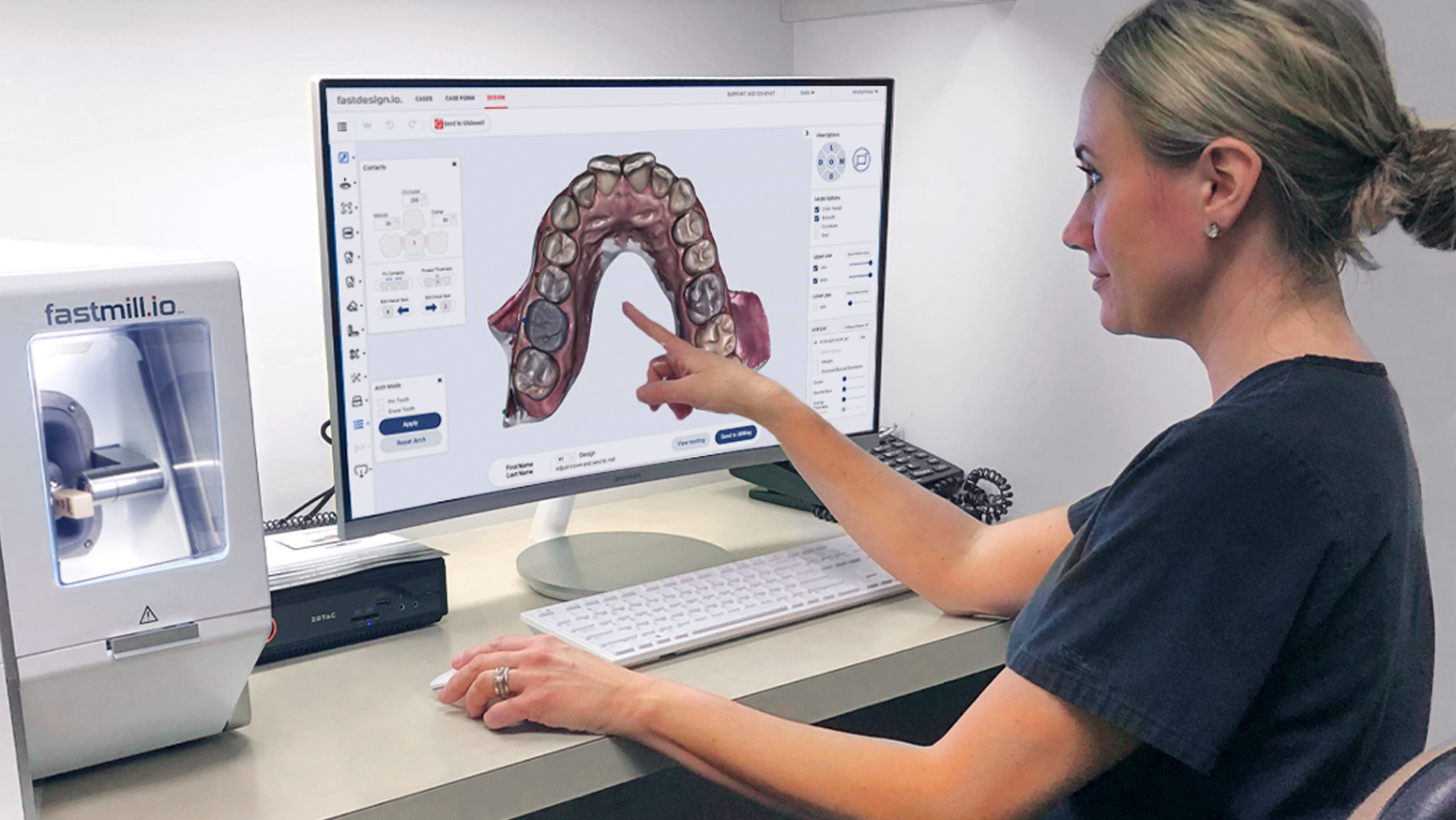
In a high-volume digital workflow, crown and bridge production rarely slows down because of one major technical failure. More often, efficiency is reduced by repeated small delays: incomplete file intake, design queue congestion, unclear prescriptions, inconsistent occlusal decisions, or avoidable redesign before manufacturing. For many laboratories, this is where the decision to Outsource Crown and bridge design becomes operationally relevant.
Outsourcing crown and bridge design is not simply a matter of shifting CAD work to an external team. In a well-structured workflow, it is a method of improving case movement from scan submission to fabrication release. The objective is not just faster file delivery. The objective is better internal efficiency: fewer bottlenecks, more consistent design output, clearer case triage, and stronger alignment between design and production.
For dental labs working across multiple restoration types, crown and bridge design often represents the largest share of daily CAD volume. That makes it one of the most practical areas to outsource when internal teams need support without compromising technical control.
Why crown and bridge design becomes a bottleneck before production does
Many labs initially assume that manufacturing capacity is the main pressure point in crown and bridge workflows. In reality, design is often the earlier bottleneck. Milling, printing, sintering, and finishing can only begin once a design file is complete, approved, and technically suitable for production. If internal designers are overloaded, even straightforward posterior crowns may sit in queue longer than necessary.
This is one of the clearest reasons labs choose to Outsource Crown and bridge design. A dedicated external design team can absorb overflow volume, reduce idle time between file receipt and design start, and keep simpler cases moving while internal teams focus on more complex work. That is especially useful for labs balancing routine single units, multi-unit bridges, implant-related cases, and cosmetic anterior restorations within the same daily schedule.
There are two ways to look at this. One view is that outsourcing is a response to labor shortage. The other is that outsourcing is a workflow tool used to protect throughput even when staffing is stable. The second view is usually more accurate for modern digital labs. Efficiency problems do not only appear when a team is understaffed. They appear whenever design demand is more variable than internal capacity.
The quality of file intake determines whether outsourcing improves efficiency
To Outsource Crown design successfully, a lab must first control case intake. External design support only helps when submitted files are complete, readable, and structured well enough to move quickly into CAD review. If incoming files are inconsistent, outsourcing can simply relocate the bottleneck rather than remove it.
For crown and bridge cases, the design team typically needs a clear preparation scan, antagonist scan, and bite registration. The prescription should identify restoration type, margin expectations when relevant, material direction if already determined, and any case-specific notes involving contact preference, occlusal scheme, pontic design, or anatomical limitations. When these details are vague, the design team must pause for clarification, and the supposed speed advantage begins to evaporate.
From a workflow perspective, intake review is not a clerical step. It is the first technical checkpoint. Labs that see the strongest results when they Outsource Crown and bridge design are usually the ones that standardize file submission rules internally before they send anything out. A clean intake process shortens design time because fewer assumptions are required later.
Outsourcing works best when case types are triaged intelligently
Not every case should be treated the same way. A strong outsourcing model separates routine crown and bridge design from cases that demand higher internal oversight or more detailed communication. Single posterior crowns with clean margins, stable occlusion, and standard anatomy often move efficiently through outsourced CAD design. By contrast, anterior esthetic cases, long-span bridges, limited reduction cases, or restorations with unclear insertion logic may require closer review before being released externally.
This is where efficiency becomes a little more subtle. Some labs try to Outsource Crown design as broadly as possible, assuming maximum external volume creates maximum internal relief. That can work in some production environments, but it is not always the smartest approach. In practice, case selection matters more than outsourcing volume alone.
A more disciplined model uses outsourcing to remove predictable routine load from the internal queue. That gives in-house teams more time for cases where nuance, communication, or esthetic sensitivity require tighter direct control. From one angle, this is a division of labor. From another, it is workflow triage disguised as common sense.
Crown and bridge design should reflect manufacturing reality from the start
A recurring problem in poorly managed outsourcing is the separation between digital design and physical production. A restoration may appear acceptable on screen but still perform poorly in manufacturing. Connector thickness may be too weak for the chosen material. Anatomy may create excessive finishing burden. Cement space may not align with the lab’s fit protocol. Contacts may be designed aggressively enough to generate adjustment time at seating.
That is why labs do not benefit from outsourcing to a purely software-driven service with limited awareness of production behavior. When a lab chooses to Outsource Crown and bridge design, the external team should understand how design decisions affect milling stability, layering preparation, finishing efficiency, occlusal correction, and overall remake risk.
This matters especially for multi-unit bridge work. Pontic form, connector geometry, emergence contour, and insertion path should not be treated as isolated digital features. They are manufacturing decisions as much as design decisions. If outsourcing improves file speed but weakens production consistency, the lab has not gained efficiency. It has only moved the mess to a different room.
Turnaround time should be measured by production readiness, not just design delivery
One of the most misleading ways to judge outsourced CAD support is to ask how quickly a design file comes back. Speed does matter, of course. But in crown and bridge workflows, the more important question is whether the returned design is ready to move smoothly into fabrication with minimal correction.
A lab that chooses to Outsource Crown design should evaluate turnaround in layers. How fast does the external team review the case? How quickly do they identify incomplete files? How often do they return technically stable first designs? How much internal adjustment is still required before manufacturing begins? These questions give a much clearer picture of workflow value than a simple headline turnaround number.
There are two competing instincts in production management. One prioritizes immediate movement. The other prioritizes controlled movement. The first looks faster on paper. The second is usually what actually improves efficiency in the lab. A design returned in a few hours but sent back twice for revision is often slower in practice than a slightly later file that moves directly into production.
Communication discipline is one of the hidden drivers of design efficiency
When labs Outsource Crown and bridge design, communication becomes more important, not less. Internal teams can often resolve ambiguity informally because designers, technicians, and case managers are sitting within the same workflow environment. External design teams do not have access to those informal corrections unless the lab communicates them explicitly.
For this reason, outsourced workflows should define what the design team needs to know before they begin. That may include preferred occlusal intensity, contact pressure style, pontic expectations, reduction concerns, material constraints, or special design notes related to the case. In more advanced anterior work, the lab may also need to provide guidance on symmetry, facial contour, or conservative contour management based on the restorative plan.
A common mistake is to assume that experienced designers will infer all of this automatically. Experienced designers can infer some things. They cannot safely infer everything. The more the lab relies on assumption, the less predictable the workflow becomes. Efficient outsourcing is not built on silent interpretation. It is built on repeatable communication standards.
Quality control is what protects outsourced design from becoming rework
No lab improves efficiency by increasing design speed if that speed leads to more remakes, more seating adjustments, or more manufacturing interruptions. This is why quality control is central to any decision to Outsource Crown and bridge design.
Quality control in this context should begin before design starts. The case should be checked for scan clarity, bite reliability, and completeness of instructions. During design, there should be review of margin interpretation, occlusal logic, proximal contact strength, connector safety, and anatomical feasibility. Before production, the lab should confirm that the design aligns with the material pathway and internal manufacturing standards.
This layered QC approach is more useful than a single final inspection because many crown and bridge errors begin as small assumptions. Margins that are barely readable, bites that are technically present but unstable, or connector designs that look acceptable until material choice is considered—these are the sorts of gremlins that chew through lab efficiency one nibble at a time.
Labs that outsource effectively do not eliminate control. They reposition it. Instead of spending all internal energy on raw design production, they can invest more selectively in review, triage, and manufacturing oversight.
Outsourcing supports consistency across fluctuating case volume
One of the strongest practical reasons to Outsource Crown and bridge design is volume variability. Many labs do not experience steady, predictable design demand. They experience peaks. A Monday scan surge, a doctor submitting several bridge cases at once, or a cluster of urgent remakes can overload the design queue even when the team is generally well organized.
Outsourcing gives the lab a way to stabilize that fluctuation without permanently expanding internal staffing for peak demand that may not remain constant. This is not just a staffing benefit. It is a consistency benefit. The lab can preserve internal turnaround expectations more reliably when additional design capacity is available during high-volume periods.
From an operational perspective, this helps protect downstream departments as well. Manufacturing, finishing, and delivery become easier to schedule when the design stage behaves more predictably. That is one of the quiet strengths of outsourcing. When it works well, the improvement is not dramatic. It is systemic.
What a lab should expect from an outsourced crown and bridge design partner
If a lab plans to Outsource Crown design, the external partner should function as an extension of the lab’s technical workflow, not as an isolated file processor. That means more than basic CAD ability. The partner should be able to work within common file formats, follow clear submission standards, understand production limitations, and communicate quickly when case information is incomplete.
The external team should also show consistency in routine design decisions. Crown morphology, contact management, occlusal balance, connector planning, and insertion logic should not vary unpredictably from one case to the next. Labs do not gain efficiency from design variety. They gain efficiency from controlled repeatability.
A useful partner also helps reduce internal friction. Fewer clarification cycles, fewer design corrections before fabrication, and fewer mismatches between CAD intent and production reality are the real markers of value. The outsourcing relationship is working when the lab’s workflow becomes smoother, not merely more outsourced.
Conclusion
To Outsource Crown and bridge design effectively is to improve lab efficiency at one of the most influential stages of the restorative workflow. Crown and bridge cases represent a large share of digital lab volume, and when design queues become congested, every downstream stage begins to slow. External CAD support can relieve that pressure, but only if it is integrated with disciplined intake, smart case triage, manufacturing-aware design, structured communication, and layered quality control.
For modern dental labs, the real advantage of outsourcing is not that someone else draws the crown. The advantage is that the lab can protect internal capacity, keep routine cases moving, and reduce workflow friction across design and production. When done properly, outsourced crown and bridge design does not reduce technical control. It makes that control easier to apply where it matters most.