


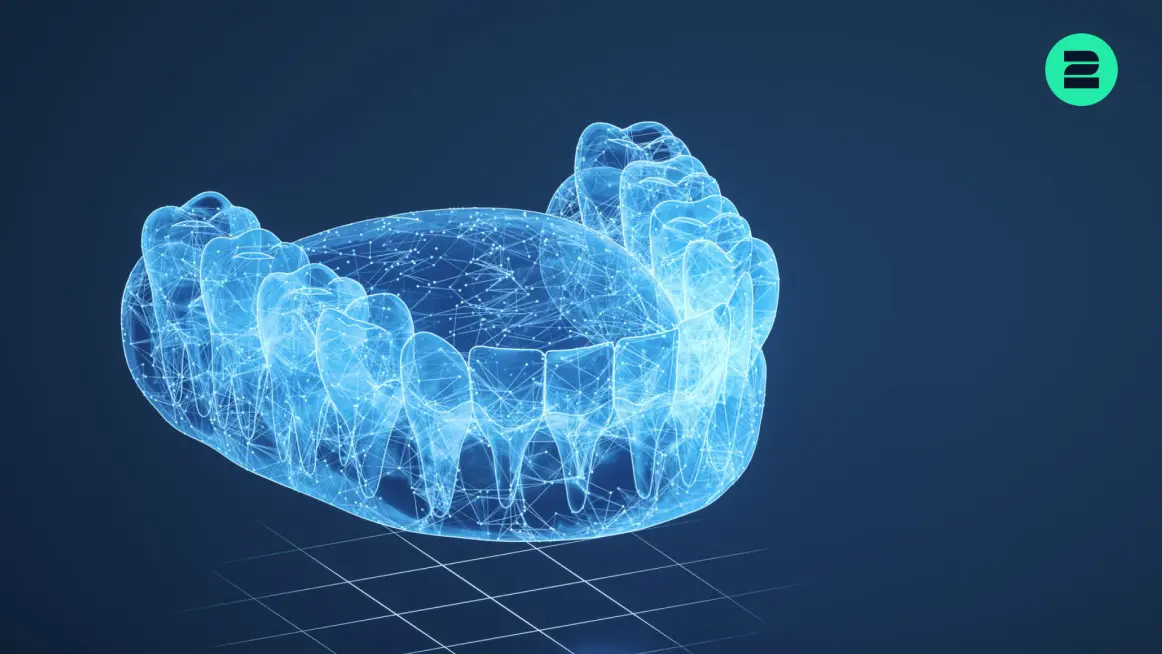
In a digital workflow, CAD Design does not begin when the file is opened. It begins when the case is submitted. If the submission lacks critical information, the design process slows down before any restoration geometry is created. For dental labs, clinics, prosthodontists, and oral surgeons working with an outsourcing partner, the quality of case preparation directly affects turnaround, design accuracy, manufacturing predictability, and remake risk.
This is why the question is not only whether a lab has sent the files. The more important question is whether the lab has provided enough structured information for CAD Design to start without delay or assumption. A strong design team can work quickly, but it should not be expected to interpret unclear restorative intent, guess missing implant details, or design around incomplete digital records. Those gaps usually lead to extra communication, design revisions, or downstream manufacturing problems.
Before CAD Design starts, the submitting lab should provide a technically usable package: complete scans, clear restoration instructions, correct case identification, relevant material direction, and any design notes that materially affect the result. When those inputs are organized well, the workflow becomes faster and more predictable. When they are weak, the entire process becomes fragile, no matter how experienced the design team may be.
CAD design starts with case identification, not with contouring
One of the most underestimated parts of digital case preparation is basic identification. Before a design team can review margins, contacts, or occlusion, it has to know exactly what the case is, which units are involved, and what type of restoration is being requested. If files are mislabeled, mixed between arches, or unclear about the unit numbers, the design process becomes slower before any technical work begins.
For CAD Design, proper case identification should include the patient or case ID used by the submitting lab, the arch, the unit or units involved, and the restoration category. A single posterior crown, a multi-unit bridge, an implant-supported crown, and a surgical guide do not enter the workflow the same way. The design team needs to know what kind of task they are reviewing before they determine what additional information is required.
This may sound administrative, but it is not merely clerical. Clear identification is the first layer of workflow control. A technically sound scan can still lose time if the design team has to decode what belongs to which case. In dental outsourcing, ambiguity at the beginning has a habit of multiplying later.
The core scan set must be complete and usable
Before CAD Design starts, the most basic requirement is a complete scan set appropriate to the restoration type. For standard crown and bridge work, this usually includes the preparation scan, antagonist scan, and bite scan. If any of these elements are missing or unreliable, design may pause because occlusal and positional decisions cannot be made safely.
Completeness alone is not enough. The scans must also be usable. Preparation margins should be readable, adjacent structures should be captured clearly enough to evaluate contacts and emergence, and the bite should reflect a stable relationship. In a digital workflow, a file can be present but still be unsuitable for design because the margin is blurred, the bite is distorted, or the scan contains stitching errors.
This is where many labs unintentionally slow the CAD Design stage. They assume that file transfer equals case readiness. It does not. The design team needs input that supports interpretation, not just upload confirmation. A simple posterior case with strong scans often moves faster than a nominally routine case with questionable bite data or indistinct preparation boundaries. In other words, scan quality is not a bonus. It is part of the minimum requirement.
The restoration type must be stated clearly from the beginning
A design team should not have to infer whether the case is a monolithic crown, cutback crown, bridge, coping, veneer, inlay, onlay, implant restoration, removable framework, or another prosthetic category. Before CAD Design starts, the restoration type should be explicitly stated because it determines the design logic, the review process, and the manufacturing pathway.
This becomes especially important when one digital case could support more than one restorative option. For example, a posterior tooth preparation may be restorable as a crown or onlay depending on the clinical plan. An implant site may require a screw-retained crown, a custom abutment with cement-retained crown, or another component-based solution. If the intended restoration is not defined, the design team is forced to stop or interpret. Neither choice supports efficient workflow.
There is a useful tension here. Some submitting teams want flexibility and therefore keep instructions broad. Some design teams want specificity and therefore prefer tightly defined prescriptions. In practice, CAD Design works best when the prescription is specific about what matters and silent about what does not. The design team should have room to execute professionally, but it should not be asked to decide the restorative category on its own.
Material direction influences design decisions earlier than many labs expect
Even though CAD Design is a digital stage, it should not be separated from material reality. The intended material affects thickness management, connector planning, morphology, internal spacing, and manufacturing feasibility. For that reason, the submitting lab should provide material direction before design begins whenever that information is already established.
For a routine crown, the material may seem secondary at first glance. Yet zirconia, lithium disilicate, PMMA, hybrid ceramic, or metal-supported pathways do not behave identically in design or production. In bridge work, material selection becomes even more relevant because connector safety and span behavior must be considered. In implant restorations, the selected restorative material may influence crown geometry, emergence contour, and post-processing expectations.
From one angle, a skilled design team can work with standard defaults and adjust later. From another angle, later adjustment is exactly what slows a digital workflow. When material direction is known early, the CAD Design stage can align more closely with manufacturing needs from the start. That reduces redesign and improves consistency.
Implant cases require component-specific information before design begins
Implant work is where incomplete information causes some of the most expensive delays. Before CAD Design starts on an implant case, the submitting lab should provide the implant system, platform details where relevant, scan body information, restoration type, and intended retention pathway. Without these details, the design team cannot verify the correct library, assess the interface properly, or plan the restorative geometry with confidence.
An implant case is not just a crown on a digital model. It is a component-dependent restoration built around a precise connection. If the implant library is unclear, if the scan body is misidentified, or if the retention method is not defined, the design team may produce a file that appears acceptable but is technically wrong. That is the sort of mistake that behaves politely at first and then causes chaos later.
For implant-related CAD Design, the best submission is the one that eliminates guesswork around hardware. The design team should know whether the case involves a custom abutment, screw-retained crown, hybrid pathway, or another defined solution. It should also know which implant system and components the restoration must match. In implant workflows, details that seem small at submission become structural once design begins.
Occlusal and contact expectations should be communicated when they are nonstandard
Routine cases can often be designed according to standard lab parameters for occlusion and proximal contact. But when a case involves nonstandard expectations, the submitting lab should state them clearly before CAD Design begins. This includes heavy or light contact preference, occlusal scheme considerations, limited clearance concerns, special pontic requirements, or site-specific functional priorities.
The reason is simple: not every restoration should be designed according to the same internal default. A bridge may require careful connector and contact management. An anterior case may need conservative contouring to protect space and esthetics. A night guard or splint case may depend on occlusal logic that is central to function. If these expectations are communicated only after the first design is returned, the workflow becomes slower and less stable.
This is one of the subtle differences between average and strong case submission. Average submission provides the files. Strong submission provides the files plus the exceptions. A design team does not need a long essay on every routine case. It does need early notice when the case departs from normal design assumptions.
Design limitations and clinical constraints should be visible before CAD work begins
Before CAD Design starts, the submitting lab should identify any known limitation that affects the restoration. This may include reduced occlusal space, questionable preparation geometry, difficult insertion path, short clinical crown, adjacent implant proximity, or esthetic constraints in a visible zone. These limitations matter because they shape what the design team can do safely.
A design file created without awareness of these constraints may look idealized rather than realistic. For example, a crown may be given anatomy that cannot be supported within the available clearance. A bridge may be designed without sufficient attention to path of insertion. An implant crown may be contoured beautifully on screen while ignoring access compromises. In each case, the problem is not design skill. It is incomplete design context.
There are two philosophies here. One assumes the design team should discover all limitations from the scan alone. The other assumes the submitting team should flag what it already knows. The second philosophy is more efficient. Good CAD Design is not weakened by better information. It is strengthened by it.
Photographs and visual references matter when they change the design outcome
Not every case requires photos, but some do. When facial context, shade behavior, provisional reference, emergence profile, or anterior anatomy expectations materially influence the result, those visual references should be provided before CAD Design starts. This is especially relevant in anterior esthetic cases, implant soft tissue-sensitive zones, and situations where the final design should reflect an existing restorative reference.
A design team can build morphology from the scan alone in many routine cases. But in cases where visual integration matters, the absence of photos may lead to avoidable interpretation. That does not mean the design will fail technically. It means it may not align as closely with the restorative objective as it could have.
For labs working with an outsourcing partner, this is an important distinction. The goal of CAD Design is not only to generate a file that can be milled. The goal is to generate a file that supports the intended restorative result with minimal revision. When photos influence that result, they belong in the submission package.
Turnaround expectations and priority status should be stated honestly
Before CAD Design starts, the lab should communicate whether the case follows standard scheduling or carries a genuine priority requirement. This should be done clearly and early, not halfway through the process. A design team organizes work based on queue logic, case complexity, and available capacity. If priority information appears late, the workflow may already be structured around a different timeline.
That said, marking every case urgent is not a strategy. It is a fast route to organizational nonsense. Priority status should be reserved for cases that genuinely require faster handling, and the information should be provided at intake along with the rest of the case data.
This matters because delivery speed is part of workflow planning. A design team can support faster CAD Design more effectively when it knows the timeline in advance and when the case is actually ready to move. A rushed case with incomplete input is still incomplete. Urgency does not magically repair missing information.
Quality control begins with the information package
Before design starts, the submitting lab should perform its own internal review of the case package. This means checking that the correct files are attached, the restoration type is stated correctly, implant details are included when necessary, and special instructions are visible. That internal review is the first layer of quality control.
A receiving design team will usually perform its own intake review as well. Together, these two checkpoints create a more stable CAD Design process. Problems are caught earlier, communication becomes more precise, and the number of redesign loops tends to decrease. This is one of the quiet truths of digital outsourcing: good quality control at submission often saves more time than aggressive speed after submission.
A well-prepared case does not guarantee that every design will be simple. But it does make the workflow more honest. The design team can spend time solving restorative problems rather than chasing missing information.
Conclusion
Before CAD Design starts, labs should provide more than just digital files. They should provide a complete technical package that allows the design team to understand the case without delay or assumption. That package should include clear case identification, a complete and usable scan set, explicit restoration type, material direction when known, implant component details where relevant, nonstandard design expectations, known clinical limitations, visual references when they affect the outcome, and honest turnaround priorities.
For dental labs, clinics, prosthodontists, and oral surgeons, the practical benefit is straightforward. Better information at submission leads to smoother design flow, fewer clarification cycles, and more predictable manufacturing preparation. In a digital workflow, CAD Design speed is not driven only by how fast a designer works. It is driven by how well the case is prepared before the first design step begins.
That is what strong case submission does. It turns the design stage from a guessing exercise into a controlled technical process.