


Category Archives: News


First-time fit is one of the most reliable indicators of a stable digital workflow. When a restoration seats without adjustment, it reflects alignment across multiple stages—scan quality, case communication, CAD design, and manufacturing. Among these variables, dental crown margin definition is one of the most critical and most frequently underestimated factors.


From a laboratory perspective, margin definition is not just a design step. It is the point at which the boundary between preparation and restoration is established. Every downstream decision—internal fit, emergence profile, occlusal alignment, and manufacturability—depends on how accurately that boundary is defined.


This article examines the role of margin definition in achieving first-time fit restorations, focusing on how margin clarity, interpretation, and workflow control influence final outcomes.


Margin Definition as the Reference for All Design Parameters


In CAD-based workflows, the margin line defines the interface between the restoration and the prepared tooth. Unlike traditional workflows, where technicians may rely on physical cues, digital design depends entirely on how this boundary is identified within scan data.


Once the margin is set, it becomes the reference for:


  • Internal spacing (cement gap)

  • Restoration thickness

  • Emergence profile

  • Edge adaptation


If the margin is inaccurate, all dependent parameters are affected.


This is why dental crown margin definition is not an isolated step—it is the structural foundation of the entire design.


The Relationship Between Margin Accuracy and First-Time Fit


First-time fit requires precise seating of the restoration without interference. Margin definition plays a direct role in this outcome.


When Margin Definition Is Accurate


  • Internal fit aligns with preparation geometry

  • Seating is consistent and complete

  • Marginal adaptation is stable


When Margin Definition Is Inaccurate


  • Internal surfaces may contact prematurely

  • Seating is incomplete or uneven

  • Margins may be open or overextended


These issues lead to chairside adjustment or, in some cases, remakes.


From a workflow perspective, accurate dental crown margin definition reduces variability and supports predictable fit.


How Scan Quality Influences Margin Visibility


Margin definition begins with scan data. If the margin is not clearly captured, it cannot be accurately defined.


Common Scan-Related Challenges


  • Subgingival margins that are not fully visible

  • Blurred or noisy scan surfaces

  • Incomplete capture of preparation edges


Impact on CAD Design


When margin visibility is compromised:


  • Designers must estimate the margin location

  • Variability increases between cases

  • Consistency in fit is reduced


Workflow Implication


Even advanced CAD systems cannot compensate for missing or unclear margin data. The accuracy of dental crown margin definition is directly dependent on scan clarity.


Margin Interpretation: From Data to Design Decision


Margin definition is not purely automatic. It involves interpretation by the designer.


Factors Affecting Interpretation


  • Scan resolution and clarity

  • Presence of artifacts or distortions

  • Consistency of preparation geometry


Risks of Inconsistent Interpretation


  • Variation in margin placement between cases

  • Differences in restoration extension

  • Increased adjustment at delivery


Standardization in Design


Structured workflows address this by:


  • Defining protocols for margin marking

  • Applying consistent interpretation criteria

  • Using design-level quality control to verify margins


This reduces variability and improves reliability.


Internal Fit and the Margin Reference


Internal fit is calculated relative to the defined margin.


Role of Margin in Internal Spacing


  • Cement gap is applied from the margin inward

  • Any deviation in margin placement affects the entire internal surface


Consequences of Margin Errors


  • Overextended margins may create open edges

  • Underextended margins may result in tight internal fit

  • Uneven margin definition leads to inconsistent seating


Workflow Impact


Accurate dental crown margin definition ensures that internal spacing is applied correctly, supporting stable seating and reducing adjustment.


Margin Definition and Manufacturing Accuracy


The relationship between margin definition and manufacturing is often overlooked.


Design-to-Production Translation


Manufacturing processes reproduce the CAD design precisely. This means:


  • Margin errors in design are replicated in the final restoration

  • Production cannot correct design inaccuracies


Material Considerations


Different materials have specific requirements:


  • Minimum thickness at margins

  • Edge strength and durability

  • Compatibility with milling or printing processes


Integrated Workflow Requirement


Margin definition must account for these factors to ensure that the restoration can be produced accurately.


Quality Control at the Margin Level


Given its importance, margin definition is a key focus of quality control.


Intake-Level QC


  • Verification of margin visibility in scan data

  • Identification of areas requiring clarification


Design-Level QC


  • Review of margin continuity and accuracy

  • Confirmation of alignment with preparation geometry


Pre-Production QC


  • Validation that margin definition supports manufacturability


This multi-level QC approach reduces errors before they reach production.


Communication and Margin Clarity


Margin definition is influenced not only by scan data but also by communication between clinic and lab.


Common Communication Gaps


  • Lack of clarity on margin location

  • Missing instructions for challenging cases

  • No indication of preparation limitations


Impact on Workflow


  • Designers rely on assumptions

  • Variability increases

  • Adjustment rates rise


Structured Communication


Workflows that define:


  • Clear submission requirements

  • Documentation of case details

  • Feedback loops for improving input quality


help ensure that margin definition is accurate and consistent.


Margin Definition in High-Volume Workflows


In high-volume environments, small variations in margin definition can scale into significant inefficiencies.


Effects of Variability


  • Increased adjustment rates across multiple cases

  • Reduced predictability in turnaround time

  • Higher remake rates


Importance of Standardization


By standardizing dental crown margin definition:


  • Consistency is maintained across cases

  • Workflow becomes more stable

  • Production efficiency improves


Managing Subgingival and Complex Margins


Certain cases present additional challenges for margin definition.


Subgingival Margins


  • Limited visibility in scans

  • Higher risk of incomplete capture


Irregular Preparations


  • Non-uniform geometry

  • Increased difficulty in defining a continuous margin


Workflow Approach


These cases require:


  • Enhanced intake validation

  • Clear communication of limitations

  • Careful design interpretation


Structured workflows ensure that these challenges are managed consistently.


Margin Errors and Their Downstream Effects


Margin inaccuracies affect multiple aspects of the restoration.


Immediate Effects


  • Poor marginal adaptation

  • Incomplete seating


Secondary Effects


  • Occlusal discrepancies due to seating issues

  • Increased chairside adjustment


Long-Term Effects


  • Reduced restoration longevity

  • Increased likelihood of remake


These cascading effects highlight the importance of precise dental crown margin definition.


From Adjustment to First-Time Fit: A Workflow Perspective


Achieving first-time fit requires alignment across all workflow stages.


Key Requirements


  • Clear margin capture at scan stage

  • Accurate and consistent margin definition in CAD

  • Alignment with manufacturing constraints

  • Integrated quality control


Workflow Outcome


When these elements are controlled:


  • Restorations seat without adjustment

  • Clinical time is reduced

  • Workflow efficiency improves


Limitations and Practical Considerations


Despite structured workflows, certain limitations remain:


  • Dependence on scan quality

  • Variability in clinical preparation

  • Challenges in capturing subgingival margins


These factors must be managed through consistent processes rather than eliminated entirely.


Conclusion: Margin Definition as a Determinant of Fit


Dental crown margin definition is a central factor in achieving first-time fit restorations. It defines the boundary for all design parameters and directly influences seating, adaptation, and overall restoration accuracy.


By controlling margin definition through clear scan data, standardized design protocols, and structured quality control, laboratories and clinics can reduce variability, minimize adjustments, and improve workflow efficiency.


In digital dental workflows, first-time fit is not the result of isolated precision. It is the outcome of a system where margin definition is treated as a critical control point from the beginning of the process.
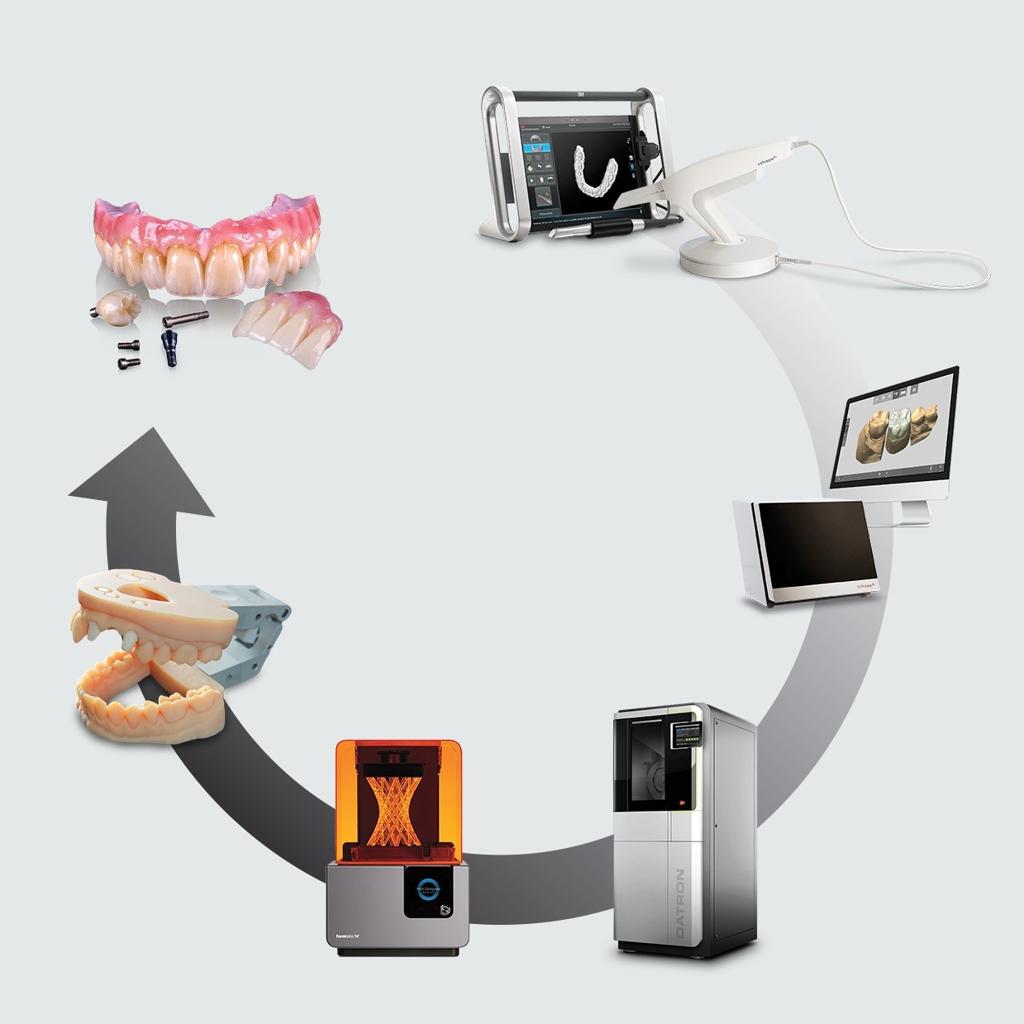


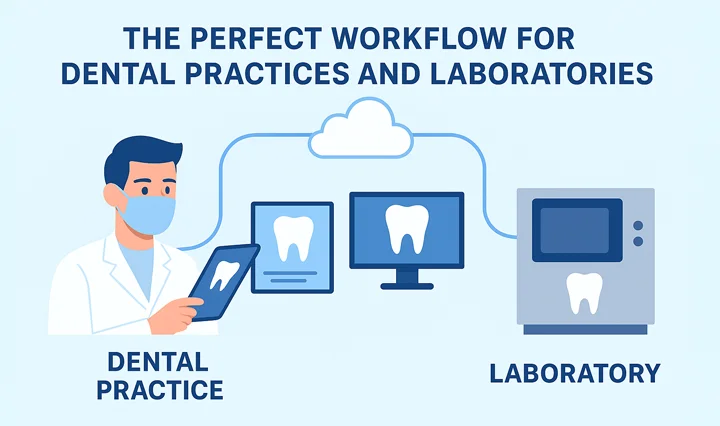
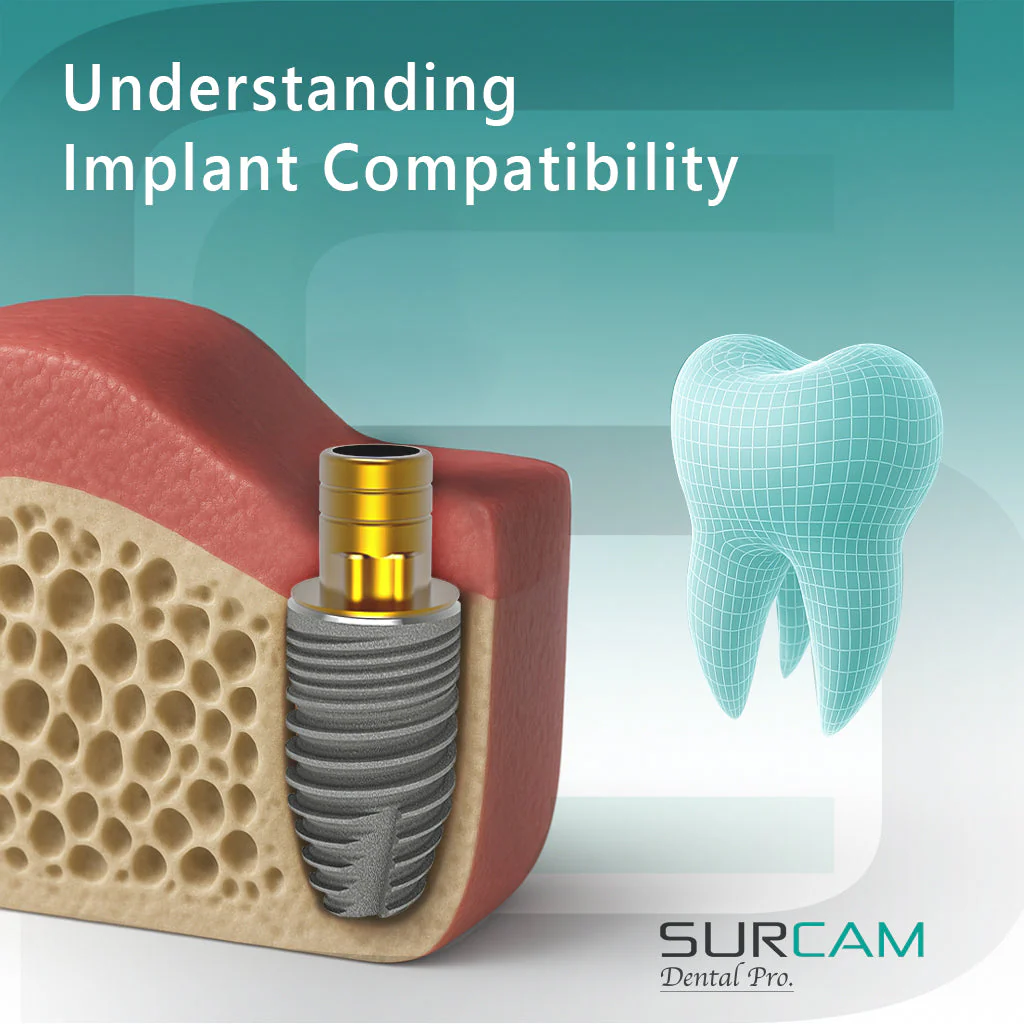


Digital dentistry depends on a simple premise: the design can only be as accurate as the data it is built on. In crown and bridge, implant, and removable workflows alike, intraoral scans serve as the primary input for CAD design. When scan data is incomplete, distorted, or inconsistent, the resulting design must compensate for uncertainty—often leading to variability in fit, occlusion, and overall restoration performance.


From a laboratory perspective, intraoral scan quality dental CAD is not just a clinical concern. It is a foundational variable that determines how efficiently cases move through the workflow, how predictable outcomes are, and how often adjustments or remakes occur.


This article analyzes how intraoral scan quality affects CAD design accuracy and explains how structured workflows manage scan-related variability.


Scan Quality as the Foundation of Digital Design


In traditional workflows, physical impressions introduce variability through material distortion and handling. Digital workflows eliminate some of these variables but introduce a new dependency: scan data integrity.


In CAD-based production:


  • Geometry is defined entirely by scan data

  • Margin identification relies on scan clarity

  • Occlusion depends on accurate bite capture

  • Fit and adaptation are derived from surface accuracy


If the input is compromised, the design cannot fully correct it. Instead, it must interpret incomplete or distorted information.


This is why intraoral scan quality dental CAD directly influences design accuracy and downstream performance.


Geometry Accuracy: The Basis of Fit


The most fundamental aspect of scan quality is geometric accuracy.


Common Geometry Issues


  • Surface noise caused by scanning artifacts

  • Missing data in deep or reflective areas

  • Distortion from stitching errors

  • Inconsistent mesh density


Impact on CAD Design


When geometry is inaccurate:


  • Internal fit may be uneven

  • Contact points may be misaligned

  • Seating may be incomplete


Design software operates on the assumption that the mesh represents true anatomy. When this assumption is incorrect, errors propagate through the workflow.


Margin Clarity and Its Role in Design Precision


Margin definition is one of the most critical steps in CAD design.


Scan-Related Margin Challenges


  • Blurred or indistinct margin lines

  • Incomplete capture of preparation edges

  • Artifacts masking margin boundaries


Effect on CAD Design


When margins are unclear:


  • Designers must estimate margin location

  • Variability increases between cases

  • Risk of overextension or underextension rises


Workflow Implications


  • Increased chairside adjustment

  • Higher likelihood of remakes

  • Reduced predictability in fit


Clear margin capture is essential for maintaining intraoral scan quality dental CAD standards.


Bite Registration and Occlusal Accuracy


Occlusion in digital workflows is defined by the relationship between upper and lower scans.


Common Bite-Related Issues


  • Incomplete or unstable bite registration

  • Misalignment between arches

  • Inconsistent articulation data


Impact on CAD Design


  • Incorrect occlusal contact points

  • High or low contacts in the final restoration

  • Need for chairside occlusal adjustment


Design Limitations


Even advanced CAD systems cannot compensate for inaccurate bite data. They can only simulate occlusion based on the provided relationship.


Full-Arch vs Single-Unit Scan Sensitivity


Scan quality requirements vary depending on case type.


Single-Unit Cases


  • Smaller scan area

  • Lower risk of cumulative distortion

  • Easier to maintain accuracy


Full-Arch Cases


  • Larger scan area increases stitching complexity

  • Higher risk of distortion across the arch

  • Greater impact on occlusal and spatial relationships


Workflow Consideration


In full-arch cases, small deviations accumulate, making intraoral scan quality dental CAD even more critical for maintaining accuracy.


Mesh Integrity and Data Stability


Beyond visible geometry, internal mesh structure affects how CAD software processes scan data.


Mesh Integrity Issues


  • Holes or gaps in the mesh

  • Overlapping polygons

  • Irregular triangulation


Impact on CAD Operations


  • Difficulty in defining margins

  • Errors in Boolean operations

  • Instability during design adjustments


Workflow Impact


Poor mesh integrity increases processing time and reduces design reliability.


File Resolution and Its Effect on Detail Capture


Scan resolution determines how much detail is captured in the digital model.


Low-Resolution Scans


  • Simplified geometry

  • Loss of fine detail

  • Reduced margin clarity


High-Resolution Scans


  • Detailed surface representation

  • Improved accuracy in design

  • Larger file sizes requiring more processing power


Balance in Workflow


While higher resolution improves accuracy, it must be balanced with system compatibility and processing efficiency.


File Format and Data Interpretation


Scan quality is also influenced by how data is stored and transferred.


Format Considerations


  • STL: geometry only, no color

  • PLY: includes color and texture

  • Other formats may include metadata


Impact on Design


  • Loss of color data may reduce margin visibility

  • Conversion between formats may introduce distortion


Structured workflows ensure that file formats are compatible and preserve critical data.


Intake Validation: Filtering Scan Quality Before Design


Given the impact of scan quality, validation at intake is essential.


Intake-Level Checks


  • Completeness of scan data

  • Clarity of margins

  • Stability of bite registration

  • Integrity of mesh structure


Cases that do not meet these criteria are paused until corrected.


Workflow Benefits


  • Prevents flawed data from entering design

  • Reduces mid-process interruptions

  • Improves overall efficiency


Design Compensation vs Design Accuracy


When scan quality is suboptimal, designers may attempt to compensate.


Compensation Strategies


  • Smoothing irregular surfaces

  • Estimating margin boundaries

  • Adjusting occlusion based on assumptions


Limitations


  • Compensation introduces variability

  • Accuracy depends on subjective interpretation

  • Results are less predictable


Workflow Perspective


True accuracy comes from high-quality input, not from post-processing adjustments.


Impact on Manufacturing and Final Fit


Scan quality affects not only design but also production outcomes.


Downstream Effects


  • Poor fit due to inaccurate geometry

  • Occlusal discrepancies requiring adjustment

  • Increased remake rates


Manufacturing Constraints


Production processes reproduce the digital design precisely. If the design is based on flawed data, errors are replicated in the final restoration.


Relationship Between Scan Quality and Workflow Efficiency


Low scan quality introduces inefficiencies at multiple stages:


  • Increased communication for clarification

  • Additional design time for compensation

  • Higher adjustment and remake rates


High scan quality supports:


  • Continuous workflow

  • Reduced need for correction

  • Predictable turnaround times


This makes intraoral scan quality dental CAD a key factor in operational efficiency.


Managing Variability Through Structured Workflows


While scan quality varies, workflows can be structured to manage its impact.


Key Strategies


  • Standardized intake criteria

  • Clear communication of scan requirements

  • Feedback loops to improve submission quality

  • Consistent QC processes


These measures reduce variability and improve overall outcomes.


Limitations and Practical Considerations


Even with advanced scanning technology, certain limitations remain:


  • Difficulty capturing subgingival margins

  • Variability in clinical scanning technique

  • Environmental factors affecting scan quality


These factors cannot be fully eliminated but can be managed through structured workflows.


Conclusion: Scan Quality as a Determinant of Design Accuracy


Intraoral scan quality dental CAD is a fundamental determinant of design accuracy in digital dental workflows. It influences margin definition, occlusion, fit, and overall restoration performance.


By validating scan data at intake, standardizing design processes, and aligning workflows with input quality, laboratories and clinics can reduce variability, improve efficiency, and achieve more predictable outcomes.


In digital dentistry, accuracy does not begin at the design stage—it begins with the quality of the scan.


Removable denture cases present a different set of challenges compared to fixed restorations. While crown and bridge workflows rely heavily on margin precision and occlusal control, removable prosthetics require coordinated management of anatomy, support areas, occlusion, retention, and base adaptation across a larger and more variable surface.


As digital workflows expand into removable prosthetics, removable denture outsourcing has become a practical approach for managing design complexity and stabilizing production. However, the effectiveness of outsourcing depends on how well the workflow is structured—from intake and design to manufacturing alignment and case control.


This article examines the removable denture workflow from a laboratory perspective and explains how outsourcing contributes to accuracy, consistency, and operational efficiency.


Why Removable Denture Workflows Require Structured Design Control


Unlike single-unit restorations, removable dentures involve:


  • Large-area tissue interaction

  • Complex occlusal relationships across full arches

  • Dependence on anatomical landmarks rather than fixed margins

  • Variability in edentulous ridge morphology


These factors make removable denture design less deterministic and more sensitive to input quality and design decisions.


In this context, removable denture outsourcing is not simply about delegating design tasks. It is about introducing structure into a workflow that inherently contains more variability.


Intake Requirements: Establishing the Foundation for Accurate Design


The success of any removable denture case begins at intake.


Key Data Requirements


For digital denture workflows, intake typically requires:


  • Upper and lower arch scans

  • Bite registration or articulation data

  • Functional or anatomical references (where available)

  • Clear prescription for denture type and design approach


Unlike crown and bridge cases, there is no defined margin line. Instead, the design depends on how well anatomical surfaces are captured.


Intake Validation in Outsourced Workflows


In removable denture outsourcing, intake is structured to ensure:


  • Completeness of scan data

  • Adequate coverage of edentulous areas

  • Stability of bite registration

  • Clarity of design instructions


Cases that lack sufficient information are paused until clarified.


Impact on Workflow


  • Reduces ambiguity during design

  • Prevents iterative corrections

  • Supports predictable case progression


Digital Denture Design: Translating Anatomy into Functional Geometry


The design stage in removable denture workflows involves more than geometric modeling. It requires balancing multiple functional parameters.


Base Adaptation


The denture base must:


  • Conform accurately to tissue surfaces

  • Maintain stability during function

  • Avoid pressure points


This depends heavily on scan quality and mesh integrity.


Tooth Setup and Occlusion


Tooth arrangement must consider:


  • Occlusal balance

  • Arch form

  • Functional articulation


In digital workflows, occlusion is defined through bite data and virtual articulation, which must be accurate to avoid adjustment.


Retention and Support


Design must incorporate:


  • Appropriate extension of the base

  • Balanced distribution of support areas

  • Stability during insertion and removal


Design Control in Outsourcing


In structured removable denture outsourcing workflows:


  • Design protocols are standardized

  • Parameters for base thickness, tooth positioning, and occlusion are defined

  • Output is aligned with manufacturing constraints


This reduces variability across cases.


Managing Variability in Edentulous Anatomy


One of the primary challenges in removable denture design is anatomical variability.


Sources of Variability


  • Differences in ridge resorption

  • Irregular tissue contours

  • Variations in arch relationships


Impact on Design


Without structured control:


  • Base adaptation may be inconsistent

  • Occlusal relationships may be unstable

  • Retention may vary between cases


Outsourcing Approach


Outsourced workflows manage variability through:


  • Standardized design frameworks

  • Consistent parameter application

  • Defined handling of anatomical deviations


This ensures that variability is controlled rather than amplified.


Workflow Transition: From Design to Manufacturing


The transition from design to production is critical in removable denture workflows.


Design-Manufacturing Alignment


Design must account for:


  • Material properties (e.g., acrylic, resin)

  • Manufacturing method (milling or printing)

  • Shrinkage or distortion during processing


Risks of Misalignment


  • Poor base fit

  • Occlusal discrepancies

  • Increased need for adjustment


Integrated Workflow in Outsourcing


In removable denture outsourcing:


  • Design parameters are aligned with production methods

  • Output is optimized for fabrication

  • Consistency is maintained across cases


This reduces errors introduced during manufacturing.


Quality Control Across the Denture Workflow


Quality control in removable denture workflows must address multiple variables.


Intake-Level QC


  • Verification of scan completeness

  • Assessment of anatomical coverage

  • Validation of bite data


Design-Level QC


  • Review of base adaptation

  • Verification of tooth setup and occlusion

  • Consistency with prescribed parameters


Pre-Production QC


  • Simulation of fit and articulation

  • Validation of manufacturability


This multi-stage QC approach reduces cumulative error and improves overall accuracy.


Case Communication and Its Role in Denture Design


Communication is particularly important in removable denture cases due to the subjective nature of certain design elements.


Required Communication Elements


  • Denture type (complete, partial, flexible, etc.)

  • Occlusal scheme preferences

  • Aesthetic considerations (if applicable)

  • Functional requirements


Impact on Workflow


When communication is unclear:


  • Designers must rely on default assumptions

  • Variability increases

  • Adjustment rates rise


Structured Communication in Outsourcing


Outsourced workflows typically define:


  • Standard submission formats

  • Required case parameters

  • Feedback mechanisms for clarification


This reduces ambiguity and supports consistent design outcomes.


Turnaround Time and Case Stability


Turnaround time in removable denture workflows is influenced by:


  • Case complexity

  • Completeness of input data

  • Design and production alignment


Structured Turnaround in Outsourcing


Outsourced workflows:


  • Begin processing after intake validation

  • Allocate time based on case requirements

  • Maintain consistent processing windows


Workflow Impact


  • Predictable timelines

  • Reduced delays due to rework

  • Improved coordination with clinical schedules


Reducing Adjustment and Remake Rates


Adjustment and remakes in removable dentures often result from:


  • Poor base adaptation

  • Occlusal imbalance

  • Inconsistent retention


Role of Outsourcing in Reduction


By enforcing:


  • Intake validation

  • Standardized design protocols

  • Integrated QC processes


outsourcing reduces the frequency of these issues.


Impact on Workflow


  • Fewer rework cycles

  • Improved production efficiency

  • More predictable outcomes


Case Control in High-Volume Denture Workflows


As case volume increases, maintaining control becomes more challenging.


Internal Limitations


  • Fixed design capacity

  • Increased variability under load

  • Difficulty maintaining consistency


Outsourced Workflow Control


Outsourcing provides:


  • Scalable design capacity

  • Standardized processing

  • Consistent output across cases


This improves case control and supports stable production.


When Removable Denture Outsourcing Delivers the Most Value


Removable denture outsourcing is particularly effective in:


  • High-volume denture production environments

  • Laboratories with limited internal design capacity

  • Workflows requiring consistent turnaround

  • Operations handling diverse case inputs


In these scenarios, outsourcing stabilizes the workflow and reduces variability.


Limitations and Implementation Considerations


While outsourcing improves workflow stability, it depends on:


  • Quality of input data

  • Clarity of communication

  • Consistency of process implementation


Without these elements, variability cannot be fully controlled.


Conclusion: Structuring Removable Denture Workflows for Consistency


Removable denture design involves a high degree of variability, making workflow structure essential for achieving consistent results.


Removable denture outsourcing improves accuracy and efficiency by:


  • Standardizing intake and design processes

  • Aligning design with manufacturing

  • Integrating quality control across stages


By treating outsourcing as a structured workflow component rather than a standalone service, laboratories can maintain control over complex denture cases while improving productivity and predictability.

Crown and bridge restorations remain one of the highest-volume categories in dental laboratories. While digital workflows have improved design accuracy and manufacturing precision, production stability is still challenged by fluctuating case volume, variability in input data, and internal capacity limitations.


From an operational perspective, crown and bridge outsourcing is not simply a method of increasing output. It is a strategy for stabilizing workflow, reducing variability, and maintaining consistent production performance under changing conditions.


This article examines how outsourcing contributes to production optimization in crown and bridge workflows, focusing on intake control, design consistency, manufacturing alignment, and throughput stability.


Crown and Bridge Production as a High-Volume Workflow


Unlike complex implant or full-arch cases, crown and bridge restorations are characterized by:


  • High daily case volume

  • Repetitive workflows with defined parameters

  • Sensitivity to small deviations (margin, occlusion, contacts)


Because of these characteristics, even minor inefficiencies can scale rapidly across multiple cases.


Common operational challenges include:


  • Design bottlenecks during peak submission periods

  • Variability in turnaround time

  • Increased adjustment or remake rates

  • Inconsistent workload distribution across teams


Optimizing this category requires a system-level approach rather than isolated improvements.


Stabilizing Intake as the First Step in Production Optimization


Production efficiency begins with intake quality.


Intake Variability in Crown and Bridge Cases


Even in high-volume workflows, input data can vary significantly:


  • Incomplete scan sets (missing antagonist or bite)

  • Inconsistent margin clarity

  • Unclear prescription parameters


When these issues are not controlled, they introduce variability into the design stage.


Role of Structured Intake in Outsourcing


In crown and bridge outsourcing, intake is typically standardized:


  • Required scan sets are defined and verified

  • File formats are checked for compatibility

  • Cases with incomplete data are paused until clarified


Impact on Production Stability


By ensuring that only validated cases enter the workflow:


  • Design interruptions are minimized

  • Production schedules remain predictable

  • Variability across cases is reduced


Redistributing Design Workload to Eliminate Bottlenecks


CAD design is often the limiting factor in crown and bridge production.


Internal Design Constraints


  • Fixed number of designers

  • Limited capacity during peak hours

  • Increased pressure to maintain speed


These constraints lead to:


  • Queue buildup

  • Inconsistent processing times

  • Reduced design quality under load


Outsourcing as a Load Balancing Mechanism


With crown and bridge outsourcing:


  • Excess case volume is distributed externally

  • Internal teams are relieved from overload

  • Design queues are reduced


Workflow Result


  • Continuous case flow

  • Reduced waiting time before design

  • Improved consistency in output


Standardization of Design Across High-Volume Cases


Consistency is critical in crown and bridge workflows due to the repetitive nature of cases.


Risks of Inconsistent Design


  • Variation in margin placement

  • Differences in occlusal contact

  • Inconsistent proximal contact strength


These variations lead to increased adjustment and remake rates.


Outsourced Design Protocols


Outsourced workflows typically apply:


  • Defined margin handling procedures

  • Standardized occlusal parameters

  • Consistent internal spacing settings


Impact on Production


  • Reduced variability across cases

  • Improved fit consistency

  • Lower adjustment rates


Standardization supports both efficiency and predictability.


Aligning Design with Manufacturing Requirements


Production efficiency depends on how well design integrates with manufacturing.


Common Misalignment Issues


  • Designs that do not account for material constraints

  • Inconsistent thickness or connector dimensions

  • Lack of consideration for production tolerances


These issues result in:


  • Adjustments during manufacturing

  • Delays in production

  • Increased risk of remakes


Integrated Approach in Outsourcing


In structured crown and bridge outsourcing workflows:


  • Design parameters are aligned with manufacturing capabilities

  • Material-specific requirements are incorporated into CAD

  • Output is optimized for production processes


Resulting Benefits


  • Smooth transition from design to fabrication

  • Reduced need for production adjustments

  • Improved overall efficiency


Managing Turnaround Time Through Workflow Control


Turnaround time in crown and bridge production is influenced by multiple variables.


Internal Variability


  • Fluctuating case volume

  • Differences in case complexity

  • Interruptions due to incomplete data


These factors make turnaround unpredictable.


Structured Turnaround in Outsourcing


Outsourced workflows typically:


  • Begin processing after intake validation

  • Allocate time based on case size and complexity

  • Maintain consistent processing windows


Workflow Impact


  • Predictable delivery timelines

  • Reduced variability across cases

  • Improved coordination with clinical schedules


Reducing Adjustment and Remake Rates


Adjustment and remakes are major constraints on production efficiency.


Common Causes in Crown and Bridge Cases


  • Margin inaccuracies

  • Occlusal discrepancies

  • Proximal contact issues


Role of Outsourcing in Reduction


By enforcing:


  • Intake quality control

  • Standardized design protocols

  • Multi-level quality checks


outsourcing reduces the frequency of these issues.


Impact on Throughput


  • Fewer rework cycles

  • Reduced material waste

  • Faster progression to delivery


Lower remake rates directly improve production capacity.


Supporting Multi-Format Digital Workflows


Modern crown and bridge workflows involve data from multiple scanner systems.


Internal Challenges


  • Limited compatibility with different file formats

  • Need for manual conversion

  • Increased processing time


Outsourced Flexibility


Outsourced partners often support:


  • Multiple file formats (STL, PLY, XML, etc.)

  • Standardized data processing

  • Integration with various digital systems


Workflow Benefit


  • Reduced delays due to file issues

  • Improved intake efficiency

  • Consistent data handling


Balancing Workload Across Production Stages


Crown and bridge production involves multiple stages:


  • Intake

  • Design

  • Manufacturing

  • Finishing


Internal Imbalance


When design becomes overloaded:


  • Manufacturing capacity may remain underutilized

  • Workflow becomes uneven

  • Overall productivity decreases


Outsourcing as a Balancing Tool


By offloading design:


  • Workload is distributed more evenly

  • Manufacturing can operate at full capacity

  • Workflow becomes synchronized


This balance is essential for optimizing production.


Handling Peak Demand Without Disruption


Case volume in crown and bridge workflows often fluctuates.


Internal Limitations


  • Fixed capacity cannot adapt quickly

  • Peak periods create bottlenecks

  • Low-volume periods lead to underutilization


Outsourced Flexibility


Outsourcing enables:


  • Rapid scaling of design capacity

  • Efficient handling of peak demand

  • Stable performance across varying volumes


This flexibility supports consistent production output.


Maintaining Workflow Continuity Through Communication


Communication plays a key role in production stability.


Structured Communication in Outsourcing


  • Defined submission protocols

  • Clear case documentation

  • Feedback loops for improving input quality


Impact on Workflow


  • Reduced need for clarification

  • Fewer interruptions during design

  • Improved coordination between stages


Effective communication supports continuous workflow execution.


When Crown and Bridge Outsourcing Delivers Maximum Value


The benefits of crown and bridge outsourcing are most evident in:


  • High-volume production environments

  • Laboratories experiencing design bottlenecks

  • Workflows requiring consistent turnaround

  • Operations handling diverse case inputs


In these scenarios, outsourcing functions as a stabilizing component within the production system.


Conclusion: Production Optimization Through Workflow Stability


Optimizing crown and bridge production is not achieved by increasing speed alone. It requires controlling variability, balancing workload, and maintaining consistent processes across all stages.


Crown and bridge outsourcing improves production by:


  • Stabilizing intake and design workflows

  • Reducing bottlenecks

  • Standardizing output

  • Supporting scalable operations


By integrating outsourcing into the workflow, laboratories can maintain continuous production flow, improve consistency, and increase throughput without compromising control.


In digital dental production, efficiency is achieved not by accelerating individual steps, but by ensuring that the entire system operates in a stable and predictable manner.

In digital dental laboratories, productivity is not defined solely by how many cases are completed per day. It is determined by how consistently cases move through the workflow without interruption, rework, or bottlenecks. As case volume increases and restoration types become more complex, CAD design often becomes the limiting stage within the production chain.


Dental CAD design outsourcing has emerged as a workflow strategy to address this constraint. Rather than expanding internal capacity linearly, outsourcing redistributes design workload, stabilizes processing flow, and allows laboratories to scale throughput without proportionally increasing internal resources.


This article analyzes how outsourcing CAD design improves operational efficiency, focusing on workflow continuity, capacity management, and system-level productivity.


CAD Design as the Primary Bottleneck in Digital Workflows


In a typical digital workflow, CAD design sits between intake and manufacturing. While scanning and production technologies can operate at high speed, design requires:


  • Interpretation of case data

  • Application of clinical parameters

  • Adjustment for material and manufacturing constraints


As case volume grows, internal design teams often reach capacity limits. This leads to:


  • Queue accumulation

  • Delays in case initiation

  • Increased variability in turnaround time


From a workflow perspective, design becomes the bottleneck that restricts throughput.


Redistributing Design Load to Stabilize Workflow Flow


The primary operational benefit of dental CAD design outsourcing is workload redistribution.


Separation of Fixed and Variable Capacity


Internal design teams represent fixed capacity. Outsourcing introduces variable capacity that can expand or contract based on demand.


  • In-house team: Handles core cases, complex adjustments, and communication-intensive work

  • Outsourced team: Absorbs overflow and standardized cases


This separation prevents internal teams from being overloaded during peak periods.


Continuous Case Flow


By offloading excess volume, cases can move through the workflow without waiting for internal availability. This reduces idle time between intake and design initiation.


Improving Case Throughput Without Expanding Internal Resources


Increasing throughput traditionally requires hiring additional designers. However, this approach has limitations:


  • Recruitment and training time

  • Increased management complexity

  • Fixed costs regardless of demand fluctuations


Outsourcing as a Scalable Alternative


With outsourcing:


  • Additional design capacity can be accessed immediately

  • Case volume can increase without internal expansion

  • Throughput scales in response to demand


This enables laboratories to handle higher volumes while maintaining operational stability.


Reducing Design Queue Congestion


Queue management is a critical factor in workflow efficiency.


Internal Queue Limitations


When all cases are processed internally:


  • Cases accumulate during peak submission periods

  • Designers must prioritize tasks dynamically

  • Workflow becomes fragmented due to interruptions


Outsourced Queue Distribution


Outsourcing distributes cases across a broader processing capacity:


  • Fewer cases remain in internal queues

  • Designers work on prioritized or complex cases

  • Workflow becomes more structured and predictable


This directly improves dental CAD design outsourcing efficiency by reducing congestion at the design stage.


Enhancing Turnaround Predictability


Turnaround time is often influenced by variability rather than absolute speed.


Sources of Variability


  • Fluctuating case volume

  • Differences in case complexity

  • Interruptions due to incomplete data


Structured Processing in Outsourced Workflows


Outsourced design environments typically:


  • Begin processing only after intake validation

  • Allocate time based on case complexity

  • Maintain consistent processing windows


For example, design timelines may be defined within specific ranges depending on case size and requirements.


This structured approach reduces variability and improves predictability.


Allowing Internal Teams to Focus on High-Value Tasks


When design workload is partially outsourced, internal teams can shift their focus.


From Volume Processing to Workflow Control


Internal designers can prioritize:


  • Complex or high-risk cases

  • Quality control and verification

  • Communication with clinicians


This improves overall workflow quality and reduces the likelihood of errors.


Impact on Productivity


By reducing time spent on repetitive or high-volume tasks, internal teams operate more efficiently, contributing to higher overall productivity.


Standardization and Its Effect on Output Consistency


Consistency is a key factor in productivity. Variability increases adjustment rates and reduces throughput.


Role of Outsourced Standardization


Outsourced workflows often rely on:


  • Defined design protocols

  • Consistent parameter application

  • Structured quality control processes


This reduces variability across cases.


Impact on Throughput


Consistent design output leads to:


  • Fewer adjustments

  • Reduced remake rates

  • Faster progression to production


These factors collectively improve case throughput.


Minimizing Workflow Interruptions Through Intake Discipline


Interruptions are a major source of inefficiency in design workflows.


Internal Workflow Interruptions


When cases enter design without validation:


  • Designers must pause to request clarification

  • Cases are reworked mid-process

  • Productivity decreases due to task switching


Outsourced Intake Control


Outsourced workflows typically enforce intake validation:


  • Cases are reviewed for completeness before design

  • Incomplete cases are paused

  • Designers work only on validated cases


This reduces interruptions and supports continuous workflow execution.


Supporting Multi-Format File Handling at Scale


Modern workflows involve multiple file formats and scanner systems.


Internal Challenges


  • Limited compatibility with certain file types

  • Need for manual conversion

  • Increased processing time


Outsourced Flexibility


Outsourced partners often support:


  • Multiple file formats (STL, PLY, XML, DCM, etc.)

  • Standardized conversion processes

  • Integrated handling of diverse data inputs


This reduces delays caused by file compatibility issues and improves workflow efficiency.


Managing Case Prioritization More Effectively


Not all cases have the same urgency or complexity.


Internal Prioritization Challenges


  • Designers must balance multiple priorities

  • Urgent cases may disrupt standard workflows

  • Scheduling becomes reactive


Outsourced Prioritization Support


Outsourcing allows:


  • Segmentation of cases based on priority

  • Allocation of urgent cases to available capacity

  • Maintenance of standard workflows for non-urgent cases


This improves overall case management and reduces disruption.


Improving Production Alignment Through Consistent Design Output


Production efficiency depends on the consistency of design output.


Effects of Inconsistent Design


  • Adjustments during manufacturing

  • Increased rejection rates

  • Delays in production scheduling


Benefits of Outsourced Consistency


When design output is standardized:


  • Production processes remain stable

  • Material usage is optimized

  • Throughput increases due to fewer disruptions


This alignment between design and production is a key benefit of dental CAD design outsourcing.


Reducing Remakes and Their Impact on Throughput


Remakes are one of the most significant constraints on productivity.


Impact of Remakes


  • Additional design cycles

  • Reproduction and material usage

  • Delayed delivery timelines


Outsourcing Contribution


By enforcing:


  • Intake validation

  • Standardized design protocols

  • Multi-level quality control


outsourced workflows reduce the likelihood of remakes.


This directly improves throughput by eliminating rework cycles.


Operational Flexibility in High-Volume Environments


Laboratories often experience fluctuations in case volume.


Internal Limitations


  • Fixed capacity cannot adapt quickly

  • Peak periods create bottlenecks

  • Low-volume periods result in underutilization


Outsourced Flexibility


Outsourcing allows:


  • Dynamic adjustment of design capacity

  • Efficient handling of peak demand

  • Balanced workload distribution


This flexibility supports consistent productivity across varying conditions.


Balancing Control and Efficiency


A common concern with outsourcing is the perceived loss of control.


Maintaining Workflow Control


Effective outsourcing does not eliminate control; it redistributes it:


  • Intake and communication remain structured

  • Design protocols are clearly defined

  • Quality control is integrated across stages


Efficiency Gains


By delegating volume processing, laboratories can focus on workflow management rather than task execution.


When Outsourcing Delivers the Most Value


The impact of dental CAD design outsourcing is most evident in:


  • High-volume production environments

  • Laboratories with limited internal design capacity

  • Workflows requiring consistent turnaround

  • Operations handling diverse case types


In these scenarios, outsourcing functions as a stabilizing layer within the workflow.


Conclusion: Productivity as a Function of Workflow Design


Productivity and case throughput in dental laboratories are determined by how effectively workflows are structured, not by individual task speed.


Dental CAD design outsourcing improves productivity by:


  • Redistributing workload

  • Reducing bottlenecks

  • Standardizing design output

  • Supporting scalable operations


By integrating outsourcing into the workflow, laboratories can maintain continuous case flow, improve consistency, and increase throughput without compromising control.


In digital dental production, efficiency is achieved not by accelerating isolated steps, but by ensuring that the entire system operates without interruption.

In digital dental workflows, delays are often attributed to design complexity or production capacity. However, from a laboratory perspective, one of the most consistent sources of inefficiency is less technical: unclear or incomplete communication between the clinic and the lab.

Dental lab case communication directly influences how quickly and accurately a case moves from intake to design, through production, and toward delivery. When communication is structured and complete, workflows remain continuous. When it is fragmented or ambiguous, delays emerge at multiple stages—often in ways that are not immediately visible.

This article analyzes how communication affects workflow timelines in dental lab outsourcing and how structured communication reduces interruptions across the entire process.

Communication as a Workflow Variable, Not a Support Function


In many workflows, communication is treated as a secondary activity—something that occurs when issues arise. In practice, communication is a core operational variable that determines whether a case can proceed without interruption.

At each stage of the workflow, communication defines:

  • What the lab understands about the case

  • Whether the provided data is sufficient

  • How decisions are made during design and production


If dental lab case communication is incomplete at the beginning, the workflow becomes reactive. Designers and technicians must pause, clarify, and reinterpret information, leading to fragmented timelines.

Where Communication Directly Impacts Timeline


Communication influences multiple control points within the workflow. Delays typically do not occur at a single stage but accumulate across transitions.

Intake Stage: Defining Case Readiness


At intake, communication determines whether the case is complete and ready for processing.

Required elements include:

  • Clear prescription details

  • Defined restoration type and material

  • Complete scan set (preparation, antagonist, bite)

  • Any specific instructions or constraints


If any of these elements are unclear or missing, the case cannot proceed. Instead, it must be paused until clarification is received.

Design Stage: Reducing Interpretation


During CAD design, unclear communication leads to:

  • Assumptions about occlusion or margin placement

  • Inconsistent anatomical design

  • Increased variability between cases


Each assumption introduces risk and may require correction later in the workflow.

Production Stage: Preventing Rework


At the production stage, communication gaps can result in:

  • Incorrect material selection

  • Misalignment between design intent and manufacturing parameters

  • Reproduction of flawed designs


These issues often require rework, extending the total turnaround time.

The Hidden Nature of Communication-Related Delays


One of the challenges in managing dental lab case communication is that its impact on timelines is often indirect.

Visible vs. Hidden Delays


Visible delays include:

  • Waiting for missing files

  • Explicit requests for clarification


Hidden delays include:

  • Designers working with incomplete information

  • Adjustments during production

  • Increased chairside correction


While visible delays are easier to track, hidden delays often have a greater cumulative impact on workflow efficiency.

Case Completeness and Its Relationship to Timeline Stability


A key determinant of workflow speed is not how quickly a case is processed, but how completely it is defined at the start.

Complete Cases


When communication is clear and complete:

  • Design can begin immediately

  • No mid-process interruptions occur

  • Turnaround times remain predictable


Incomplete Cases


When communication is incomplete:

  • Cases are paused or delayed

  • Design workflows are interrupted

  • Production schedules become unstable


Structured workflows prioritize completeness over immediate processing to maintain overall efficiency.

Communication Protocols as a Workflow Control Mechanism


To reduce variability, many laboratories implement structured communication protocols.

Standardized Case Submission


Protocols typically define:

  • Required files and formats

  • Mandatory prescription fields

  • Minimum data quality thresholds


This ensures that all cases entering the workflow meet consistent criteria.

Defined Communication Channels


Clear channels are established for:

  • Case submission (email, portal, file transfer systems)

  • Clarification requests

  • Status updates


This reduces delays caused by fragmented or informal communication.

Feedback Loops and Their Role in Reducing Delays


Effective dental lab case communication includes not only initial submission but also ongoing feedback.

Handling Missing or Incomplete Information


When issues are identified:

  • The lab communicates specific deficiencies

  • The clinic provides updated data

  • The case is revalidated before proceeding


If information is provided promptly, the case can continue within the same processing cycle. If not, it may be deferred to the next cycle.

Long-Term Improvement


Over time, consistent feedback leads to:

  • Improved submission quality

  • Fewer interruptions

  • More stable timelines


This transforms communication from a reactive process into a proactive system.

The Relationship Between Communication and Turnaround Time


Turnaround time is often treated as a fixed metric. In reality, it is highly dependent on communication efficiency.

Structured Turnaround vs. Variable Turnaround


In structured workflows:

  • Turnaround begins only after case validation

  • Timelines are defined based on case complexity

  • Communication delays are minimized


In unstructured workflows:

  • Turnaround is interrupted by clarification requests

  • Timelines vary unpredictably

  • Delays accumulate across stages


Clear dental lab case communication enables consistent turnaround by reducing variability.

Communication and Case Prioritization


Not all cases require the same level of urgency. Effective communication allows for proper prioritization.

Defining Case Priority


Clinics may specify:

  • Urgent cases requiring expedited processing

  • Standard cases following normal timelines

  • Complex cases requiring extended design time


Impact on Workflow Allocation


When priorities are clearly communicated:

  • Resources can be allocated efficiently

  • Bottlenecks are avoided

  • Deadlines are met more consistently


Without clear prioritization, urgent cases may be delayed, and standard cases may be unnecessarily expedited.

Integration with Case Management Systems


Modern outsourcing workflows often include digital systems for managing communication and case tracking.

Features of Integrated Systems


  • Centralized case information

  • Real-time status updates

  • Tracking of design and production stages

  • Shipment and delivery visibility


These systems provide a structured framework for dental lab case communication, reducing reliance on manual follow-up.

Benefits for Workflow Transparency


  • Improved visibility into case progress

  • Reduced uncertainty for both lab and clinic

  • Faster response to issues


Common Communication Breakdowns and Their Effects


Understanding where communication fails helps identify how delays are introduced.

Incomplete Prescriptions


  • Missing material or design parameters

  • Ambiguity in restoration type


Effect: Design cannot proceed or requires assumptions.

Unclear Scan Data Context


  • Lack of indication for margin location

  • Missing bite registration


Effect: Occlusal and margin inaccuracies.

Delayed Responses


  • Slow clarification from clinic

  • Lack of defined response timelines


Effect: Cases are postponed, affecting overall workflow.

Two Approaches to Communication in Outsourcing


Different laboratories adopt different approaches to communication.

Reactive Communication


  • Issues addressed only when they arise

  • Informal or inconsistent communication channels

  • High variability in timelines


Structured Communication


  • Defined protocols and requirements

  • Proactive validation at intake

  • Continuous feedback and tracking


The second approach supports more stable and predictable workflows.

Balancing Communication Efficiency and Workflow Speed


There is often a perceived trade-off between speed and thorough communication.

Minimal Communication Approach


  • Faster initial processing

  • Increased risk of errors

  • Higher likelihood of rework


Structured Communication Approach


  • Additional time spent at intake

  • Reduced need for mid-process clarification

  • More predictable overall timelines


From a workflow perspective, investing in communication upfront reduces total processing time.

Limitations and Practical Considerations


While structured communication improves efficiency, it requires:

  • Clear guidelines for case submission

  • Consistent adherence by both lab and clinic

  • Efficient communication channels


Without these elements, communication protocols may become ineffective.

However, when properly implemented, they significantly reduce workflow variability.

Conclusion: Communication as a Determinant of Workflow Predictability


In dental lab outsourcing, dental lab case communication is a primary determinant of workflow efficiency and timeline stability.

Clear, structured communication ensures that cases move through intake, design, and production without interruption. It reduces the need for clarification, minimizes rework, and supports predictable turnaround times.

For laboratories and clinics seeking to optimize digital workflows, improving communication is not an optional enhancement—it is a fundamental requirement for consistent and efficient case execution.

 
Implant restorations represent one of the most technically sensitive workflows in digital dentistry. Unlike conventional crown and bridge cases, implant-supported restorations involve multiple interdependent variables—implant positioning, component compatibility, occlusal load distribution, and soft tissue considerations. As a result, variability at any stage can affect the final outcome.

In this context, implant restoration outsourcing is not simply a production decision. It is a structured workflow approach that determines how consistently cases move from intake to final delivery. Predictability depends less on individual technical steps and more on how those steps are aligned and controlled.

This article outlines how a properly structured outsourcing workflow supports implant restorations across three critical stages: intake, design, and production.

Why Implant Workflows Require Structured Outsourcing


Implant cases differ from conventional restorations in two key ways:

  • Higher dependency on precise data alignment (implant position, scan bodies, bite registration)

  • Greater sensitivity to design-manufacturing mismatch


In fragmented workflows, where design and production are handled separately or without standardized protocols, common issues include:

  • Misalignment between scan body data and implant library

  • Incorrect emergence profile design

  • Occlusal discrepancies due to incomplete articulation data

  • Component incompatibility during fabrication


These issues are rarely caused by a single error. They typically result from gaps between workflow stages.

Implant restoration outsourcing, when structured correctly, addresses these gaps by integrating intake validation, design logic, and manufacturing constraints into a continuous process.

Stage 1: Intake Control as the Foundation of Implant Accuracy


In implant workflows, intake is not a passive data transfer. It is an active validation stage that determines whether a case can proceed.

A structured intake process typically requires:

Complete Scan Data


  • Implant-level or abutment-level scan

  • Antagonist scan

  • Bite registration

  • Correct scan body positioning


Any deviation at this stage—such as incomplete scan capture or improper scan body seating—introduces errors that cannot be corrected later in the workflow.

Prescription Clarity


  • Restoration type (screw-retained, cement-retained, hybrid)

  • Material selection

  • Occlusal scheme requirements

  • Margin or emergence profile expectations


Component Identification


  • Implant system and platform

  • Connection type

  • Availability of compatible libraries


A full-service outsourcing workflow performs intake-level quality control before design begins. Cases that lack complete or consistent data are paused rather than processed with assumptions.

This approach prevents downstream complications that are significantly more difficult to resolve after design or production has started.

Stage 2: Design Logic in Implant Restoration Outsourcing


Once intake is validated, the design stage becomes the central point where clinical intent is translated into manufacturable geometry.

In implant restoration outsourcing, design is not an isolated CAD task. It is a controlled process that must account for both biological and mechanical considerations.

Alignment with Implant Libraries


Accurate design depends on correct library selection and alignment with scan body data. Misalignment at this stage leads to:

  • Improper seating

  • Rotational discrepancies

  • Misfit at the implant interface


A structured workflow ensures that:

  • The correct implant library is used

  • Scan body geometry is verified before design

  • Interface tolerances are respected


Emergence Profile and Soft Tissue Considerations


The emergence profile is critical in implant restorations. It must balance:

  • Soft tissue support

  • Hygiene accessibility

  • Aesthetic contour


In outsourcing environments, this requires clear communication of clinical expectations. Without defined parameters, variability in emergence design can lead to inconsistent outcomes.

Occlusal Design and Load Distribution


Implant restorations do not respond to occlusal forces in the same way as natural teeth. Design must account for:

  • Load direction

  • Contact intensity

  • Functional occlusion


This requires accurate bite registration and articulation data. Incomplete or inaccurate input at intake directly affects occlusal outcomes at this stage.

Design for Manufacturability


Unlike standalone CAD workflows, outsourcing environments must ensure that designs are compatible with production methods.

This includes:

  • Minimum thickness requirements

  • Connector dimensions for multi-unit restorations

  • Material-specific limitations


Design decisions that ignore manufacturing constraints often lead to adjustments or remakes during production.

Transition Between Design and Production


The transition from design to production is a critical control point in implant workflows. In fragmented systems, this is where inconsistencies often emerge.

A structured implant restoration outsourcing workflow ensures that:

  • Design files are validated before manufacturing

  • Material selection is aligned with design parameters

  • Production instructions are clearly defined


This reduces the need for reinterpretation during fabrication, which is a common source of variability.

Stage 3: Production and Fabrication Consistency


Production in implant restoration outsourcing involves more than executing a design file. It requires maintaining consistency across multiple variables:

  • Material processing

  • Milling or printing accuracy

  • Post-processing and finishing

  • Component integration (e.g., Ti-base, screws)


Material-Specific Considerations


Different materials introduce different constraints:

  • Zirconia requires precise sintering control

  • Titanium components must maintain interface accuracy

  • Hybrid restorations require coordination between materials


A full-service outsourcing partner aligns design parameters with these material requirements to avoid discrepancies during fabrication.

Component Integration


Implant restorations often involve multiple components:

  • Custom abutments

  • Ti-bases

  • Screws and fixation elements


Accurate integration depends on:

  • Correct interface design

  • Tolerance control

  • Consistent assembly protocols


Any mismatch at this stage affects fit and long-term stability.

Quality Control Across the Implant Workflow


Quality control in implant restoration outsourcing is not limited to final inspection. It is distributed across all stages:

Intake-Level QC


  • Verification of scan data and prescription

  • Identification of missing or inconsistent information


Design-Level QC


  • Review of implant interface alignment

  • Validation of occlusion and emergence profile


Production-Level QC


  • Fit verification on models or digital simulations

  • Inspection of material integrity and finishing


This layered approach reduces cumulative error and ensures that each stage supports the next.

Turnaround Structuring for Implant Cases


Implant cases require more structured turnaround planning compared to standard restorations.

Factors influencing turnaround include:

  • Case complexity (single unit vs. full-arch)

  • Number of components involved

  • Completeness of submitted data


In structured outsourcing workflows, design timelines are defined within specific ranges, with extensions for complex cases.

Production timelines are then aligned accordingly, ensuring that the overall workflow remains predictable.

Predictability, rather than speed alone, is the primary objective in implant workflows.

Managing Variability in Implant Restoration Outsourcing


Implant workflows inherently involve variability due to differences in:

  • Clinical techniques

  • Implant systems

  • Case complexity


Outsourcing does not eliminate this variability but provides a framework to manage it.

This is achieved through:

  • Standardized intake protocols

  • Consistent design guidelines

  • Controlled production processes


By reducing variability at each stage, the overall workflow becomes more stable and repeatable.

Two Approaches to Implant Outsourcing Workflows


Different laboratories approach implant restoration outsourcing with different priorities.

Approach 1: Task-Based Outsourcing


  • Design and production handled separately

  • Limited integration between stages

  • Higher risk of inconsistency


Approach 2: Integrated Workflow Outsourcing


  • Intake, design, and production aligned within one system

  • Continuous quality control across stages

  • Greater predictability in outcomes


The second approach reflects a system-level perspective, where each stage supports the next rather than operating independently.

Limitations and Implementation Considerations


While structured outsourcing improves workflow predictability, its effectiveness depends on:

  • Clear communication of clinical intent

  • Consistent case submission protocols

  • Alignment between laboratory and outsourcing partner expectations


Incomplete data or unclear instructions remain the primary causes of inefficiency, regardless of the outsourcing model.

Conclusion: Structuring for Predictability, Not Just Output


Implant restoration outsourcing should be evaluated based on how well it structures the entire workflow rather than how efficiently it performs individual tasks.

From intake validation to design logic and production consistency, each stage must be aligned to reduce variability and support predictable outcomes.

For laboratories and clinics managing complex implant cases, outsourcing becomes most effective when it is treated as an integrated workflow system—one that maintains continuity, enforces standards, and supports consistent execution across all stages of restoration production.

 
Long-term growth in dentistry does not come from volume alone. It comes from building a workflow that can handle more cases without losing control of quality, turnaround stability, communication clarity, or manufacturing consistency. For dental labs, clinics, prosthodontists, and oral surgeons, this is where a Professional Dental outsourcing lab becomes strategically important. The role of an outsourcing partner is not limited to case overflow. In a mature digital environment, the right partner supports growth by making the workflow more scalable, more repeatable, and less vulnerable to operational friction.

This matters because growth creates pressure in several directions at once. More case volume increases design demand. A broader case mix adds technical complexity. Faster clinical scheduling reduces tolerance for delay. Digital workflows introduce more file handling requirements, more software dependencies, and more coordination across teams. If these pressures are absorbed through improvisation alone, the system becomes unstable. A professional outsourcing lab helps prevent that instability by introducing structure where expansion would otherwise create inconsistency.

That is why long-term growth should not be discussed only in terms of sales, new accounts, or production numbers. In technical dentistry, growth is sustainable only when the workflow can expand without quietly increasing remake risk, communication failure, or design-to-manufacturing mismatch. A strong outsourcing partner supports exactly that kind of growth.

Growth becomes fragile when workflow capacity grows slower than case demand


Many dental businesses assume growth problems will appear mainly at the business development level. In practice, the first real strain often appears inside production. A lab may gain more clients, a clinic may increase digital case submissions, or a specialist may broaden the range of implant and restorative work being handled. At first, this looks positive. Then the internal design queue becomes congested, communication slows, turnaround becomes uneven, and routine cases start competing for attention with complex ones.

This is one of the clearest reasons a Professional Dental outsourcing lab supports long-term growth. It expands functional capacity without requiring every increase in demand to be absorbed immediately by internal hiring, retraining, or rushed process changes. More importantly, it does so within a technical workflow rather than outside it. The partner becomes part of the case pathway, helping manage intake, design support, fabrication logic, and coordination under higher volume conditions.

From one angle, outsourcing may seem like a temporary solution for busy periods. From another, more operationally useful angle, it is a structural solution for growth management. The second view is usually more accurate when the goal is not simply to survive a busy month, but to support growth over years without degrading consistency.

Long-term growth depends on repeatable systems, not heroic effort


In small or early-stage operations, growth can sometimes be sustained by extra individual effort. A technician stays late. A designer handles more cases than usual. A case manager manually resolves file problems one by one. This can work for a while. But it is not a scalable model. Growth supported only by human improvisation eventually becomes vulnerable to fatigue, inconsistency, and preventable errors.

A professional outsourcing structure helps replace heroic effort with repeatable process. That is one of the deeper advantages of a Professional Dental outsourcing lab. The partner does not merely add hands. It adds systems: file intake rules, case categorization logic, CAD design protocols, communication checkpoints, and production-aware review steps. These systems make the workflow less dependent on individual rescue behavior and more capable of handling sustained volume.

This distinction matters because long-term growth is not just an increase in demand. It is an increase in exposure to small operational failures. Every unclear prescription, incomplete scan, delayed clarification, or unstable design choice becomes more costly as volume rises. Repeatable systems reduce this risk. And in dentistry, risk reduction is often what allows growth to remain profitable rather than merely busy.

A professional outsourcing lab helps stabilize turnaround as volume increases


One of the first things growth tends to disrupt is turnaround consistency. When more cases arrive, design queues lengthen. When case complexity rises, routine units may wait behind larger or more technical cases. When internal teams are stretched, priorities become harder to manage. This is where a professional partner can create real operational value.

A Professional Dental outsourcing lab supports long-term growth by helping stabilize the early and middle stages of production. Standard cases can be routed efficiently. Overflow design can be absorbed without collapsing internal schedules. More complex categories can be triaged properly instead of forcing every case through the same bottleneck. This improves not only speed, but schedule predictability.

That point is important. Long-term growth does not benefit from occasional bursts of fast performance if the workflow remains unstable overall. What matters more is dependable rhythm. Clinics and labs need to know how work moves under normal conditions, under busy conditions, and under mixed case conditions. A professional outsourcing workflow supports that rhythm by smoothing capacity fluctuations before they become systemic delays.

File quality and intake discipline become more important as operations expand


Growth multiplies the consequences of weak submission habits. A small number of incomplete scans or vague prescriptions may be manageable in a low-volume setting. In a growing operation, those same problems can create repeated interruption across many cases. That is why one of the most valuable contributions of an outsourcing partner is stronger intake discipline.

A mature outsourcing lab does not simply receive files and start designing. It reviews whether the case is ready. It checks whether the digital package is complete. It identifies missing information early. In the context of long-term growth, this is extremely useful because it prevents expansion from being built on bad intake habits. A Professional Dental outsourcing lab helps the sending team become more disciplined as well, because the relationship encourages cleaner file preparation, clearer prescriptions, and more structured communication.

This creates a two-sided benefit. The outsourcing lab works more efficiently because incoming data is more usable. The sending lab or clinic also becomes operationally stronger because its own submission standards improve over time. That is one of the subtle ways outsourcing supports growth: it strengthens the upstream process, not only the downstream workload.

Consistent CAD design supports scalable quality


As operations grow, variability becomes more dangerous. If similar cases are designed differently from one week to the next, manufacturing becomes less predictable, adjustment time increases, and confidence in the workflow starts to erode. This is why consistency in CAD design matters so much for sustainable expansion.

A professional outsourcing lab helps by applying more stable design logic across routine and moderately complex cases. Contact strategy, occlusal balance, emergence control, connector behavior, internal fit planning, and production-aware anatomy can be managed with repeatable standards. A Professional Dental outsourcing lab supports growth not because it removes judgment from design, but because it reduces unnecessary variation in how judgment is applied.

From one perspective, design consistency sounds like a quality issue. From another, it is also a growth issue. A business cannot scale effectively if every additional case introduces new unpredictability into production. Stable design standards allow larger case volume to move through the system with less friction. That is one of the quiet foundations of long-term operational growth.

Broader case capability supports strategic expansion


Growth is not always about more of the same work. Often it involves handling a wider range of cases. A lab may expand from routine crown and bridge work into implants, removable prosthetics, night guards, or surgical guides. A clinic may move from standard restorations into more digitally integrated prosthetic and surgical workflows. These shifts require more than capacity. They require technical breadth.

This is another reason a Professional Dental outsourcing lab can support long-term growth. A capable partner allows an operation to broaden its service range without building every specialty entirely in-house at the beginning. That does not mean internal expertise becomes unimportant. It means the path to expansion becomes more manageable. The business can enter new technical categories with support from a partner already structured around those workflows.

This approach reduces growth risk. Instead of overcommitting internal resources before demand is stable, the operation can expand more selectively. It can test workflow compatibility, refine communication patterns, and understand the demands of each new category while still protecting daily operations.

Manufacturing awareness matters when growth increases case complexity


Many scaling problems do not begin in design alone. They begin when design and manufacturing drift apart. As volume increases, a workflow becomes more vulnerable to designs that are technically acceptable on screen but less stable in milling, printing, finishing, or assembly. Long-term growth requires stronger connection between digital planning and production behavior.

A professional outsourcing lab supports this by designing with fabrication in mind. That matters for crowns, bridges, implants, removable cases, and guides alike. Thickness, fit strategy, access planning, connector safety, insertion logic, and material behavior all affect whether a design will move cleanly into production. A Professional Dental outsourcing lab with real manufacturing awareness helps prevent growth from increasing this design-to-production gap.

That matters especially in high-volume settings, where small technical mismatches get repeated many times. One awkward workflow quirk may be tolerable at low volume. At scale, it becomes a tax on the whole operation.

Reliable communication becomes a growth asset, not just a service feature


As businesses grow, communication breakdown becomes more expensive. A missing implant detail, an unclear prescription, or a delayed design clarification may affect not just one case, but scheduling, staffing, and patient coordination across multiple teams. This is why communication should be treated as infrastructure rather than courtesy.

A strong outsourcing lab supports long-term growth by making case communication more structured. It identifies missing data clearly. It separates routine handling from exception handling. It creates a cleaner channel between intake, design review, and technical support. In practical terms, a Professional Dental outsourcing lab helps reduce the amount of interpretive chaos in the workflow.

There are two kinds of growth environments. One grows in volume while communication becomes noisier and more reactive. The other grows while communication becomes more structured and technically precise. Only the second environment scales well. The first one simply gets louder.

Quality control protects growth from becoming expensive


A fast-growing operation can look healthy on the surface while quietly accumulating risk underneath. Remakes, redesigns, inconsistent fit behavior, and unstable turnaround may not immediately stop growth, but they make it more costly and less durable. This is where quality control becomes central to long-term strategy.

A professional outsourcing lab supports growth by applying quality checks at intake, during design, before production, and in final case handling. This layered approach reduces the chance that flawed input or weak design logic moves unchecked through the system. A Professional Dental outsourcing lab does not merely help produce more work. It helps ensure that additional work does not create proportionally more correction and waste.

This is critical because growth without quality discipline is often fake efficiency. Cases move, but hidden costs rise. Teams get busier, but not stronger. Quality control is what prevents scaling from turning into organized self-sabotage.

Outsourcing can improve internal maturity over time


One of the most overlooked benefits of a strong outsourcing relationship is that it often makes the internal organization better. File preparation improves. Case notes become clearer. Triage becomes more disciplined. Designers and technicians gain better understanding of what information matters at each stage. In short, the operation becomes more mature because the outsourcing workflow demands maturity.

That is why a Professional Dental outsourcing lab can support long-term growth even beyond the cases it directly handles. It influences the structure of the sending business. Over time, the internal workflow becomes more scalable because it has adapted to clearer external standards. This kind of operational learning is one of the most valuable forms of support a partner can provide.

What long-term growth actually requires from an outsourcing partner


If growth is the goal, the right outsourcing partner should offer more than broad case acceptance. The workflow should include disciplined intake, stable CAD design standards, production-aware planning, reliable file compatibility, strong communication, category-specific technical support, and layered quality control. These are the conditions that allow a business to expand without losing consistency.

Labs and clinics should not evaluate a Professional Dental outsourcing lab only by whether it can handle more cases today. They should ask whether the partner helps the workflow become more scalable, more predictable, and less risky over time. That is the standard that matters in long-term growth.

Conclusion


Long-term growth in dental production depends on more than attracting more case volume. It depends on building a workflow that can expand without increasing operational instability. A Professional Dental outsourcing lab supports that goal by adding structured capacity, stabilizing turnaround, improving intake discipline, supporting consistent CAD design, strengthening manufacturing alignment, clarifying communication, and protecting quality as complexity grows.

For dental labs, clinics, prosthodontists, and oral surgeons, the real value of outsourcing is not simply external support. It is the ability to grow with more control. A professional partner does not remove complexity from the business. It helps manage complexity with better systems, better consistency, and lower workflow risk over time.

That is what makes outsourcing strategically useful in the long run. Not just more output, but a stronger foundation for sustainable growth.
In a digital production environment, the word Warranty is often treated as a simple commercial term. In practice, it has a deeper operational meaning. For dental labs, clinics, prosthodontists, and oral surgeons, warranty-related policies are not just about what happens after a case fails. They reflect how an outsourcing partner handles accountability, technical review, remake logic, and case support across the full workflow.

That distinction matters because remakes rarely begin as isolated product events. They usually emerge from a chain of technical conditions: incomplete file submission, unclear restorative instructions, scan quality limitations, implant compatibility problems, design interpretation gaps, or manufacturing constraints. When a lab evaluates Warranty, it should not only ask whether remakes are accepted. It should also ask how the partner reviews the case, how support is structured, and whether the process helps reduce repeat issues rather than simply reacting to them.

For this reason, dental labs should view warranty, remakes, and case support as connected parts of one quality system. A reliable partner does not treat them as separate departments or afterthoughts. The partner uses them to protect consistency, clarify responsibility, and support predictable case handling when something does not go as expected.

Warranty in dental workflows is really about accountability structure


In a laboratory setting, Warranty should not be interpreted as a blanket promise that every completed restoration will perform perfectly under all conditions. That would be technically unserious. Restorations are influenced by case quality, preparation conditions, scan accuracy, occlusion, material choice, manufacturing behavior, and clinical handling. No honest lab workflow can reduce all of that into a simplistic guarantee.

What warranty does provide is a structure for accountability. It defines how the outsourcing partner responds when a case requires review, correction, or remake. It also shows whether the partner understands the difference between a technical production issue, a case input issue, and a limitation created upstream before design or fabrication began.

From one angle, some labs see Warranty as mainly a protection against financial loss. From another angle, it is equally a signal of process maturity. A partner with a clear and technically grounded warranty framework is often easier to work with because case responsibility is evaluated through workflow logic rather than through vague negotiation after a problem appears.

That is the first thing dental labs need to know: warranty matters most when it reflects a real case review process, not just a line item in a service summary.

Why remakes should be evaluated as workflow events, not isolated failures


A remake is easy to describe at the end of the case. The restoration does not fit, the contacts are unstable, the occlusion is off, the implant interface is inconsistent, or the design no longer matches the restorative need. But the deeper question is why the remake became necessary. Without that analysis, the same problem often returns in another form later.

This is where Warranty and remake policy should connect directly to technical review. A strong partner should not simply accept or reject a remake request in a mechanical way. The case should be assessed in context. Was the file submission complete? Were the bite and scan quality reliable? Was the restoration type communicated clearly? Were implant system details verified? Did the manufacturing path reflect the approved design correctly? These questions matter because they help distinguish a true production issue from an upstream case limitation.

There are two ways to handle remakes. One is purely transactional: remake or no remake. The other is diagnostic: what happened in the workflow, and how should the case be handled now? The second approach is far more useful for dental labs because it reduces recurring friction instead of merely processing individual complaints.

In a serious lab environment, a remake is not just a replacement event. It is a signal that something in the case pathway deserves closer attention.

A meaningful warranty policy depends on case input quality


One of the most important realities in digital dentistry is that the quality of the final restoration depends heavily on the quality of the information provided at intake. This is why Warranty cannot be separated from case submission standards. If a case enters the workflow with incomplete scans, unstable bite relationships, unclear preparation boundaries, missing implant references, or vague prescription instructions, the outcome may be limited before design even begins.

For dental labs, this means warranty conversations should always be connected to file submission quality. A reliable outsourcing partner should review input carefully at intake and identify major issues early. This protects both sides. The sending lab knows what is missing before deeper production begins, and the receiving lab reduces the chance of building a case on weak digital foundations.

From one perspective, this may sound like the partner is protecting itself. From another, more useful perspective, it is also protecting the client lab from false expectations. A weak submission that moves forward silently may create a more frustrating remake discussion later than a case that is paused for clarification at the start.

So when labs think about Warranty, they should also think about intake control. The two belong together. A clean warranty framework without disciplined intake review is like putting a fire extinguisher next to a leaking fuel tank and calling it strategy.

Not every remake means the same thing


One reason remake handling can become messy is that the word “remake” covers very different situations. A restoration may need to be redone because of a design interpretation issue, a manufacturing deviation, a change in clinical conditions, a revised treatment direction, a new scan after tooth preparation changes, or a limitation in the original digital input. These are not the same event, even if the practical result is another restoration.

That is why dental labs should expect any serious Warranty process to distinguish between remake categories. A case support team should be able to identify whether the issue is related to production, communication, file quality, fit logic, component mismatch, or changed case conditions. This does not require dramatic language. It requires technical clarity.

For fixed restorations, that may involve reviewing the original files, the approved design logic, and any post-delivery feedback. For implant cases, it may require checking the component pathway, library alignment, scan body quality, or restorative space assumptions. For removable work, it may involve design constraints, adaptation expectations, or incomplete case reference data.

This classification matters because it helps labs avoid treating every corrective event as if it were caused by the same kind of failure. A stable outsourcing relationship depends on distinguishing cause, not just reacting to symptoms.

Case support is often more important than the warranty label itself


Many labs focus on whether a partner offers Warranty, but the more operationally important question is how case support works once a problem is identified. A formal warranty statement has limited value if the support process is slow, vague, or disconnected from the actual technical workflow.

Case support should include clear communication, timely review of the issue, access to the original case information, and a structured decision path for what happens next. That may include design revision, file clarification, technical explanation, or remake processing depending on the situation. The key point is that support should reduce uncertainty rather than adding another layer of it.

This is particularly important in outsourced digital workflows where the sending lab and receiving lab do not share the same physical production space. If a case problem appears, the support process becomes the bridge between technical diagnosis and operational action. A partner may have a perfectly respectable Warranty policy on paper and still perform poorly if the case support process turns every issue into a drawn-out interpretive mess.

From a practical angle, dental labs should judge support quality by how clearly the partner explains the problem, how efficiently the case is reviewed, and whether the corrective path makes technical sense.

Implant cases require more careful warranty and support logic


If any category shows why simplified warranty thinking fails, it is implant restorations. Implant cases are more sensitive because they involve scan body accuracy, implant library matching, component selection, retention method, interface precision, and restorative space planning. A problem in any of these areas can affect fit and function later, sometimes in ways that are not obvious during the initial review.

This is why Warranty and case support for implant work should be especially structured. A serious outsourcing partner should review the implant-related data before deciding whether the case requires remake, redesign, or clarification. The response should not depend on generic rules alone. It should depend on how the implant workflow was built and where the technical mismatch occurred.

From one angle, this makes implant support more complicated. From another, it makes it more honest. Implant cases are not routine single-unit crowns, and they should not be treated as though every outcome issue can be judged with the same criteria. Labs that send implant work externally should look for support systems that understand this difference.

A partner who handles implant remakes casually is waving a tiny red flag made entirely of workflow chaos.

Clear communication reduces dispute and speeds correction


When a case issue appears, uncertainty grows fast if communication is vague. The lab may not know whether the partner is reviewing the original design, the fabrication stage, the file package, or the clinical feedback. This is where structured case communication becomes one of the most valuable parts of the support process.

A good Warranty workflow should not force the client lab to guess how the issue is being evaluated. The partner should explain what information is needed, what aspect of the case is under review, and what the likely corrective paths are. This can include requesting updated scans, reviewing original files, clarifying whether the case conditions changed, or verifying whether the design matched the submitted instructions.

There are two kinds of support communication. One creates friction because every response is partial and unclear. The other reduces friction because each response moves the case toward a more precise understanding. Dental labs should expect the second kind, especially when turnaround and patient scheduling may depend on a prompt and technically grounded resolution.

A strong remake process should improve future consistency


The best remake process does more than solve the current case. It also improves the workflow that produced the problem. This is one of the most useful ways to think about Warranty in a quality-focused outsourcing relationship. The point is not only to correct the outcome. It is to reduce the chance of the same issue repeating across future cases.

For example, if a recurring issue is linked to incomplete bite data, the lab and partner may refine intake standards. If a pattern emerges around implant library confusion, the case submission process may be tightened. If the problem comes from unclear restorative notes, communication templates may be adjusted. In each situation, the immediate remake is still important, but the larger value comes from strengthening the process behind it.

From one perspective, this sounds like operational maintenance. From another, it is exactly how trust is built. Dental labs do not gain confidence merely because a partner agrees to review a problem. They gain confidence when the partner helps make the workflow more stable over time.

What dental labs should actually look for in warranty and case support


When evaluating an outsourcing partner, dental labs should not look only for the presence of the word Warranty. They should look for the quality system surrounding it. That includes intake review discipline, clear remake classification, technically competent case support, transparent communication, implant-specific review where needed, and a corrective process that links current case handling to future workflow improvement.

A useful partner should be able to explain how case issues are reviewed, what information is needed for assessment, how remakes are distinguished from revised treatment situations, and how support is provided once a case is flagged. These are practical markers of reliability. They matter more than abstract language about customer care or broad quality claims.

A calm, structured support process usually tells you more about a lab partner than any marketing paragraph ever will.

Warranty is strongest when it sits inside a larger quality system


Ultimately, Warranty is only as meaningful as the system around it. If intake quality is weak, communication is inconsistent, and case support is vague, then warranty language alone does not do much. By contrast, when warranty exists inside a disciplined digital workflow—one with good case review, clear design logic, manufacturing awareness, and structured support—it becomes genuinely useful.

For dental labs, the most important lesson is that warranty should not be separated from the rest of the production relationship. It is part of how risk is managed, how accountability is clarified, and how case issues are resolved without destroying workflow stability.

Conclusion


Warranty, remakes, and case support matter because they reveal how an outsourcing partner handles technical accountability when a case does not go according to plan. For dental labs, the real value is not in broad promise language. It is in whether the partner has a structured system for intake review, remake assessment, support communication, implant-specific analysis, and corrective follow-through.

A strong warranty framework does not pretend that every case can be reduced to a simple yes-or-no guarantee. Instead, it helps dental labs understand what happened, what support is available, and how the workflow can move forward with more clarity and less repeated risk.

That is what dental labs need to know. In a serious restorative workflow, warranty is not just about replacement. It is about how professionally the partner responds when reality gets a little unruly.

REQUEST A TRIAL ORDER

Request Sample Case VCAD